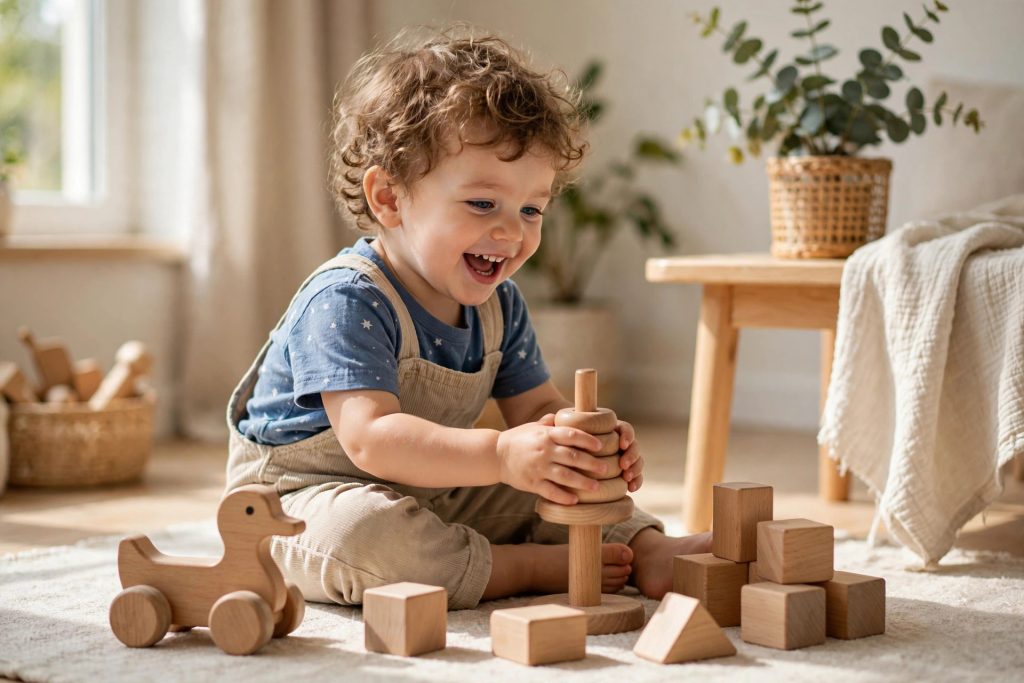
Watch a toddler for five minutes and you’ll see a scientist at work. They drop a spoon from the highchair seventeen times — not to annoy you, but to test gravity. They fill and empty the same bucket, babble into an overturned bowl, and have a lengthy conversation with a stuffed bear. It looks like messing around. It’s actually the most important work of childhood.
Play isn’t a break from learning. For young children, play is learning — the primary way they explore the world, practice skills, process emotions, and figure out how things work. A child who spends the day playing isn’t wasting time. They’re building a brain.
Why Play Matters More Than Lessons
There’s a quiet pressure on modern parents to make everything educational: flashcards for babies, structured classes for toddlers, apps that promise to boost intelligence. But decades of child development research point in the opposite direction. Unstructured, child-led play builds exactly the capacities that matter most — creativity, problem-solving, emotional regulation, social skills, and physical coordination.
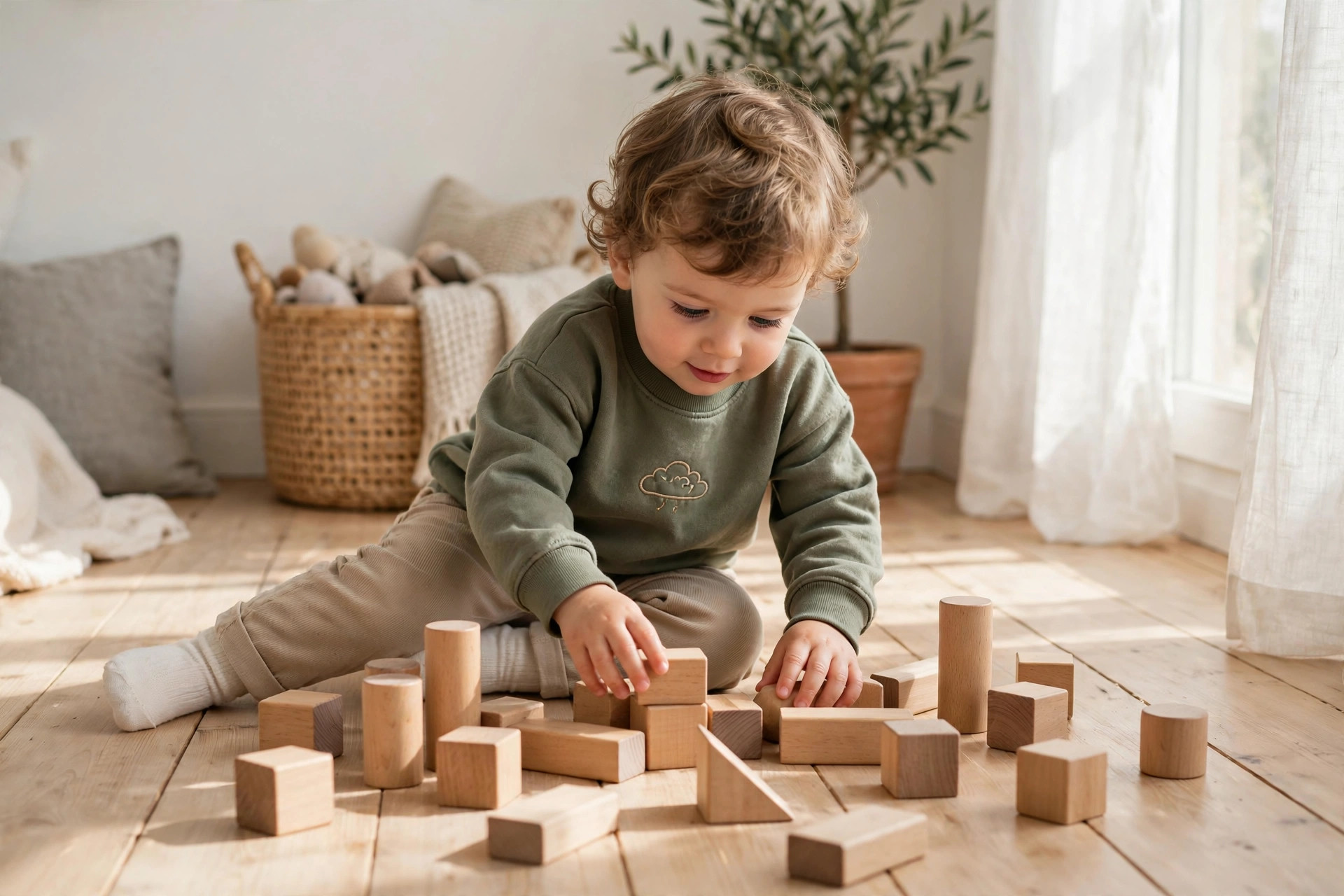
Think about what’s happening when a toddler builds a block tower. They’re practicing fine motor control, spatial reasoning, cause and effect (it falls!), persistence (build it again), and emotional regulation (managing the frustration when it topples). No flashcard teaches all of that at once. Play is efficient because it’s integrated — the whole child is engaged at the same time.
Play is also how children process their inner lives. A toddler who “plays doctor” after a checkup, or who puts their dolls to bed with elaborate rituals, is working through experiences and emotions. This is why play therapists exist: play is children’s native language for making sense of the world.
The Main Types of Play (and Why Each Matters)
Children don’t need you to schedule play types like lessons. But understanding them helps you provide the right opportunities:
Sensory play
Water, sand, playdough, finger paint, scooping rice — sensory play builds neural connections and is deeply calming for many children. It also develops the hand strength needed for later writing. Don’t fear the mess; contain it (a tray, a smock, the bathtub) and let them explore. Simple sensory activities are among the best fine motor skills activities for babies and toddlers.
Pretend play
Playing house, feeding stuffed animals, being a shopkeeper — pretend play typically blooms around age two and is a powerhouse for language, empathy, and abstract thinking. When your child offers you invisible tea, drink it enthusiastically. They’re practicing being human.
Physical play
Climbing, running, jumping, wrestling, dancing — big-body play builds strength, coordination, and confidence, and it’s essential for sleep and mood. Children who don’t get enough physical play often show it as restlessness or bedtime battles. Aim for plenty of active time daily; a trip to the park is worth more than any structured class.
Constructive play
Building, stacking, nesting, puzzles — anything where children make something. This develops planning, persistence, and spatial skills. Open-ended materials (blocks, LEGO-type bricks, magnetic tiles) beat single-purpose electronic toys every time, because the child supplies the imagination.
Your Role: Follow Their Lead
The best thing you can do during play is often the hardest: nothing. Child-led play — where your toddler decides what happens and you follow — builds independence, creativity, and confidence. When you constantly direct (“put the red block here!”), you accidentally teach your child that their ideas aren’t good enough.
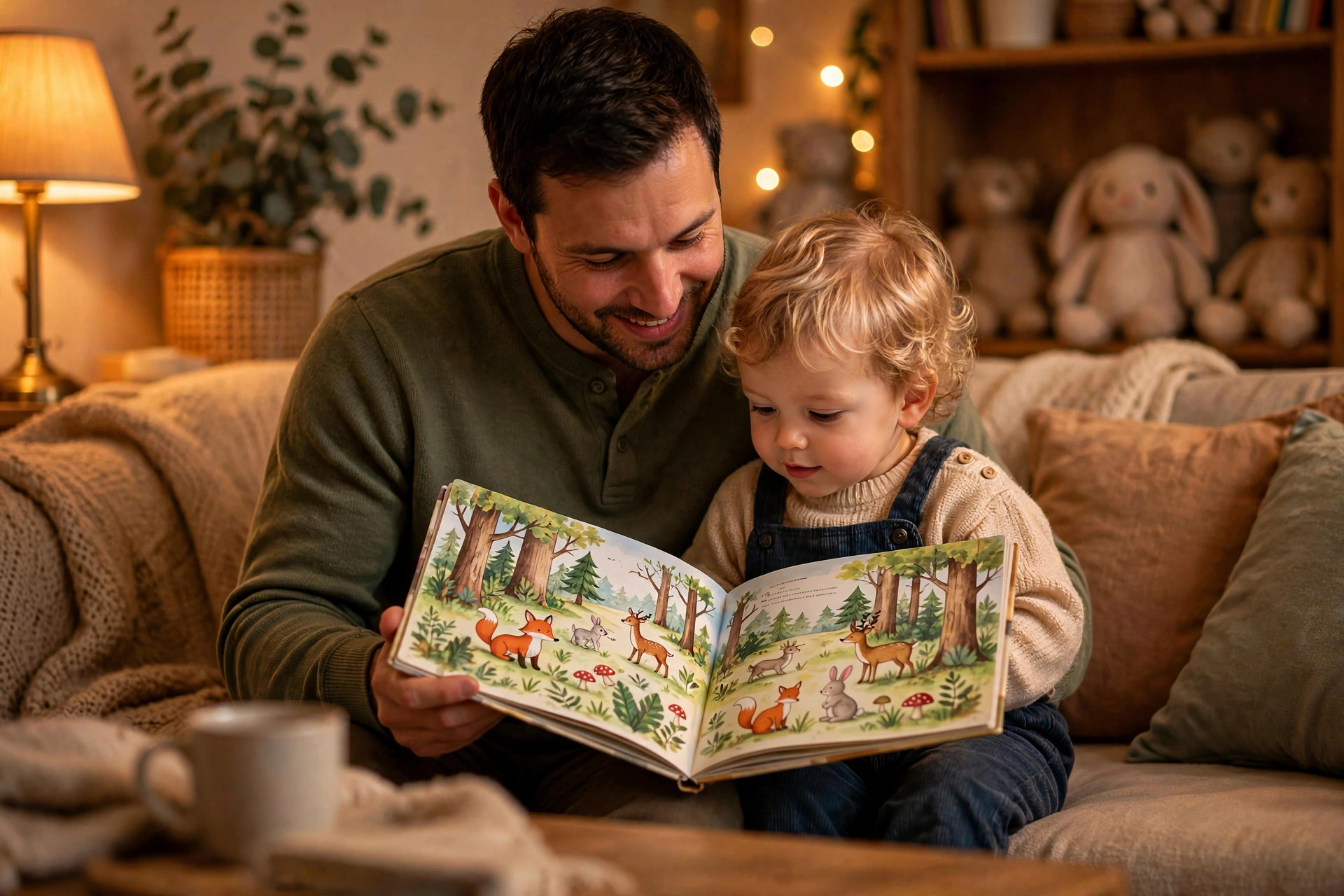
That doesn’t mean sitting on your phone while they play nearby (though independent play is valuable too). It means engaged following: get on the floor, narrate what they’re doing (“You’re stacking the blue block on top — it’s getting tall!”), and let them direct the story. This kind of responsive interaction during play is rocket fuel for language development — the same principle behind reading to your baby, applied to playtime.
A few practical guidelines:
- Join, don’t hijack. Ask “Can I play too?” and accept the role you’re given, even if you’re the baby and they’re the parent.
- Narrate, don’t quiz. “You’re pouring the water!” builds more language than “What color is this?” Quizzing turns play into a test.
- Let them struggle a little. The puzzle piece that almost fits, the tower that wobbles — resist the urge to fix it. Productive struggle is where learning lives.
- Protect long stretches. Children need unhurried time to get deep into play. Back-to-back scheduled activities fragment the very focus you’re trying to build.
Simple, Low-Cost Play Ideas by Age
You don’t need expensive toys. The best playthings are often free:
Babies (0–12 months): tummy time with interesting objects to look at, crinkly fabric, wooden spoons and plastic bowls, peekaboo (endlessly fascinating), water play in a shallow tray, and — the all-time favorite — emptying things out of containers.
Young toddlers (1–2 years): stacking and nesting cups, simple puzzles, push toys, balls, playdough (supervised), scribbling with chunky crayons, helping with “real” tasks like wiping tables or sorting laundry. Imitation of your daily life is their favorite game.
Older toddlers (2–3 years): pretend kitchens and tool sets, dress-up clothes, building sets, simple board games, outdoor treasure hunts, baking together (stirring, pouring), and art with no expected outcome — process art, not product art.
Notice what’s missing: anything with batteries that does the playing for the child. The best toy is one that’s 90% child and 10% toy, not the reverse. A cardboard box has entertained more toddlers than any electronic gadget ever manufactured.
Do Toddlers Need Educational Toys?
Short answer: no. The “educational” label on toys is marketing, not science. What makes a toy genuinely good for development is open-endedness — how many different things a child can do with it. Blocks, dolls, balls, art supplies, sand, and water are open-ended. A toy that sings the alphabet when you press a button is closed: it does one thing, and the child just watches.
This doesn’t mean electronic toys are harmful in small doses — they’re just not the developmental superstars their packaging claims. If grandparents gift them, no need for drama. Just make sure the bulk of your child’s play diet is open-ended, and balance screen-based entertainment using the principles in our screen time guide for babies and toddlers.
Boredom isn’t a problem to be solved — it’s the doorway to creativity. A child who complains “I’m boooored” is standing at the edge of inventing something wonderful. Give them time, not entertainment.
How Much Should You Play With Your Child?
Here’s the liberating truth: you don’t need to entertain your child all day. In fact, you shouldn’t. Independent play — where your child plays alone, inventing their own games — is a crucial skill that builds focus, creativity, and self-reliance. Children who never practice playing alone struggle with it later.
Aim for quality over quantity: even 15–20 minutes of fully present, child-led play daily (phone away, on the floor, following their lead) does more for your connection and their development than hours of distracted half-presence. The rest of the time, let them play independently nearby while you do your thing — narrating occasionally, available but not directing.
And siblings can be wonderful play partners. Yes, they’ll fight (see our guide to sibling rivalry solutions), but they’ll also invent games together you’d never think of. Mixed-age play teaches negotiation, empathy, and leadership in ways adult-led activities can’t. For more ideas on structuring the kind of days where play flourishes, our guide to setting boundaries with love covers the routines and limits that give play room to breathe.
Frequently Asked Questions
Why is play important for child development?
Play is how young children learn everything that matters: motor skills, language, problem-solving, creativity, emotional regulation, and social skills. Unlike direct instruction, play engages the whole child at once — brain, body, and emotions — which is why it’s more effective than flashcards or structured lessons for children under five. It’s not a break from learning; it is learning.
What are the different types of play?
The main types are sensory play (water, sand, playdough), pretend play (playing house, role-play), physical play (climbing, running, dancing), and constructive play (building, puzzles, stacking). Each develops different capacities, and children naturally cycle through all of them when given time, space, and simple materials.
Do toddlers need educational toys?
No — “educational” is a marketing label, not a scientific one. The best toys are open-ended: blocks, dolls, balls, art supplies, sand, and water — things the child can use in many different ways. Electronic toys that sing or flash when a button is pressed are far less valuable because the toy does the work instead of the child.
How much should I play with my child each day?
Quality beats quantity: 15–20 minutes of fully present, child-led play daily (phone away, following their lead) matters more than hours of distracted hovering. The rest of the time, encourage independent play — it’s a vital skill that builds focus and creativity. You don’t need to be your child’s constant entertainer.
Is it okay if my child gets bored?
Yes — boredom is actually valuable. A bored child who isn’t immediately rescued with entertainment will eventually invent something to do, and that invention is creativity in action. Resist the urge to fix boredom instantly; provide open-ended materials and give it time.
My toddler prefers screens to toys. What should I do?
This is common and fixable. Gradually replace screen sessions with engaging alternatives rather than just removing screens — go outside, introduce a novel sensory activity, or start a pretend game together. Keep screens out of easy reach, establish clear household rules, and be patient: it takes a week or two for a child to rediscover the joy of self-directed play.