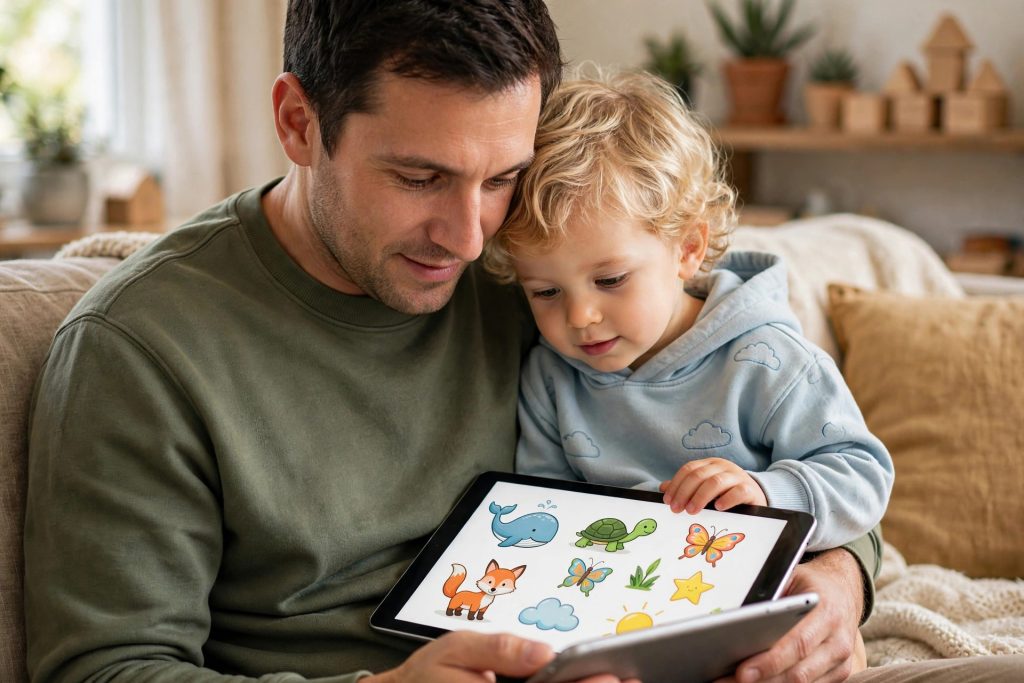
Let’s start with the truth: almost every parent of a baby or toddler uses screens sometimes. The video call with grandparents, the cartoon that buys you twenty minutes to make dinner, the phone handed over in a moment of desperation at the doctor’s office. If you’ve ever felt a stab of guilt about it, you’re in enormous company.
This guide isn’t here to shame you or to declare all screens evil. It’s here to give you a clear, calm picture of what we actually know — and, more importantly, practical ways to handle screens in your family without anxiety or guilt spirals. Because the goal was never zero screens. The goal is a healthy relationship with them, starting now.
What the Guidance Actually Says
Major pediatric organizations generally suggest avoiding screen media (other than video calls) for babies under about 18 months, and limiting screen time to about an hour a day of high-quality content for children ages 2 to 5, ideally watched together with a parent. These are guidelines, not laws — and they’re meant to protect the things screens can displace: sleep, active play, face-to-face interaction, and language-rich time with caregivers.
Here’s the nuance that often gets lost: the guidance isn’t really about the screen itself. It’s about what the screen replaces. An hour of cartoons that replaces an hour of outdoor play is a different proposition than twenty minutes of a video call with grandma, or a short educational video you watch together, talking about what you see.
And the research distinction that matters most for babies: very young children learn almost nothing from screens. A baby under 18 months doesn’t learn words from a video the way they do from a live person — this is sometimes called the “video deficit.” They need real faces, real voices, and back-and-forth interaction. That’s the core reason the guidance is stricter for the youngest babies.
Making Screen Time Better, Not Just Less
Since screens are part of modern family life, the more useful question isn’t “how do I eliminate them?” but “how do I make the screen time that happens as good as it can be?”
Choose quality over quantity
Not all content is equal. Slow-paced, age-appropriate programs with simple stories, real human faces, and opportunities to respond (songs, questions, repetition) are far better than fast-paced, overstimulating content designed to hook attention. If a show leaves your toddler wired, cranky, or zoned out, trust that signal — it’s telling you something about that particular content.
Co-view whenever you can
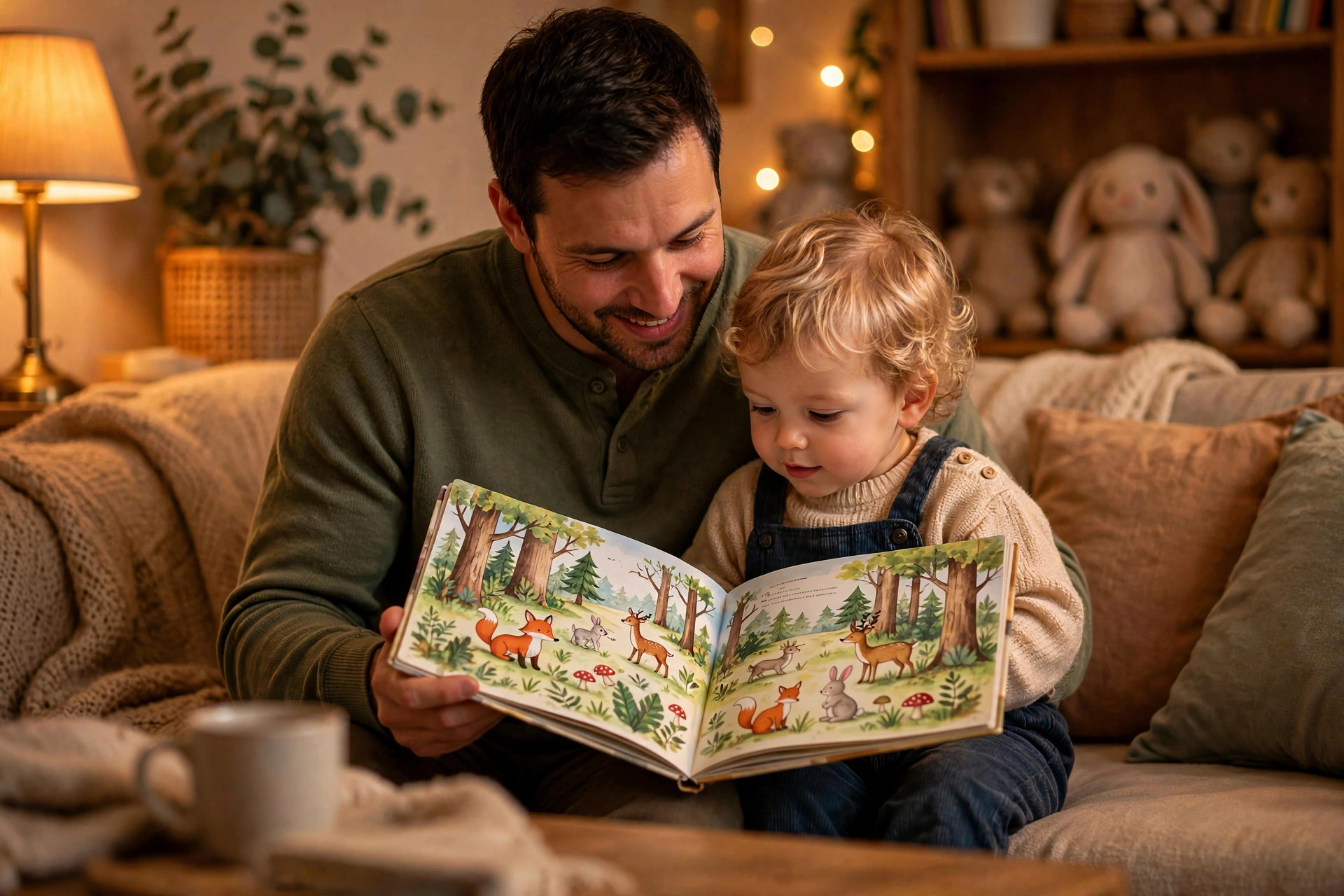
The single biggest upgrade to screen time is your presence. Watching together — naming what’s happening, asking questions, connecting it to real life (“Look, the bunny is eating carrots, like you did at lunch!”) — transforms passive viewing into interactive learning. This is especially powerful for language: talking about what’s on screen builds the same kinds of skills as reading to your baby, just through a different medium.
Protect the non-negotiables
Rather than policing every minute, guard the things that matter most: no screens during meals (family conversation is precious language time), no screens in the hour before bed (light and stimulation fight sleepiness — see our bedtime routine guide), and no screens as the default background noise all day. A few clear, consistent rules beat constant minute-counting.
Practical Family Rules That Work
Rules work best when they’re simple, predictable, and decided in advance — not invented mid-meltdown. Here are some that real families actually sustain:
- Set the container, not just the clock. “One episode after lunch” is easier to enforce than “30 minutes.” When the episode ends, the show ends — the container is the boundary.
- Use transitions. Give a warning (“When this song ends, we turn it off”), and have the next activity ready. Most screen-time battles are really transition battles — the same skills from handling toddler tantrums calmly apply here.
- Keep screens out of bedrooms. This one rule protects sleep more than almost anything else. Charge devices in a common area overnight.
- Model what you preach. This is the hard one. If the rule is “no phones at the table,” it applies to you too. Children learn their screen habits by watching yours far more than by hearing your rules.
- Keep it fair between siblings. Nothing breeds resentment like one child getting more screen time than another. Agree on the rules together and apply them evenly — our guide to sibling rivalry solutions has more on keeping things fair between kids.
- Plan the alternative. “Less screen time” only works if there’s something to do instead. Keep a basket of open-ended toys, art supplies, or books where your child can reach them. Unstructured play is the best screen replacement ever invented.

The Guilt Problem (Let’s Talk About It)
Parenting culture has turned screen time into a moral issue, and that’s unfair. Using a screen so you can shower, cook dinner, or simply sit down for ten minutes doesn’t make you a bad parent. It makes you a human being with a finite nervous system caring for a small child around the clock.
Here’s a healthier frame: think in terms of your child’s whole day, not individual moments. Did they get physical activity? Face-to-face play? Outdoor time? Stories and conversation? Sleep? If the overall day is rich, twenty minutes of a cartoon isn’t going to undo it. The families who struggle aren’t the ones using screens thoughtfully — they’re the ones where screens have quietly replaced everything else.
And if you’ve been relying on screens more than you’d like — during a difficult pregnancy, an illness, a sleep regression, a hard season — that’s not failure. That’s survival. Seasons change. When you’re ready to shift the balance, do it gradually and without self-punishment. Add good things (a walk, a puzzle, a dance party) rather than just subtracting screens.
The question isn’t “are screens good or bad?” It’s “what is this screen time replacing, and is my child still getting plenty of what they need most — play, connection, movement, and sleep?”
Video Calls Deserve Their Own Category
Video chatting with grandparents or distant loved ones is fundamentally different from passive screen viewing. It’s interactive, social, and relationship-building — a real conversation that happens to travel through a screen. Most guidance explicitly excludes video calls from screen-time limits, and for good reason.
To get the most from video calls with little ones, keep them short (toddlers have limited patience for a flat face), make them interactive (sing songs, show toys, play peekaboo), and don’t stress if your baby mostly wants to chew the phone. The connection still counts.
Frequently Asked Questions
How much screen time is okay for a toddler?
General pediatric guidance suggests about an hour a day of high-quality content for ages 2–5, watched together when possible, and avoiding screens (other than video calls) for babies under about 18 months. Treat these as flexible guidelines aimed at protecting sleep, play, and interaction — not as strict rules to feel guilty about. What matters most is the overall balance of your child’s day.
Is any screen time safe for babies?
Video calls with loved ones are considered fine at any age — they’re interactive and social. For other screen media, babies under about 18 months learn very little from screens compared to live interaction, which is why guidance recommends avoiding it. An occasional brief exposure isn’t harmful; the concern is only when screens regularly replace interactive time, sleep, or play.
What kind of shows are best for toddlers?
Look for slow-paced, age-appropriate content with simple stories, real people, music, repetition, and chances to respond. Avoid fast-paced, overstimulating programs with rapid scene changes. And whatever they watch, watching together and talking about it — asking questions, naming things, connecting it to real life — dramatically improves the value.
How do I reduce my child’s screen time without constant battles?
Don’t just subtract — add. Fill the day with appealing alternatives: outdoor time, open-ended toys, art, books, and plenty of physical play. Set a few clear rules (no screens at meals, none before bed, screens stay out of bedrooms) and enforce them boringly and consistently. Use natural containers (“one episode after lunch”) rather than timers that invite negotiation.
Does screen time affect language development?
Heavy passive screen time can displace the face-to-face interaction that drives language learning, which is the main concern. But co-viewed, high-quality content where a parent talks about what’s happening can actually support language — the key ingredient is your interaction, not the screen itself. For more on supporting language, see our guide to baby language milestones.
What about educational apps for toddlers?
Be skeptical of “educational” labels — they’re marketing terms, not regulated claims. A few well-designed apps used briefly and together with a parent are fine, but no app teaches a toddler as effectively as hands-on play, conversation, and shared book reading. If an app claims to make your baby smarter, that claim deserves a raised eyebrow, not your credit card.