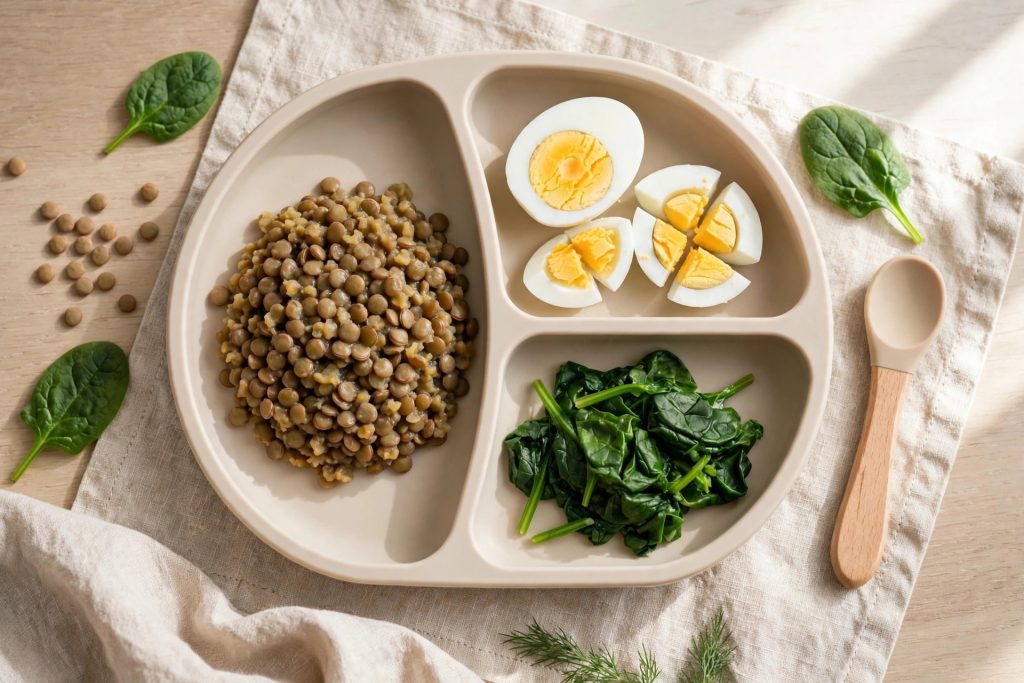
Here’s a nutritional plot twist most new parents don’t see coming: the iron your baby was born with — carefully stockpiled during pregnancy — starts running low at around six months. Right when solids begin. It’s no coincidence. Nature designed this transition so that food picks up exactly where those prenatal stores leave off.
Iron matters enormously in the first two years because it’s tied to healthy brain development and energy — and babies’ needs, relative to their tiny size, are surprisingly high. The good news? Meeting those needs doesn’t require supplements or stress. It requires a handful of the right foods, served regularly, with one clever pairing trick. This guide covers all of it.
Why Iron Becomes So Important After 6 Months
During pregnancy, babies build up iron stores that carry them through the early months. Breast milk, for all its wonders, is naturally low in iron — which is fine while those stores last. But around the six-month mark, the stores dwindle just as growth (and the brain’s development) is racing ahead. That’s why pediatric guidance everywhere emphasizes iron-rich first foods from the very start of solids.
Formula-fed babies get iron from iron-fortified formula, so the urgency is lower — but iron-rich solids still matter for every baby. What iron does, in plain terms: it helps carry oxygen in the blood and supports the rapid brain development happening in the first two years. It’s not about perfection at every meal; it’s about making iron-rich foods a regular, ordinary part of your baby’s diet. Our starting solids guide explains how this fits into the bigger first-foods picture.
Heme Iron: The All-Star Sources
Nutritionists divide iron into two types, and the distinction is genuinely useful. Heme iron — found in animal foods — is absorbed efficiently by the body. These are your heavy hitters:
- Beef, lamb, and dark meat poultry: Slow-cooked until very tender, then finely shredded or minced. A small amount goes a long way.
- Liver: Extraordinarily iron-rich; a little blended into a meat purée or lentil dish once a week is plenty. (A little goes a long way — it’s also very high in vitamin A.)
- Sardines and salmon: Soft, flaky, and bonus omega-3s. Mash sardines with a fork; flake salmon carefully, checking for bones.
- Egg yolk: Soft-scrambled, hard-boiled and mashed, or as egg strips for baby-led weaning.
- Turkey and chicken thigh meat: Dark meat beats breast meat for iron; cook soft and shred fine.
You don’t need to serve meat daily — a few times a week as part of the rotation is a solid pattern. For preparation ideas across the board, see best first foods for baby.
Plant-Based Iron: Excellent With One Trick
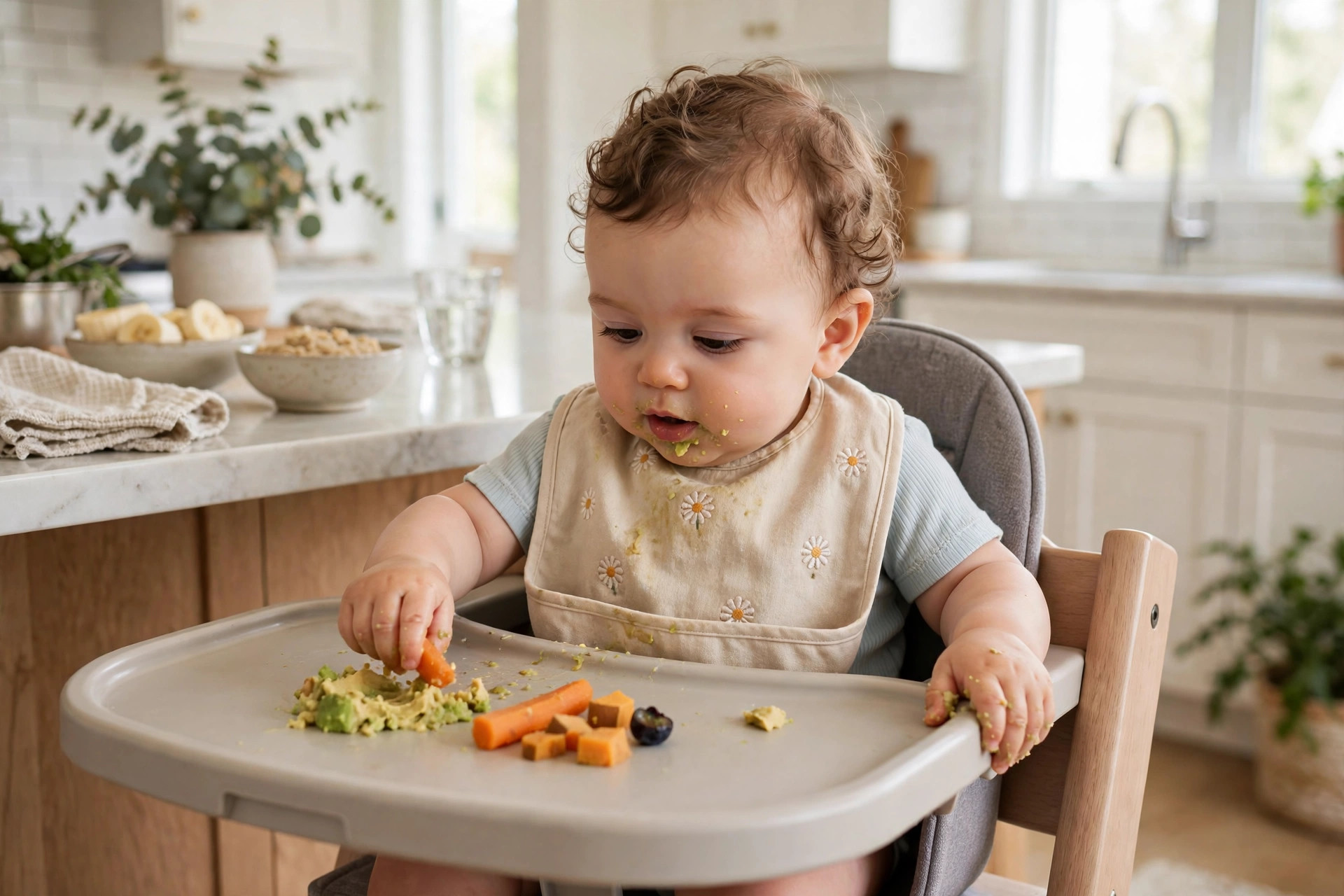
Non-heme iron — from plants — is plentiful but less readily absorbed. The trick that changes everything: pair it with vitamin C, which significantly boosts absorption. A squeeze of lemon on lentils isn’t just flavor; it’s nutrition strategy. Top plant sources:
- Lentils (red, brown, green): Cook until very soft and mash. The MVP of plant-based baby iron.
- Chickpeas and black beans: Simmered soft and mashed or as soft patties.
- Iron-fortified infant cereals and oats: A reliable, convenient iron source — check the label for iron content.
- Tofu: Soft silken tofu cubes are easy for babies to manage.
- Spinach, kale, and other dark greens: Wilted into lentils or blended into purées — always with a vitamin C partner.
- Quinoa: Well-cooked until very soft; contains iron plus complete protein.
Smart pairings in practice: lentil mash with a little mashed mango; bean patties with bell pepper strips; oatmeal with stewed strawberries; spinach blended into a tomato-based sauce. If your family leans vegetarian, this pairing habit is the single most important thing to get right — and it’s easy.
The Vitamin C Pairing Guide
Since this trick does so much work, keep a mental list of vitamin C foods to deploy alongside iron sources:
- Citrus: orange segments (membranes removed), mandarin, a squeeze of lemon or lime
- Mango, papaya, kiwi, strawberries, pineapple
- Bell peppers (roasted until soft), tomatoes, broccoli
It doesn’t need to be precise — just make it a habit that iron foods and colorful produce share the plate. One caution in the other direction: cow’s milk as a main drink (before 12 months) and tea can interfere with iron absorption, which is another reason milk stays as a feed, not a mealtime beverage, in the first year.
What About Iron Supplements?
Most healthy, full-term babies who eat a varied diet with regular iron-rich foods don’t need supplements — food does the job. But there are situations where your pediatrician might recommend one: babies born prematurely or with low birth weight (their prenatal stores were smaller), babies with certain medical conditions, or toddlers who are extremely selective eaters over a long period.
This is firmly pediatrician territory, not a DIY decision. Iron dosing for babies needs to be precise, and too much iron isn’t harmless. If supplements come up, your pediatrician will advise on the right form and dose — and on rechecking levels later. Never start iron supplements on your own because a blog post (including this one) made you worry.
Iron isn’t about one superfood — it’s about rhythm. A few iron-rich foods in the weekly rotation, paired with something colorful, covers your baby beautifully.
Signs That Warrant a Conversation With Your Pediatrician
True iron deficiency develops gradually, and early signs are easy to miss or attribute to normal baby behavior — which is exactly why you shouldn’t try to diagnose it yourself. That said, it’s worth knowing what pediatricians look for: unusual paleness (especially of the inner eyelids, gums, or nail beds), seeming unusually tired or low-energy, poor appetite over a sustained period, or frequent infections. If any of these ring a bell, mention it at your next visit or book one — a simple blood test gives a clear answer, and treatment is straightforward.
Routine screening for iron deficiency typically happens around the first birthday at well-child visits in many practices. If your baby is in a higher-risk group (prematurity, low birth weight), your pediatrician may check earlier. This article is general information, not medical advice — your pediatrician’s guidance for your baby always comes first.
Putting It Into Practice: A Week of Iron-Rich Eating
Theory is nice; dinner is nicer. Here’s what an iron-aware week can look like without any special effort:
- Monday: Red lentil and sweet potato mash with a squeeze of lemon
- Tuesday: Soft shredded slow-cooked beef with mashed avocado
- Wednesday: Iron-fortified oatmeal with stewed strawberries
- Thursday: Flaked salmon with soft roasted bell pepper strips
- Friday: Black bean and butternut squash soft patties with mango
- Weekend: Scrambled egg strips with wilted spinach and orange segments; family meals adapted as usual
Notice the pattern: iron source + vitamin C friend, most days, without overthinking any single meal. Batch-cook the lentils and grains on a weekend and the whole week gets easier. And keep your own iron up too — postpartum nutrition demands are real, especially if you’re breastfeeding (see also healthy eating while breastfeeding).
Frequently Asked Questions
Why do babies need iron?
Babies are born with iron stores that deplete around six months, just as their brains are developing rapidly and their growth demands more iron. Iron carries oxygen in the blood and supports healthy brain development, making it one of the most important nutrients in the first two years.
What are the best iron sources for babies?
Heme iron (best absorbed): beef, lamb, dark poultry meat, sardines, salmon, and egg yolk. Plant iron: lentils, beans, chickpeas, iron-fortified cereals, tofu, and dark leafy greens — always paired with a vitamin C food to boost absorption.
How can I help my baby absorb iron better?
Serve iron-rich foods alongside vitamin C foods — citrus, mango, kiwi, strawberries, bell peppers, tomatoes, or broccoli. Even small amounts help. Avoid serving cow’s milk as a mealtime drink in the first year, as it can interfere with iron absorption.
What are signs of iron deficiency in babies?
Possible signs include unusual paleness (inner eyelids, gums, nail beds), persistent low energy, poor appetite, or frequent illness — but these are nonspecific, so don’t self-diagnose. Mention concerns to your pediatrician; a simple blood test gives a definitive answer.
Does my baby need an iron supplement?
Most healthy full-term babies eating varied iron-rich foods don’t. Supplements are sometimes recommended for premature or low-birth-weight babies or specific medical situations — always at a pediatrician’s direction, never started on your own.
Can babies get enough iron without meat?
Yes, with planning. Lentils, beans, iron-fortified cereals, tofu, and greens can absolutely meet needs — the key is consistent vitamin C pairing at meals and genuine variety. If you’re vegetarian or vegan, mention it to your pediatrician so they can keep an eye on levels.
For finger-food-friendly iron ideas, our baby-led weaning guide shows how to serve iron-rich foods safely for self-feeders, and healthy toddler snacks keeps the iron habit going into the toddler years.