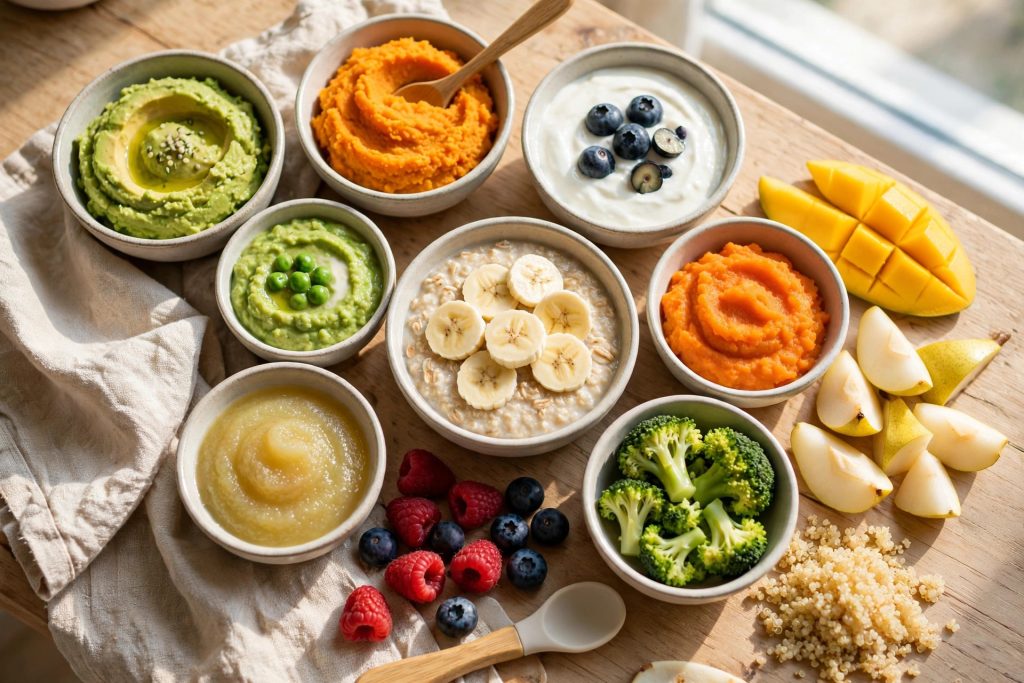
Walk down any baby-food aisle and you’ll be buried in boxes shouting about “first foods” — most of them some shade of beige. Here’s the truth that simplifies everything: the best first foods for your baby aren’t in a box at all. They’re the nutrient-dense, colorful, real foods you probably already have in your kitchen, prepared soft and served with love.
This guide cuts through the marketing noise. You’ll learn which nutrients actually matter most in the first months of eating, the specific foods that deliver them, how to prepare each one safely, and which foods to hold off on — so every tiny bite counts.
What Makes a Great First Food?
Before the specific list, it helps to know what you’re aiming for. Around six months, three things change in your baby’s nutritional world: their iron stores start running low, they need more zinc, and they’re ready to practice with new textures. The ideal first foods therefore check at least one of these boxes:
- Rich in iron or zinc — the two nutrients of greatest concern at this stage.
- Full of healthy fats — babies’ brains are growing fast, and fats (including DHA-type omega-3s) support that growth.
- Colorful and varied — different colors generally mean different vitamins, and early variety builds adventurous eaters.
- Soft enough to be safe — squishable between your fingers, or blended smooth for spoon-feeding.
Notice what’s not on the list: “bland.” Babies don’t need weeks of tasteless cereal. They need real nutrition, and their palates are remarkably open at this age. If you’re still deciding on timing, our starting solids guide covers readiness signs and the first-week plan.
Iron-Rich First Foods: The Priority Group
If there’s one nutritional headline for the first year, it’s iron. After about six months, babies need more iron than breast milk alone typically provides, and iron supports healthy brain development — so these foods deserve a regular spot on the tray:
- Well-cooked, finely shredded beef, lamb, or dark poultry meat — heme iron, the type bodies absorb most easily.
- Lentils, chickpeas, and black beans — cooked very soft and mashed; wonderful plant-based iron plus fiber.
- Iron-fortified infant cereal or oatmeal — a convenient, reliable iron source; mix with breast milk, formula, or water.
- Mashed sardines or soft-cooked salmon — iron plus brain-friendly omega-3 fats. Flake carefully and check for bones.
- Egg yolk, soft-scrambled or hard-boiled and mashed — iron, choline, and healthy fats in one tidy package.
Pair plant-based iron sources with a vitamin C food — a little mashed mango with lentils, or bell pepper strips alongside beans — and absorption improves noticeably. Our dedicated guide to iron-rich foods for babies and toddlers goes deeper on portions, pairings, and what deficiency can look like.
Vegetables: Savory First Is a Great Strategy
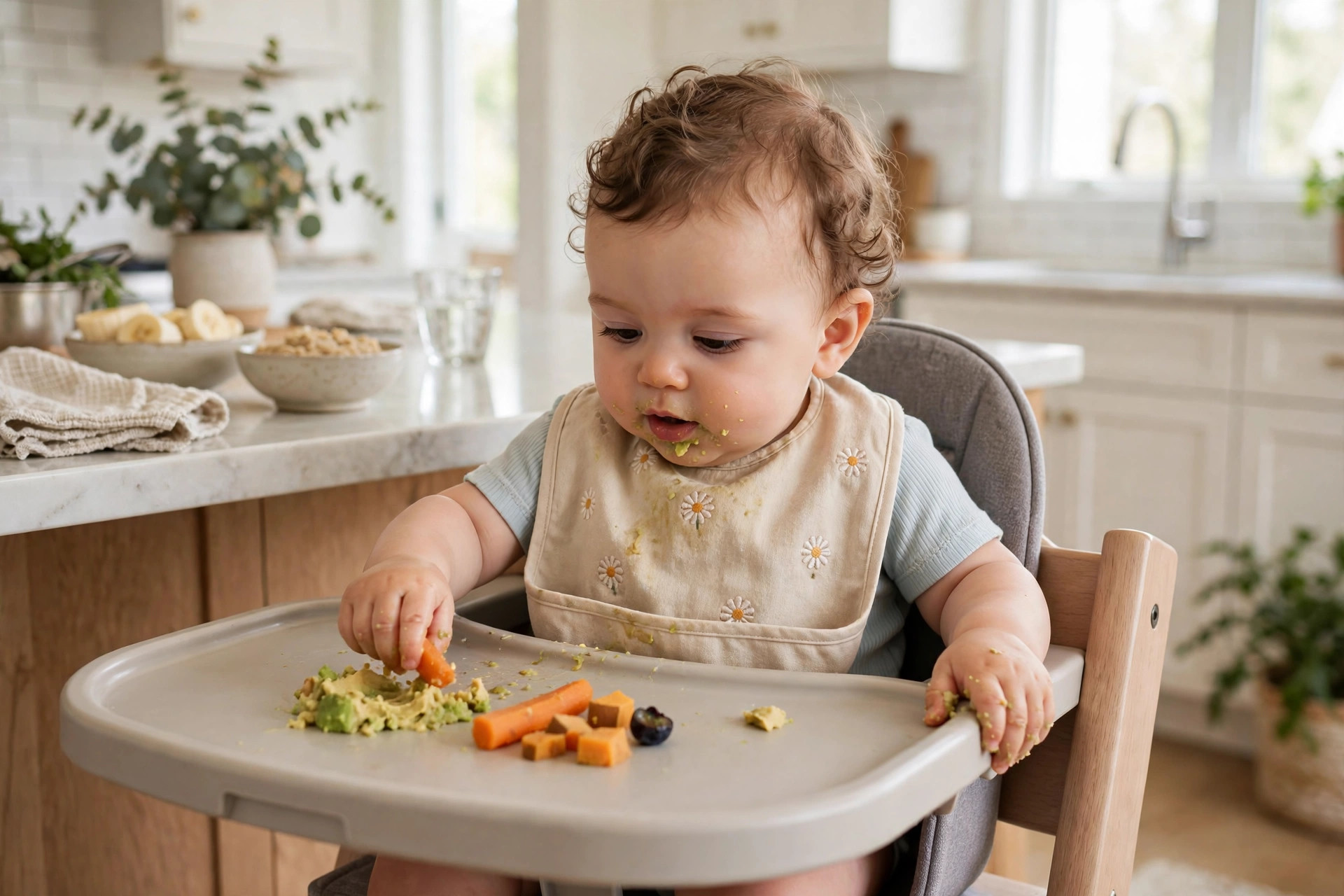
There’s no rule that says fruit must wait, but many parents find that leading with vegetables helps babies embrace savory flavors before the sweetness of fruit takes over the show. Excellent choices:
- Sweet potato — roasted soft and mashed; naturally sweet, rich in beta-carotene.
- Avocado — ripe slices or mashed; creamy healthy fats with almost no prep.
- Steamed broccoli florets — soft enough to squish, with a perfect little “handle” for baby-led weaning.
- Soft-cooked carrots, butternut squash, and peas — sweet, colorful, and easy to mash.
- Spinach or kale — wilted into lentils or blended into purées; pair with vitamin C for the iron.
Roasting brings out natural sweetness and needs no added anything. A tray of roasted sweet potato wedges and broccoli does double duty: finger foods for the baby, side dish for you.
Fruits: Nature’s Dessert (in Moderation)
Fruit is wonderful — just treat it as one part of the mix rather than the whole show. Ripe banana spears, soft pear slices, mashed mango, blueberries squashed flat (whole blueberries are a choking hazard until cut), and stewed apple are all lovely. Serve fruit alongside savory foods rather than always leading with it, and you’ll keep the overall balance tilted toward variety.
A note on juice: skip it. Whole fruit gives fiber and a slower, gentler delivery of natural sugars; juice gives neither. Water with meals is all babies need to drink besides milk — more on that in our baby hydration guide.
Healthy Fats: Small Foods, Big Job
A baby’s brain is doing extraordinary work in the first two years, and fats are its building material. Don’t fear fat in your baby’s diet — embrace the right kinds:
- Avocado — worth mentioning twice; it’s nearly the perfect baby food.
- Olive oil — a drizzle over mashed vegetables or lentils adds calories and flavor.
- Nut butters, thinned smooth — peanut or almond butter thinned with warm water or milk to a drippy consistency (never thick globs or whole nuts — serious choking hazards).
- Oily fish — salmon and sardines, as above, for omega-3s.
- Full-fat plain yogurt — creamy, protein-rich, and a great vehicle for other flavors. Choose plain; flavored yogurts are sugar bombs.
Foods to Wait On or Limit
The “avoid” list is shorter than most parents fear, but the items on it matter:
- Honey — wait until 12 months. This is the big one. Honey can contain botulism spores that young infants can’t handle. No honey in any form before the first birthday, including in baked goods.
- Cow’s milk as a main drink — wait until 12 months. Small amounts in cooking are fine, but as a beverage it can interfere with iron absorption and isn’t nutritionally complete for infants.
- Added salt and sugar — babies’ kidneys are still maturing, and early exposure shapes taste preferences. Cook family foods with minimal salt and add yours at the table instead.
- Whole grapes, cherry tomatoes, hot dogs, popcorn, whole nuts, hard raw vegetables — choking hazards. Always modify: quarter grapes lengthwise, grate or steam hard veg, and save popcorn and whole nuts for much later.
- High-mercury fish — shark, swordfish, king mackerel, and bigeye tuna are best avoided; stick with salmon, sardines, and light tuna.
- Unpasteurized dairy and juices — pasteurized only for little immune systems.
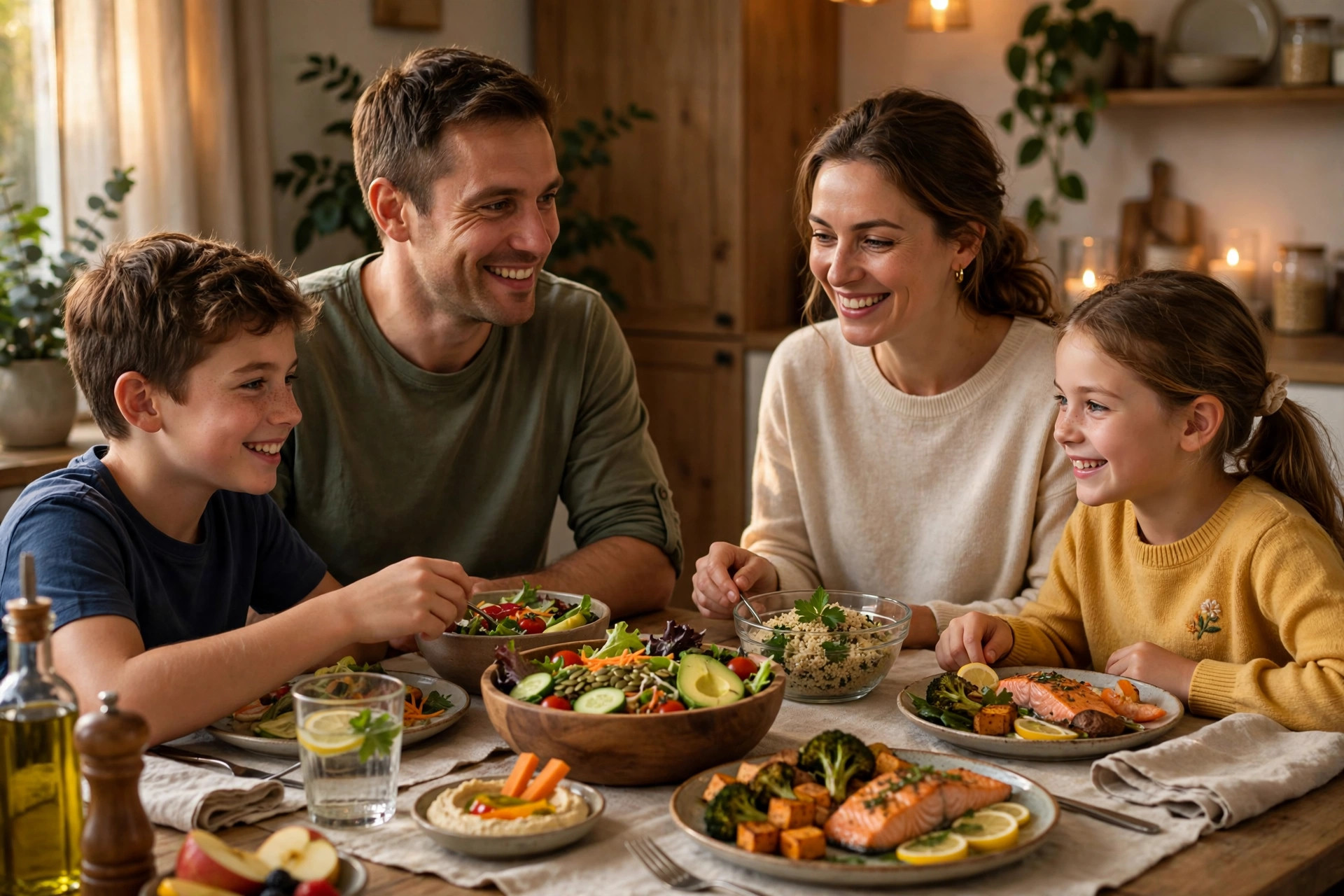
The best first food isn’t a single magical ingredient — it’s whatever iron-rich, colorful, real food you serve consistently, in a safe texture, while your baby watches you enjoy your own meal beside them.
Putting It Together: A Simple Daily Rhythm
You don’t need a meal plan; you need a rhythm. In the early weeks, one small “meal” a day is plenty. By seven to eight months, most babies manage two; by nine months, three small meals plus milk feeds. A day might look like: iron-fortified oatmeal with mashed banana at breakfast, lentil-and-sweet-potato mash at lunch, soft salmon flakes with avocado at dinner — each just a few tablespoons, with milk feeds continuing as before.
Batch cooking is your friend. A weekend pot of lentils, a tray of roasted vegetables, and a few hard-boiled eggs cover days of baby meals. Freeze purées in ice-cube trays for easy portions. And remember the family table: by nine or ten months, most babies can eat modified versions of what you’re eating, which is the simplest system of all. While you’re planning their plates, keep yours nourished too — healthy eating while breastfeeding and our postpartum nutrition guide are built for exactly this season.
Frequently Asked Questions
What is the single best first food for babies?
There’s no single winner, but iron-rich foods top the list: soft-cooked lentils, finely shredded meat, mashed egg yolk, or iron-fortified infant cereal. Pair them with colorful vegetables and fruits for a balanced start.
Should I start with vegetables or fruits?
Either works, but starting with vegetables is a popular strategy — it lets babies learn savory flavors before fruit’s sweetness dominates. The most important thing is variety across both groups in the first weeks.
Can babies eat meat?
Absolutely — meat is one of the best first foods. Serve it very soft: slow-cooked and finely shredded, or ground meat cooked soft and broken into tiny pieces. It’s an excellent source of the heme iron babies need after six months.
Which foods should babies avoid?
Honey before 12 months (botulism risk), cow’s milk as a main drink before 12 months, added salt and sugar, whole grapes and other choking hazards unless modified, high-mercury fish, and unpasteurized products.
How do I prepare food safely for a new eater?
The squish test is your best friend: if you can squish it between your thumb and finger, it’s soft enough. Cut round foods (grapes, cherry tomatoes, blueberries) into quarters lengthwise, grate hard vegetables or steam them soft, and thin nut butters to a drippy consistency.
Do I need to buy special “baby food”?
No. Homemade mashed or soft versions of family foods are nutritious, cheaper, and expose your baby to your family’s real flavors. Commercial baby food is fine as a backup, but it’s not a nutritional requirement. If finger foods appeal to you, our baby-led weaning guide explains the safety essentials.
As always, this article is general information, not medical advice — if your baby has feeding difficulties, poor weight gain, or a suspected food reaction, your pediatrician is the right next call.