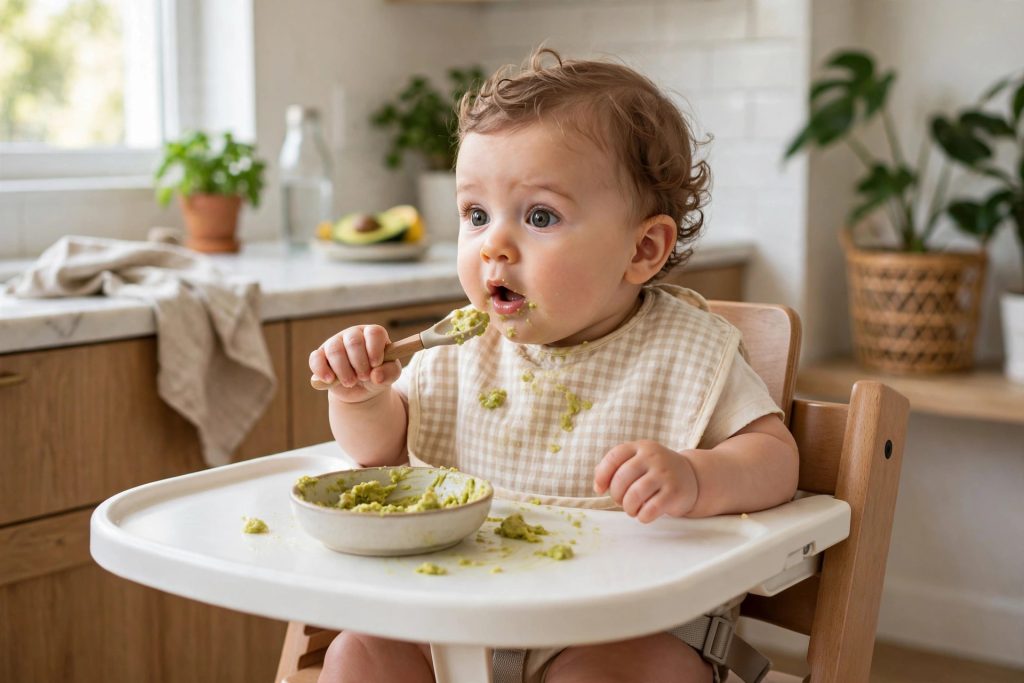
There comes a moment in every parent’s life when the baby at the table stops being content to watch you eat — and starts reaching for your plate. That grabby little hand is exciting, a little nerve-wracking, and the unofficial announcement that it’s time to talk about solid foods. If you’re wondering when to start, what to offer first, and how not to overthink the whole thing, you’re in exactly the right place.
Starting solids is one of those milestones that feels enormous but is actually wonderfully simple once you know the basics. This guide walks you through the readiness signs, the right timing, a calm first-week plan, and the safety notes that matter — so you can enjoy this messy, joyful stage instead of stressing through it.
How Do You Know Your Baby Is Ready for Solids?
Age alone doesn’t tell the whole story. Most babies are ready around six months, but the real green light comes from a cluster of developmental signs. Look for all of these before offering that first spoonful:
- Sits with support: Your baby can sit upright in a highchair with minimal slumping, and holds their head steady on their own.
- Tongue-thrust reflex is fading: Newborns automatically push food out with their tongues. When this reflex starts to fade, they’re physically able to move food to the back of the mouth and swallow.
- Shows interest in food: Watching you eat intently, reaching for your food, opening their mouth when food comes near — curiosity counts.
- Can bring objects to their mouth: If they’re confidently grabbing toys and mouthing them, the coordination needed for eating is developing.
- Doubled birth weight (rough guideline): Many babies are close to double their birth weight by the time solids begin, though this is a rough marker, not a rule.
If your baby was born prematurely, go by their adjusted age and check in with your pediatrician about timing. And remember — readiness is a window, not a single day. A week or two in either direction is perfectly normal.
When to Start: What the Guidance Says
Most major health authorities recommend introducing solid foods at around six months, while continuing breast milk or formula as the main source of nutrition. Starting much earlier isn’t necessary — before about four months, a baby’s digestive system and swallowing coordination simply aren’t ready, and early solids don’t help babies sleep longer (despite what well-meaning relatives may claim).
On the other side, waiting too long has downsides too. By around six months, babies’ natural iron stores begin to run low, which is one reason iron-rich first foods matter so much. Delaying well beyond six months can also mean missing a helpful window for learning to manage different textures. If your baby is approaching seven months and still showing no interest, mention it at their checkup — but don’t panic. Every baby has their own timeline.
How to Start: A Calm First-Week Plan
Forget the idea of a “first meal” as an event. Think of the first week as a series of tiny, low-pressure experiments. Here’s a simple way to begin:
- Pick a calm moment. Mid-morning or midday usually works best — baby is rested, alert, and not starving. Offer milk first, then try solids about 30–60 minutes later. A frantically hungry baby won’t be in the mood to learn.
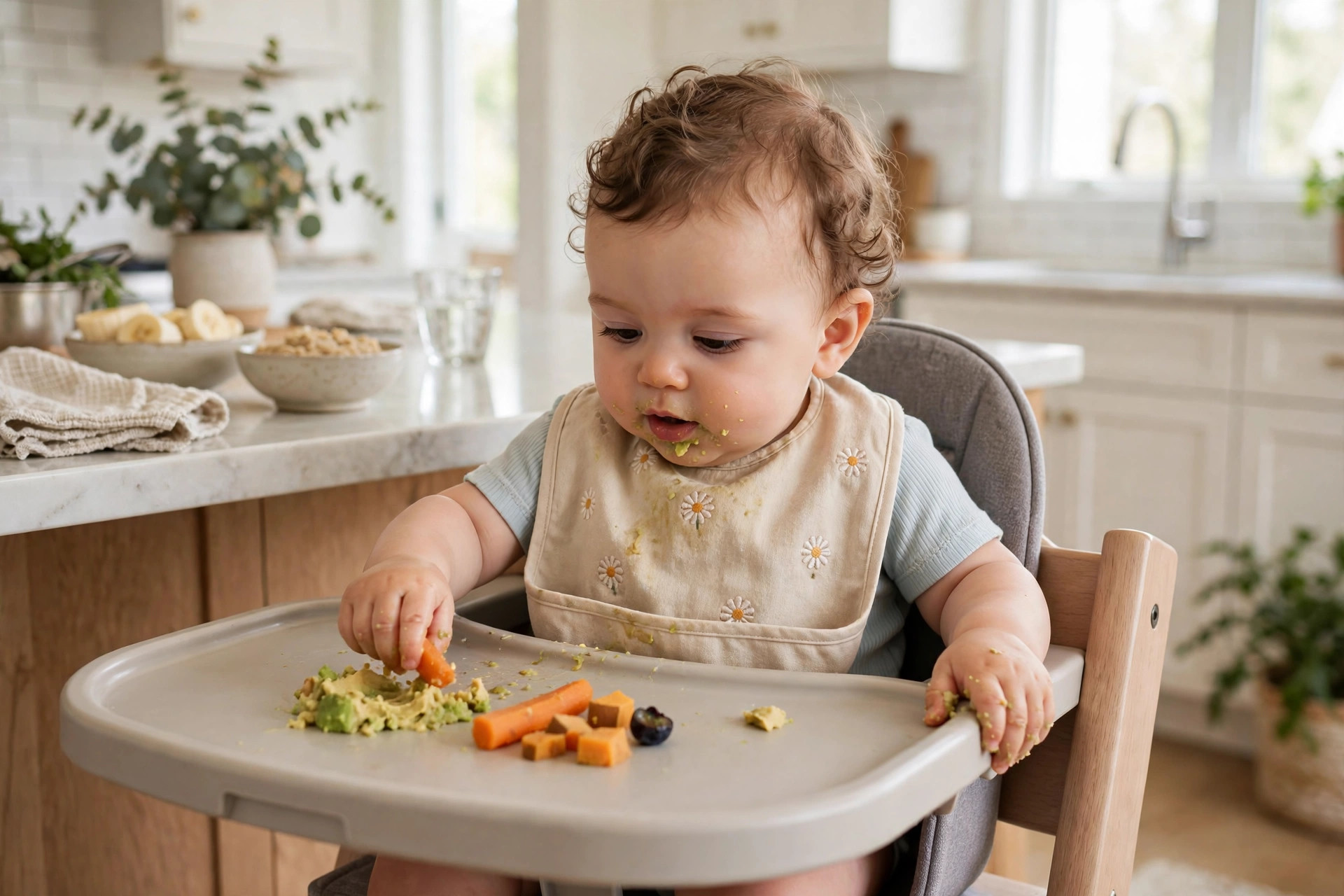
- Set up for success. Highchair with good support (a rolled towel at the sides helps smaller babies), a bib, and a washable mat or towel under the chair. Keep expectations low and a camera handy.
- Start with a teaspoon or two. Literally. A tiny taste on a soft-tipped spoon, or a soft finger food they can grab. Most of it will end up on their face, the tray, and the floor. That’s the job.
- Watch and wait. Give them time to explore — touching, smelling, and tasting are all part of learning. Don’t rush the spoon in or scrape food off their face.
- Introduce one new food at a time. This isn’t about allergies so much as learning: if something disagrees with them, you’ll know what it was. A day or two between new foods is plenty.
- End on a happy note. Ten minutes of curious nibbling is a complete success. Follow with milk as usual and move on with your day.
Our guide to the best first foods for babies has plenty of specific ideas for what to put on that tray, from iron-rich options to soft fruits and vegetables.
Which Foods Should You Offer First?
The old advice to start with bland rice cereal and work up to “real” food has quietly retired. Modern guidance favors nutrient-dense foods from the start — particularly iron-rich ones, since your baby’s iron needs jump at around six months. Good openers include soft-cooked lentils, well-cooked shredded meat, mashed egg yolk or soft scrambled egg, mashed avocado, sweet potato, banana, and iron-fortified infant cereal if you’d like an easy option.
Vegetables before fruit isn’t a hard rule, but many parents find it helps babies accept savory flavors before discovering that everything sweet is wonderful. Either way, variety is the real goal — the wider the range of flavors in the first months, the more adventurous most eaters become. For a fuller list with preparation ideas, our best first foods for baby guide (linked above) has you covered.
Textures: From Smooth to Lumpy to Finger Foods
Texture progression matters more than most parents realize — it’s how babies learn the oral-motor skills that eventually make them confident eaters. A sensible path looks like this:
Stage 1: Smooth purées (first couple of weeks)
Thin, smooth textures that slide easily off a spoon. Think well-blended sweet potato, pear, or lentils thinned with a little breast milk, formula, or water.
Stage 2: Thicker purées with soft lumps (around 7 months)
Mashed banana, soft-cooked carrot mashed with a fork, oatmeal with texture. Lumps teach the tongue to move food around — don’t stay on silky-smooth purées too long.
Stage 3: Soft finger foods (around 8 months)
Strips of soft-cooked vegetables, ripe avocado slices, banana spears, soft pasta. Foods should be soft enough to squish between your thumb and finger. If you’re curious about skipping purées entirely, our baby-led weaning guide (linked in the FAQ below) explains the safety essentials.

Introducing Common Allergens: A Calm, Sensible Approach
This is the topic that worries parents most, so let’s demystify it. Guidance has shifted in recent years: rather than delaying common allergens, pediatric experts now generally suggest introducing them during the first year, once a few basic foods are going well. The big ones to know are peanut, egg, dairy, wheat, soy, fish, shellfish, tree nuts, and sesame.
A practical approach: introduce one allergen at a time, in a small amount, earlier in the day (so you can watch for any reaction during waking hours), and keep offering it regularly afterward — a taste once doesn’t count as “introduced.” Serve peanut as thinned smooth peanut butter (never whole nuts or thick globs, which are choking hazards), egg well-cooked and mashed, yogurt as plain full-fat.
If your baby has severe eczema or a known food allergy, or there’s a strong family history of allergies, talk to your pediatrician first — they may recommend a specific plan or testing before you begin. For most babies, though, calm and steady introduction at home is the way to go. Watch for hives, vomiting, swelling of the lips or face, or unusual fussiness in the hours after a new food, and call your pediatrician promptly if anything concerns you.
Starting solids isn’t about how much your baby eats — it’s about learning. A teaspoon tasted with curiosity beats a bowlful eaten under pressure, every single time.
What to Expect (and What’s Completely Normal)
The faces. Oh, the faces. Sour expressions, dramatic shudders, food spat straight back out — all normal. Babies are encountering flavors and textures for the first time, and their reactions are exploration, not rejection. It can take many exposures before a new food is accepted, so keep offering without pressure.
Also normal: tiny amounts actually swallowed (a tablespoon or two per “meal” is plenty at first), gagging occasionally as they learn to manage textures (loud and dramatic, but they work through it — very different from choking), and changes in diapers. Undigested bits of food in the stool are completely normal and not a sign anything is wrong.
And the most important expectation of all: milk is still the main event. Until around twelve months, breast milk or formula provides the bulk of your baby’s nutrition. Solids before one are “just for fun” — for learning, exploring, and gradually building skills. Our article on healthy eating while breastfeeding is a helpful companion read for keeping your own nutrition strong during this stage.
Signs to Pause and Check With Your Pediatrician
Most of the starting-solids journey is smooth sailing, but check in with your pediatrician if you notice persistent vomiting after feeds, blood in the stool, ongoing diarrhea, a rash or swelling that appears after specific foods, or if your baby consistently refuses all solids well past seven months. Trust your instincts — you know your baby best, and pediatricians would always rather hear from you than have you worry alone. This article is for general information and isn’t a substitute for professional medical advice.
Frequently Asked Questions
When can I start my baby on solids?
Around six months is the standard guidance, once your baby shows the readiness signs: sitting with support, good head control, fading tongue-thrust reflex, and interest in food. If your baby was premature, use their adjusted age and confirm timing with your pediatrician.
What are the signs my baby is ready for solids?
The key signs are sitting upright with minimal support, steady head control, the ability to bring objects to the mouth, visible interest in your food, and a fading tongue-thrust reflex that previously pushed food straight back out.
How much solid food should a 6-month-old eat?
Very little at first — a teaspoon to a tablespoon per sitting is a full success. Start with one “meal” a day and follow your baby’s lead, gradually increasing amount and frequency over the coming months. Milk remains their primary nutrition until about twelve months.
Which foods should I introduce first?
Iron-rich foods are the priority: soft-cooked lentils, well-cooked shredded meats, mashed egg, along with vegetables, fruits, and healthy fats like avocado. There’s no required order — variety and nutrient density matter more than any specific “first food.”
Can I give my baby water with solids?
Yes — once solids begin, small sips of water with meals are fine and help them practice cup skills. Keep it to a few sips; milk is still their main drink. Our guide to hydration for babies covers exactly how much water babies need at each stage.
Is it normal for my baby to gag on new textures?
Yes. Gagging is loud, dramatic, and self-resolving — it’s the body’s protective reflex doing its job while your baby learns. It’s very different from choking, which is silent and needs immediate action. Learning the difference is essential reading in our baby-led weaning safety guide.
Paying attention to your baby’s hunger cues also helps you time those first solid-food sessions well — a calm, mildly hungry baby learns far better than an overtired or ravenous one. And while you’re nourishing your baby, don’t forget yourself: postpartum nutrition matters just as much in these demanding months.