Of all the questions new parents ask, “when can my baby have water?” might be the most surprisingly confusing. Well-meaning relatives offer sips to newborns. The internet offers seventeen different answers. Meanwhile your baby is perfectly hydrated and has no opinions on the matter whatsoever.
Here’s the short version: for the first six months, milk is the whole story. After that, small sips of water join the picture, milk stays the star, and most other drinks can wait — some of them for years. This guide lays out exactly what babies should drink at each stage, how much, and the warning signs of dehydration every parent should know.
The First 6 Months: Milk Is Everything
Newborns and young infants get all the hydration they need from breast milk or formula — even in hot weather. Breast milk is roughly 87% water and adjusts its composition to conditions; formula, prepared exactly as directed, is similarly complete. Extra water isn’t just unnecessary at this age — it can actually be harmful, filling a tiny stomach with empty fluid and displacing the nutrition babies need, and in large amounts it can dangerously dilute the body’s sodium balance.
So the rule for the first six months is beautifully simple: no water, no juice, no teas — just milk, on demand. If you’re ever unsure whether your young baby is getting enough, the output tells the story: plenty of wet diapers (around six or more a day after the first week), regular bowel movements, and steady weight gain at checkups. Concerns about intake always deserve a call to your pediatrician — never a DIY water supplement.
Starting Water With Solids: Small Sips, Big Skills
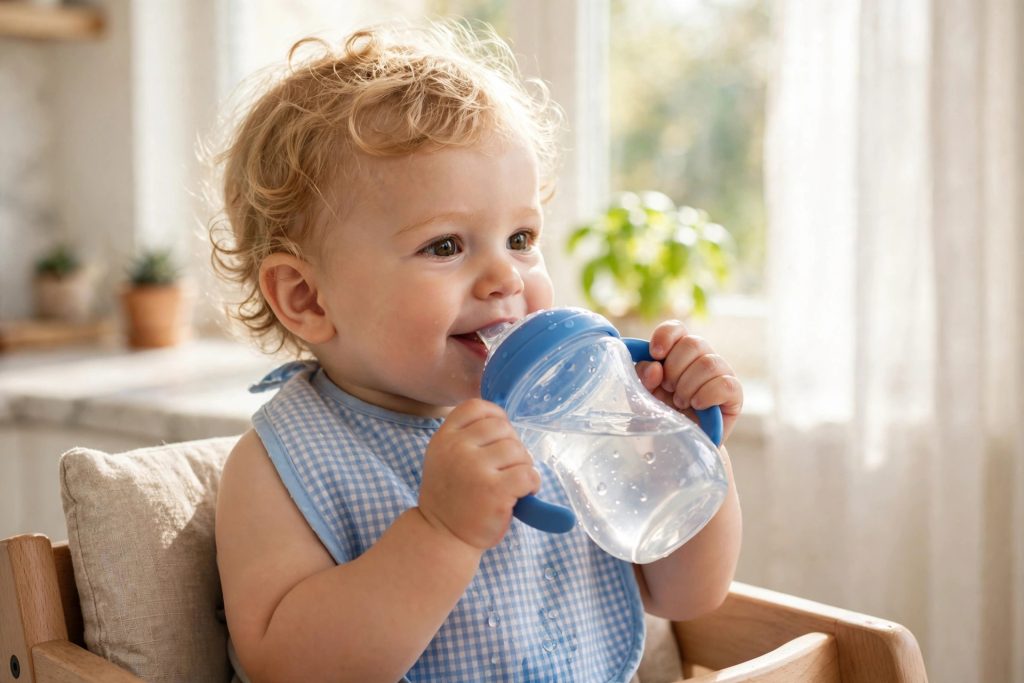
Around six months, when solid foods begin, water earns a small supporting role. The goal at this stage isn’t hydration volume — milk still handles that — it’s learning the skill of drinking. Offer a few sips with meals from an open cup (held by you at first) or a sippy/straw cup. Expect most of it to dribble down their chin. That’s the lesson.
How much? Think in sips, not ounces — a couple of ounces across the whole day is plenty at six to eight months. By nine to twelve months, as solid meals grow to three a day, four to eight ounces of water daily is a reasonable range. These are flexible guidelines, not prescriptions; a baby who nurses frequently needs less supplemental water than one taking fewer milk feeds. Our starting solids guide covers how meals and milk balance out in this transition.
Cup skills matter more than you think
Learning to drink from an open cup or straw cup is genuine developmental work — it builds oral-motor skills that support speech and safe swallowing. Start with an open cup (you hold it, they sip), then introduce a straw cup around six to nine months. Many feeding therapists favor straw cups over hard-spout sippy cups, since straws exercise more of the mouth muscles. Whatever you choose, skip the valve-heavy “no-spill” designs for everyday use if you can — a little spilling is how learning happens.
Milk After One: What Changes
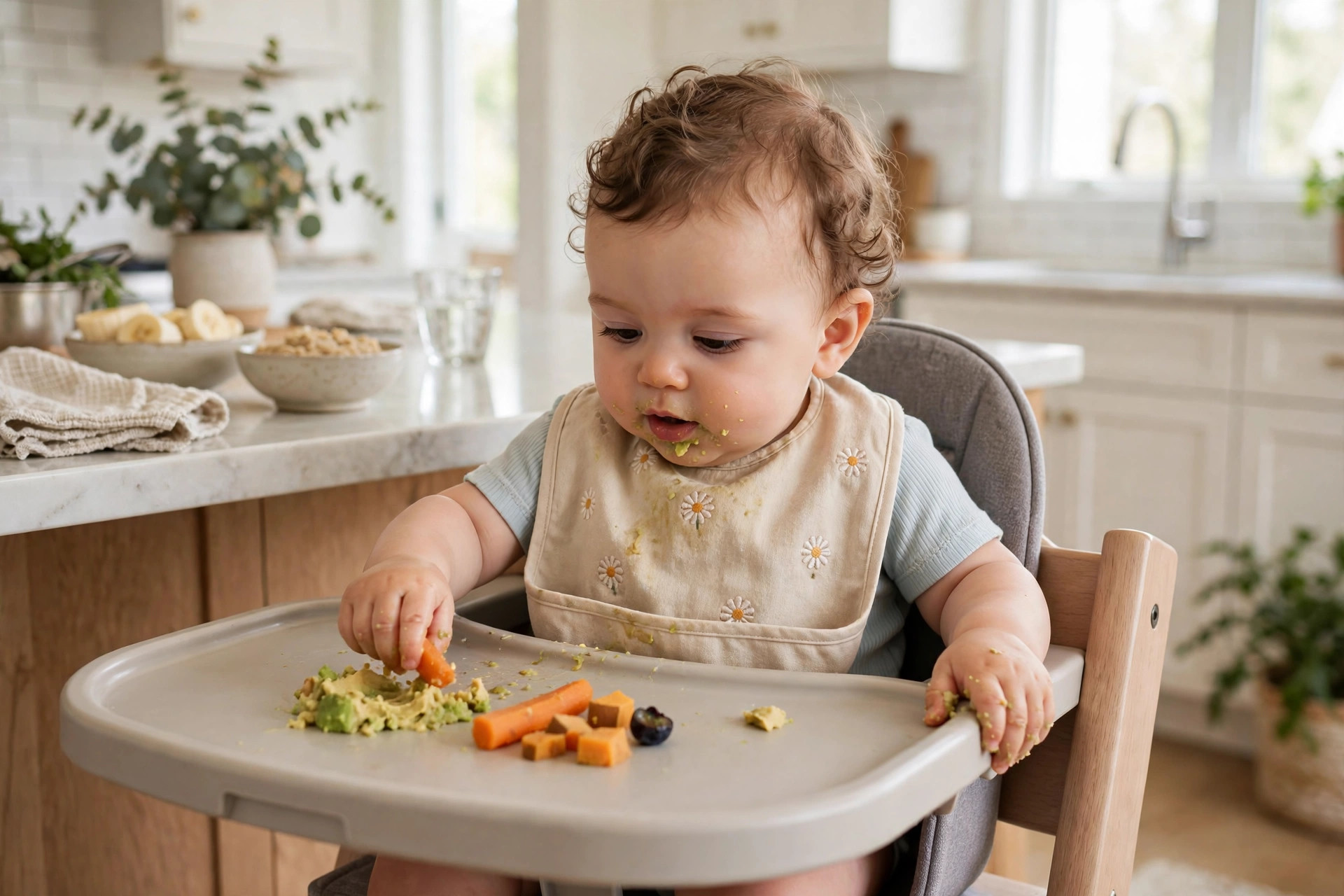
At around twelve months, the drink menu expands: whole cow’s milk can become a regular beverage (unless your pediatrician advises otherwise), typically around 16–24 ounces a day at most. More than that can blunt appetite for iron-rich foods and even interfere with iron absorption — the classic “too much milk” toddler is pale, picky, and tired, a pattern pediatricians know well.
After age two, many families switch to lower-fat milk, but that’s a conversation for your pediatrician based on your child’s growth. Plant-based milks vary enormously in nutrition — if your family uses them, choose unsweetened, fortified options and discuss the choice with your pediatrician to make sure protein, calcium, and vitamin D needs are covered.
And breastfeeding? It doesn’t expire at twelve months. If it works for your family, continuing to nurse alongside meals and water is entirely normal and nutritionally valuable. Our healthy eating while breastfeeding guide supports mothers through every stage of the journey, and breastfeeding basics is there if you’re still in the early months.
Juice, Sugary Drinks, and Other Things to Skip
This is the section where guidance is refreshingly blunt:
- Juice: Babies under twelve months don’t need juice at all. After one, if it’s offered, keep it to a very small amount of 100% juice — but whole fruit is better in every way (fiber, slower sugar release, chewing practice). Juice is essentially the least nutritious way to eat fruit.
- Sugary drinks, sodas, sweetened teas: No place in a baby or toddler’s diet. They deliver sugar without nutrition, harm emerging teeth, and shape taste preferences early.
- Plant milks marketed to kids, flavored milks, “toddler formulas”: Mostly marketing. Water, milk, and (while nursing continues) breast milk cover it.
- Caffeine: Obviously not for babies — but worth remembering that chocolate and some teas contain it, so keep those as rare, tiny tastes rather than habits.
The beverage philosophy for the under-twos fits in one sentence: milk and water, water and milk. Everything else is optional at best.

Hydration in Hot Weather and Illness
Two situations legitimately raise the hydration stakes. In hot weather, babies under six months need more frequent milk feeds — not water. Older babies can have extra sips of water, plus water-rich foods (cucumber, watermelon, oranges for toddlers). Dress them light, seek shade, and never leave a baby in a parked car, even briefly.
During illness — especially vomiting, diarrhea, or fever — fluid loss speeds up. Continue offering milk feeds frequently; your pediatrician may recommend an oral rehydration solution for significant losses. This is one situation where professional guidance really matters: the right fluid and amount depends on the baby’s age, weight, and symptoms. Don’t try to manage significant dehydration at home without calling your pediatrician.
When in doubt, offer milk. It’s the original hydration plan, and it works for the entire first year and beyond.
Dehydration Warning Signs: Know Them Cold
Dehydration in babies can escalate quickly, so every parent should know the signs. Call your pediatrician promptly if you notice:
- Noticeably fewer wet diapers (fewer than 4–6 in 24 hours for an infant), or very dark yellow urine
- No tears when crying, dry mouth and tongue
- A sunken soft spot (fontanelle) on top of the head
- Unusual sleepiness, lethargy, or hard-to-wake behavior
- Sunken eyes, or cool, blotchy hands and feet
Seek urgent care for a baby who is extremely lethargic or difficult to wake, has rapid breathing, or shows several of these signs together. Trust your instincts — parents who “just felt something was wrong” are right often enough that pediatricians always want the call. This article is general information and isn’t a substitute for professional medical advice.
Frequently Asked Questions
When can babies drink water?
Small sips can start around six months, alongside solid foods. Before six months, breast milk or formula provides complete hydration and extra water isn’t needed — and can be unsafe in quantity.
How much water should a 6-month-old drink?
Just sips with meals — a couple of ounces across the day is plenty. Milk remains the main drink. By nine to twelve months, roughly four to eight ounces daily is a reasonable range, adjusted to how much milk they’re still taking.
Is juice okay for babies?
Not in the first year, and barely after. Whole fruit beats juice on every measure — fiber, nutrition, dental health. If 100% juice is ever offered to a toddler, keep the amount very small and infrequent.
What are signs of dehydration in babies?
Fewer wet diapers, dark urine, no tears when crying, dry mouth, sunken soft spot, unusual sleepiness, and sunken eyes. Several signs together — or an extremely lethargic baby — warrant urgent care.
Can I give my newborn water in hot weather?
No — offer more frequent milk feeds instead. Breast milk and properly prepared formula fully cover hydration even in heat. Extra water for young infants can displace nutrition and, in large amounts, dangerously upset electrolyte balance.
What cup should my baby learn to drink from?
Start with an open cup (you hold it) around six months, then add a straw cup around six to nine months. Straw cups are often recommended over hard-spout sippy cups for oral-muscle development. Expect spills — they’re part of learning.
Good hydration habits pair naturally with good eating habits: healthy toddler snacks with water (not juice) at the table, and iron-rich meals that keep little bodies thriving. Keep it simple — milk and water — and you’ve mastered baby hydration.