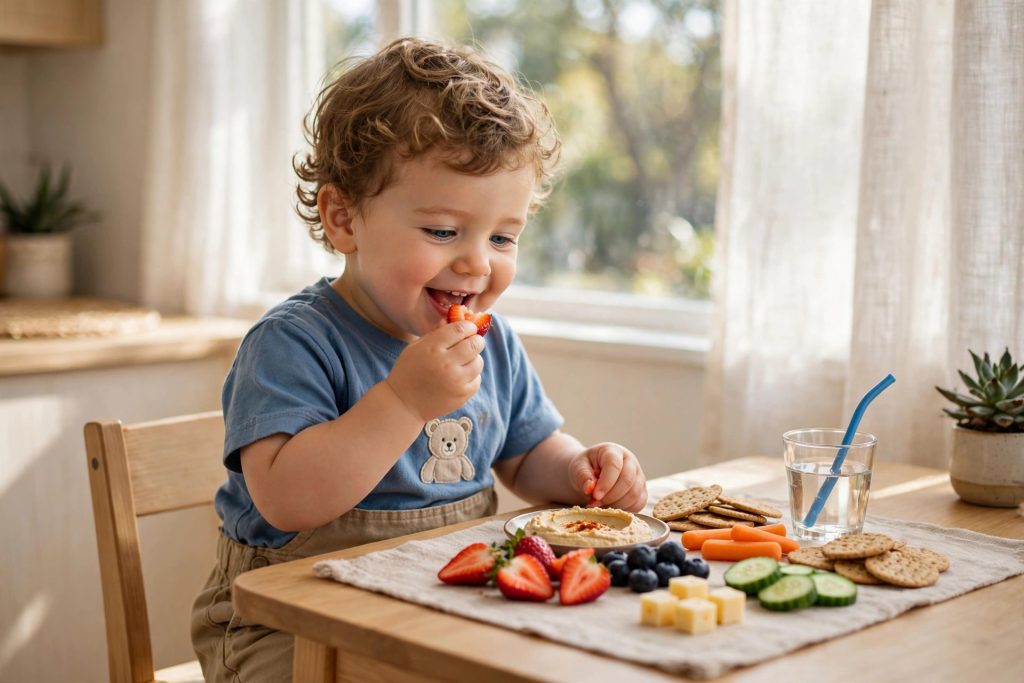
Somewhere around the first birthday, a shift happens: your baby becomes a toddler, and the toddler discovers that snacks are a food group, a hobby, and — when deployed strategically — a negotiation tactic. If you feel like you’re running a 24-hour snack bar, you’re not doing it wrong. You’re just parenting a toddler.
Snacks aren’t the enemy. For small stomachs that can’t take in much at a sitting, well-chosen snacks are genuinely part of good nutrition. The trick is making them count — so this guide covers what makes a snack actually nourishing, 15+ ideas that take minutes, how to time snacks around meals, and how to handle the “snack, snack, SNACK” phase without losing your mind.
What Makes a Good Toddler Snack?
A good toddler snack does three things: bridges the gap between meals without ruining the next one, delivers real nutrition (not just energy), and is safe for little mouths. The formula that works:
- Protein or healthy fat + fiber: This combination keeps energy steady instead of spiking and crashing. Think apple slices with thinned peanut butter, or cheese with whole-grain crackers.
- Something colorful: Fruits and vegetables bring the vitamins; aim for color most of the time.
- Right-sized portions: Toddler portions are small — a quarter to a half cup total is plenty. You can always offer more.
- Choking-safe prep: Quarter grapes lengthwise, cut cherry tomatoes, grate hard apple or steam it soft, spread nut butters thin. The squish test still applies.
What a good snack is not: a slow drip of crackers and juice boxes all day. Constant grazing means kids arrive at meals never quite hungry, then the cycle repeats. Structure — not restriction — is the answer, which we’ll get to below.
15+ Easy, Nutritious Snack Ideas
No elaborate recipes. These are assembly-only, using foods you likely have:
Fruit-forward
- Banana spears rolled in a little ground flaxseed (extra grip, extra nutrition)
- Blueberries, squashed flat for younger toddlers, with a few cubes of cheese
- Mandarin segments and a small handful of soft-cooked chickpeas
- Apple slices (thin, or steamed soft for newer chewers) with thinned almond butter
- Frozen mango chunks, slightly thawed — nature’s sorbet
Protein and savory
- Hard-boiled egg halves with a pinch of mild paprika
- Hummus with soft pita triangles and cucumber sticks
- Small cubes of cheese with whole-grain crackers
- Mini lentil or bean patties, reheated from a weekend batch
- Flaked salmon or tuna mixed with a little mashed avocado on toast fingers
Warm and comforting
- Oatmeal made thick, cooled, and cut into fingers they can hold
- Soft scrambled egg strips with a few peas
- Mini pancakes (banana-egg-oat, no added sugar) with berries
- Warm lentil soup in a small open cup for confident cup-drinkers
Keep the iron habit going through the toddler years, too — several of these (lentil patties, egg, salmon, hummus) pull double duty. Our iron-rich foods guide has more ideas that work as snacks.
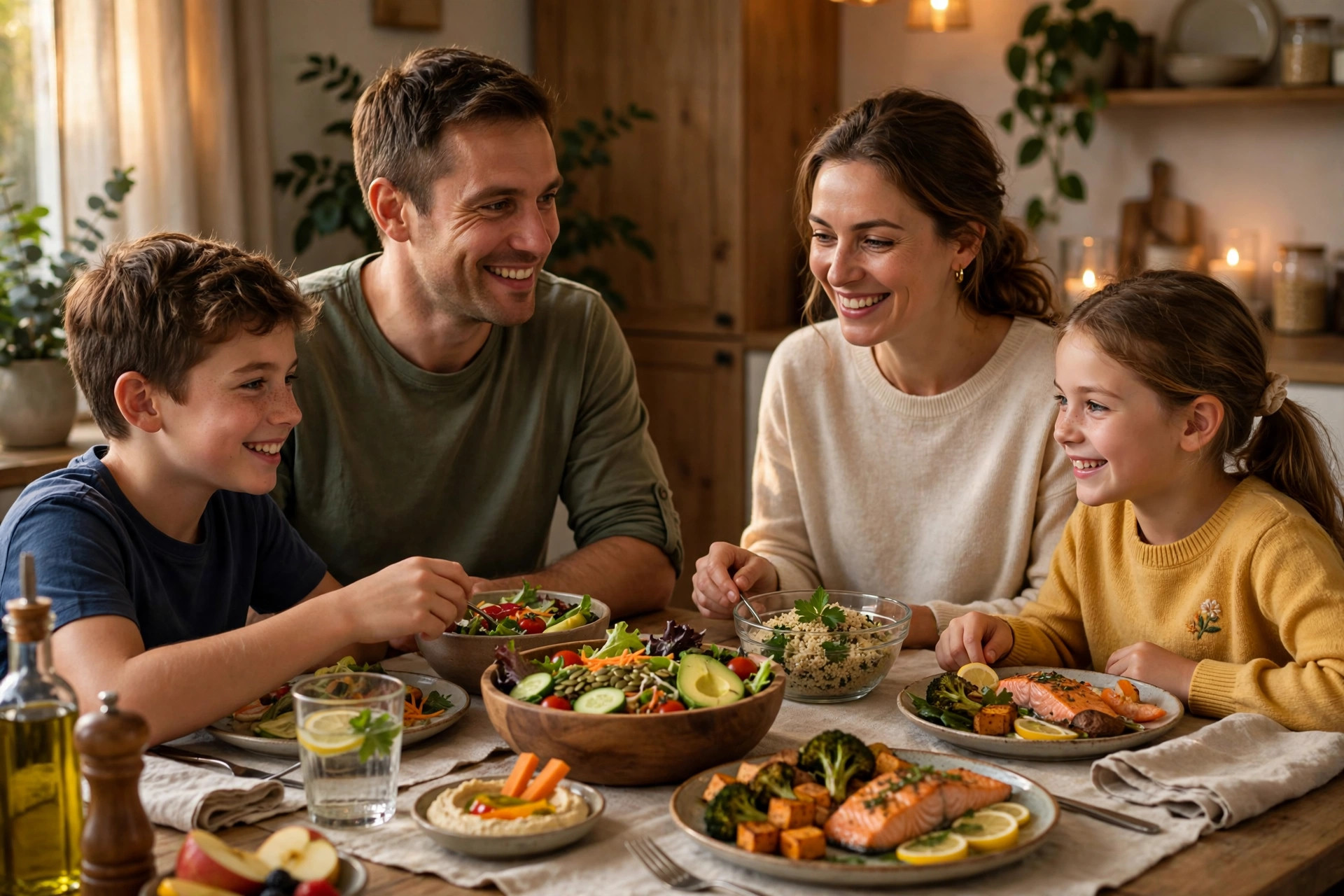
Snack Timing: Structure Beats Grazing
The single most impactful change most families can make isn’t what they serve — it’s when. Toddlers thrive on predictable eating rhythms: three meals plus two to three structured snacks, spaced roughly two to three hours apart. When food arrives on a rhythm, the frantic “I’m STARVING” (ten minutes after lunch) usually fades, because their bodies learn that food is reliably coming.
Practical timing tips:
- Morning snack mid-way between breakfast and lunch; afternoon snack between lunch and dinner. An optional small bedtime snack works if dinner was early.
- Close the kitchen between eating times. Not punitively — just matter-of-factly: “Snack time is over; lunch is coming soon.” Water is always available.
- Serve snacks at the table, not on the run. Sitting down (even for five minutes) turns snacking into an event the body registers, instead of background munching that never quite satisfies.
- Don’t let snacks crowd meals. If dinner is in 45 minutes, a snack now guarantees a dinner strike. Offer water and a distraction instead.
This structure also protects healthy hydration habits — kids who graze on juice boxes all day rarely drink water, and rarely arrive at meals thirsty or hungry.
The “Constant Snacking” Phase: What’s Normal, What Helps
Almost every toddler goes through a phase of asking for snacks relentlessly. It’s developmental, not a character flaw: they’re testing boundaries, they’re genuinely growing, and — let’s be honest — snacks are fun and meals require sitting still. Here’s how to navigate it without turning food into a battleground:
- Check the basics first: Is the phase coinciding with a growth spurt, new molars (chewing soothes), or meals that are too small, too rushed, or too battleground-y? Fix the meal, and the snack siege often lifts.
- Offer a “snack plate” at snack time: Put out a balanced mini-meal — protein, produce, grain — and let them choose within it. Choice satisfies the autonomy craving that’s really driving the requests.
- Hold the boundary kindly: “We’re all done with snacks. We’ll have dinner together soon.” Then redirect — outside, bath, books, blocks. Boredom is the secret engine of half of all snack requests.
- Watch the drinks: A toddler filling up on milk or juice genuinely isn’t hungry. Milk has its place, but large volumes between meals blunt appetite for food.
- Don’t moralize food: Avoid “good food/bad food” language and avoid using snacks as rewards or punishments. Neutral, structured, boring — that’s the goal.
The goal isn’t a toddler who never asks for snacks. It’s a toddler who trusts that food comes regularly, eats enough at meals to play happily between them, and doesn’t think about food the rest of the time.
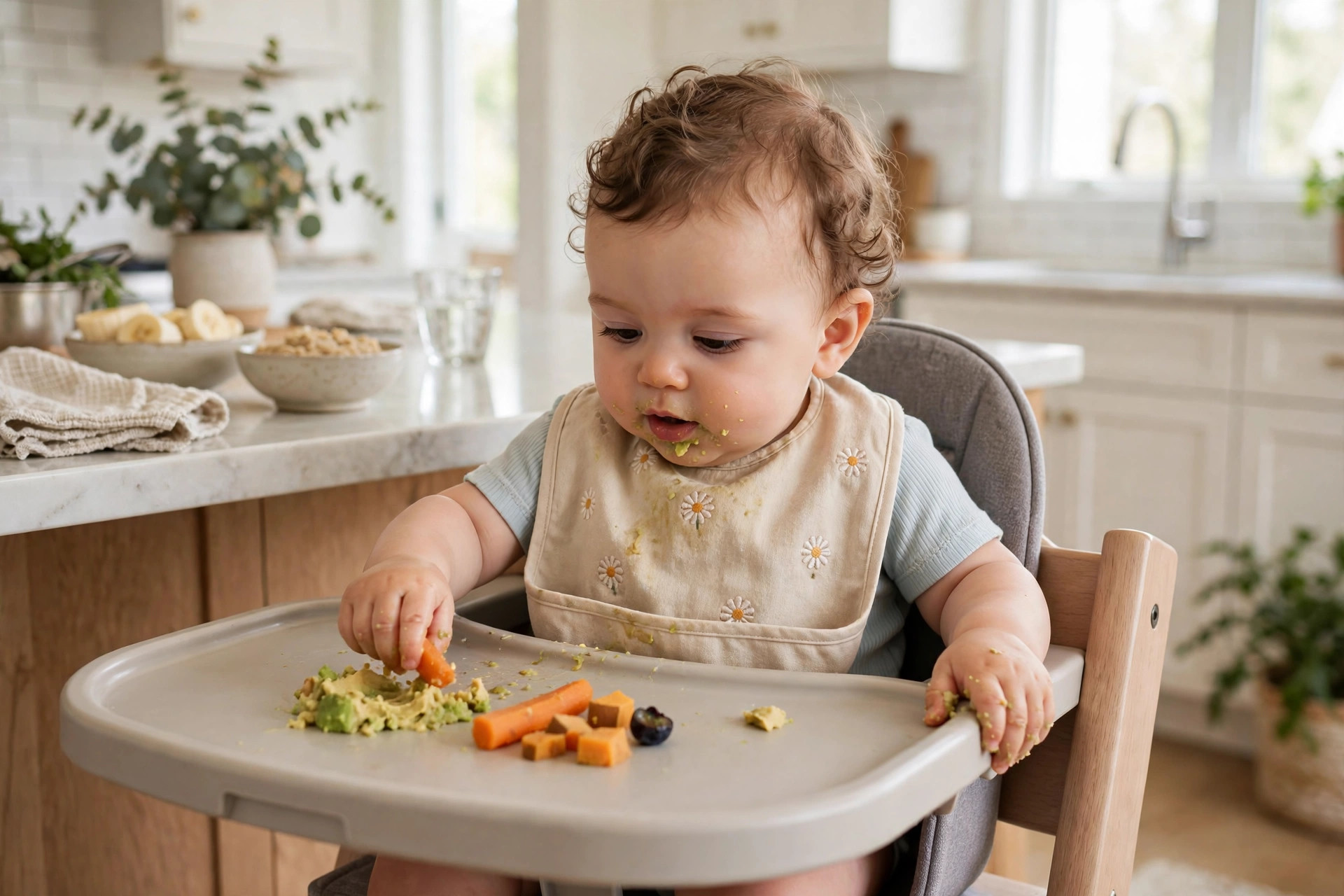
A Note on Pouches, Crackers, and Packaged Snacks
Let’s be realistic: packaged toddler snacks exist because parents are busy, and there’s no shame in the stash. The balanced view:
- Fruit and veggie pouches: Handy, genuinely contain fruit — but they’re not equivalent to eating the food. Sucking purée doesn’t teach chewing, and the natural sugars hit faster without fiber’s full effect. Use for travel and emergencies, not as the daily vegetable.
- Puffs and crackers: Fine as a crunchy vehicle (hummus needs something), but nutritionally they’re mostly starch. Pair, don’t rely.
- “Toddler” labeled products: The label is marketing, not a nutritional standard. Flip the package: if sugar is high or the ingredient list reads like a chemistry exam, treat it as an occasional food.
- Juice boxes: Whole fruit and water do the job better in every way. If juice appears, keep it rare and small.
None of this requires purity — it requires proportion. A pantry with mostly real food and a small “convenience shelf” is a system that survives real life.
Snacks Away From Home
The diaper-bag snack kit is a parenting rite of passage. Pack with two principles: no refrigeration needed, no crumbs of despair. Reliable travelers: banana, mandarin, small oatcakes, cheese cubes in a cool bag, roasted chickpeas, mini muffins (oat-banana, low sugar), and a water bottle — always the water bottle. For flights and long car rides, add one “novelty” snack they rarely get; novelty buys you twenty peaceful minutes, which is priceless at 30,000 feet. (More travel survival in our traveling with a baby guide.)
Frequently Asked Questions
What are healthy snacks for toddlers?
Snacks combining protein or healthy fat with fiber and color: fruit with nut butter, cheese with whole-grain crackers, hummus with soft pita, hard-boiled eggs, or mini bean patties. Keep portions small (a quarter to half cup) and prep everything choking-safe.
How many snacks should a toddler have per day?
Two to three structured snacks between three meals is the typical rhythm — roughly every two to three hours. The key word is structured: snacks at predictable times, at the table, with the kitchen “closed” in between.
Are fruit pouches healthy?
They’re convenient and do contain fruit, but they’re not equal to eating whole fruit — no chewing practice, faster sugar delivery. Fine for travel and busy days; not ideal as the everyday fruit serving.
How do I stop my toddler’s constant snacking?
First check whether meals are substantial and calm enough. Then move to structured snack times, close the kitchen between them, serve snacks sitting down, watch milk/juice intake between meals, and redirect boredom with play. Most constant-snacking phases pass within weeks once the rhythm holds.
What snacks help toddlers sleep better?
There’s no magic sleep snack, but a small balanced bedtime snack (if dinner was early) with some protein and complex carbs — like oatmeal fingers or banana with peanut butter — can prevent hunger wake-ups. What matters more for sleep is the overall daytime rhythm; our bedtime routine guide covers the rest.
Should I worry if my toddler only eats snacks and refuses meals?
Short phases are normal, but if it persists for weeks, look at the pattern: too much milk or juice, snacks too close to meals, or mealtimes that have become pressured. Adjust the structure first. If poor eating persists with poor growth or extreme selectivity, talk to your pediatrician.
Snacking well is also self-care by proxy — a fed, rhythm-fed toddler is a calmer toddler, which is its own kind of self-care for mothers. And if little fingers are doing the grabbing, those pincer-grasp workouts double as development: our fine motor skills activities guide explains why. As with all nutrition content here, this is general information, not medical advice.