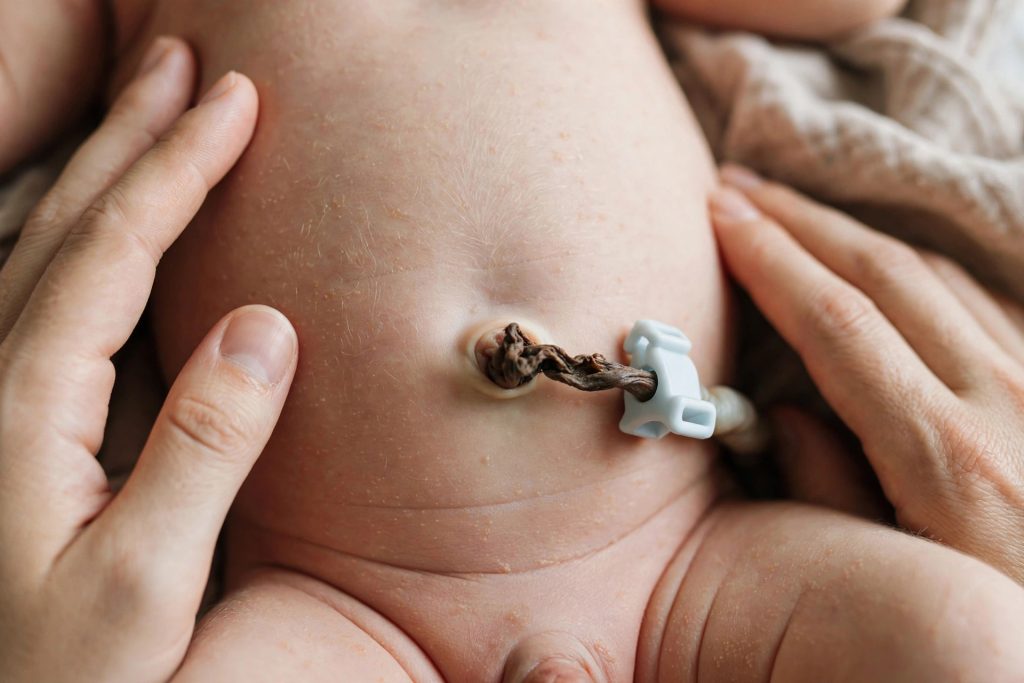
That tiny shriveled stump on your newborn’s belly can be oddly intimidating. It looks fragile, a little strange, and most new parents quietly wonder the same thing: am I supposed to do something with it? The good news is that umbilical cord care is one of the simplest parts of newborn care — once you know the rules. It mostly comes down to keeping the area clean and dry, leaving it alone, and knowing which warning signs actually matter.
What Is the Umbilical Cord Stump?
Right after birth, the umbilical cord is clamped and cut, leaving a short stump — usually about an inch long — attached to your baby’s belly button. Since the stump no longer has a blood supply, it behaves a bit like a scab: it darkens, dries out, hardens, and eventually detaches on its own. This is a completely normal process, and it doesn’t hurt your baby. There are no nerve endings in the stump itself, so gentle handling around it won’t cause pain — though the skin at the base can be a little sensitive.
Most stumps fall off somewhere between one and three weeks after birth. It might look darker and drier each day, and one morning you’ll simply find it has come away — often in the diaper or during a change. That gradual, uneventful shrinking is exactly what you’re hoping to see.
How to Bathe Your Baby Before the Cord Falls Off
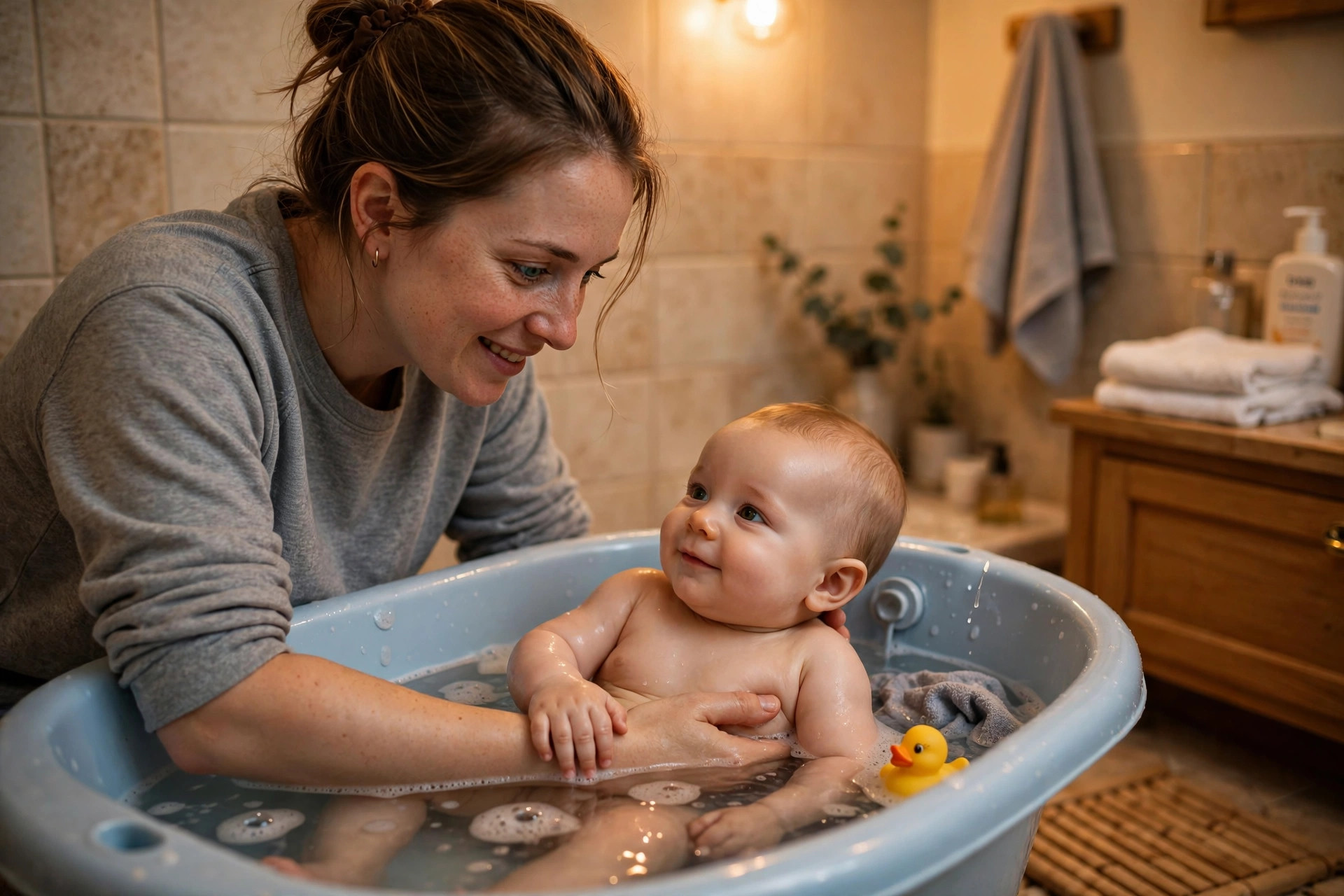
Until the stump detaches, full baths are off the menu. Stick to sponge baths: warm room, a basin of warm water, and a soft washcloth are all you need. Wash the face, neck folds, hands, and diaper area, taking care to work around the cord rather than over it. If the stump gets damp during the sponge bath, simply pat it dry with a clean, soft cloth afterward — dampness is the enemy, not water itself.
Never submerge your baby in a tub until the cord has fallen off and the belly button area has fully healed, which is usually a few days after detachment. Once you’re past that milestone, you can graduate to real baths — you’ll find the full routine covered in our guide to baby bath time basics.
The Daily Care Routine: Keep It Clean and Dry
Day to day, cord care takes about thirty seconds. Here’s the routine:
- Wash your hands first. Clean hands before touching the stump area, every time.
- Clean only when needed. If the stump gets soiled with urine or stool, gently wipe the area with warm water on a soft cloth or cotton pad, then pat it completely dry. No scrubbing.
- Pat dry, don’t rub. After cleaning or a sponge bath, press a soft cloth or gauze gently against the area to absorb moisture.
- Fold the diaper down. Fold the front of the diaper below the stump so it isn’t covered — this keeps urine away and lets air circulate. Many newborn diapers even have a cut-out for this.
- Dress loosely. Soft, breathable clothing that doesn’t press or rub against the stump is ideal. Skip anything tight around the waistband.
The best thing you can do for the cord stump is, mostly, nothing. Clean air, dry surroundings, and patience do more than any product ever could.
The first weeks are full of tiny, fiddly tasks — cord care is one, and learning how to trim your newborn’s nails without tears is another. Give yourself grace with both; nobody gets them perfect on day one. And once the stump is gone, the belly button area deserves the same gentle approach as the rest of your baby’s skin — our newborn skin care basics guide walks you through that.
What NOT to Do With the Cord Stump
A lot of well-meaning advice about cord care is outdated. Here’s what to skip:
- Don’t clean it with alcohol. Rubbing alcohol was once standard advice, but it’s now considered unnecessary — it can irritate the skin and may actually slow down the drying process. Plain water, only when needed, is enough.
- Don’t pull or pick at it, even when it’s hanging by a thread. Let it detach on its own; pulling can cause bleeding and open the door to infection.
- Don’t cover it with bandages or tape. The stump needs airflow to dry out. Wrapping it traps moisture and delays healing.
- Don’t apply anything to it — no oils, powders, creams, or home remedies. The stump isn’t a wound that needs treating.
- Don’t submerge it in water until it has fallen off and the area has healed.
When It Falls Off: The Normal Timeline
As the stump dries, it typically goes from yellowish-green to brown to nearly black — all normal. It may look like it’s barely hanging on for a day or two before it finally lets go. A tiny spot of blood or a bit of clear, slightly sticky discharge at the base after detachment is normal too; it’s just the last bit of the area finishing its healing.
Sometimes a small piece of pink, fleshy tissue (called granulation tissue) remains after the stump falls off. This is common and usually resolves on its own within a week or two. Keep the area clean and dry as before, and mention it at your next checkup if it doesn’t clear up.
Once the stump is off and the belly button looks dry and healed — usually a few days later — it’s time for the first real bath. Many parents find this a surprisingly emotional little milestone.
If you notice redness or small bumps around the belly button, it’s worth knowing how to tell cord-related irritation apart from the many common baby skin rashes newborns get — most are harmless, but it’s reassuring to know the difference.
Infection Warning Signs: What’s Normal vs. What’s Not
True cord infections are uncommon when the area is kept clean and dry, but it’s important to know what to watch for. Here’s how to tell the difference:
Normal and not a concern
- A small amount of clear or slightly yellow discharge as it dries
- A few drops of blood when the stump is bumped or near falling off
- Mild odor while it’s drying out
- Slight redness right at the base where the stump meets the skin
Warning signs — call your pediatrician
- Redness that spreads outward from the base onto the belly skin
- Swelling or puffiness around the stump
- Thick yellow or green pus, or a foul smell
- Bleeding that doesn’t stop with gentle pressure
- The area feels warm, or your baby cries when the belly is touched
- Fever, poor feeding, unusual sleepiness, or general irritability
When in doubt, it’s always better to check. Pediatricians see cord questions constantly — yours won’t be the first call they’ve had about a stump that looks “a bit odd.”
When to Call Your Pediatrician
Contact your pediatrician promptly if you see any of the infection signs above, if the stump hasn’t fallen off after three to four weeks, or if the belly button area stays moist, oozing, or unhealed well after detachment. Also mention any leftover pink tissue that doesn’t resolve within a couple of weeks. If you’re unsure whether something is normal, a quick call or photo to the nurse line can save you a lot of worry — and keeping up with your newborn checkups and pediatrician visits means these things get a professional eye regularly.
Frequently Asked Questions
How long until the umbilical cord falls off?
Most stumps fall off between one and three weeks after birth. It darkens, shrivels, and detaches on its own. If it hasn’t fallen off by four weeks, mention it to your pediatrician — it usually just needs a little more time, but it’s worth checking.
Should I clean the cord stump with alcohol?
No. Cleaning the stump with alcohol is outdated advice. It can irritate your baby’s skin and may delay the drying process. The current guidance is simple: keep the stump clean and dry, wiping gently with plain water only if it gets soiled, and let air do the rest.
What does an infected cord look like?
An infected stump may show redness spreading onto the surrounding belly skin, swelling, thick yellow or green discharge, a foul odor, or bleeding that won’t stop. Your baby might also develop a fever, feed poorly, or cry when the area is touched. A little clear oozing or a few drops of blood on their own are normal — it’s the combination of spreading redness, pus, and a sick-appearing baby that signals a problem.
Can I bathe my baby before the cord falls off?
Yes — with sponge baths. Wash your baby with a warm, damp washcloth while keeping the cord stump as dry as possible, patting it dry afterward if it gets damp. Wait for full tub baths until the stump has fallen off and the belly button has healed, usually a few days after detachment. Our baby bath time basics guide covers the whole routine for when you’re ready.
This article is for general information and isn’t a substitute for professional medical advice. If something doesn’t look right, trust your instincts and check with your pediatrician.