
Your baby’s first bath can feel like a milestone wrapped in a little anxiety. One hand on a slippery newborn, water sloshing around, and a tiny human who has opinions about everything — it’s no wonder so many new parents put it off. The good news is that bathing a baby is a simple skill, and once you’ve done it twice, it becomes one of the sweetest parts of the day.
This guide walks you through exactly how to bathe a newborn safely: when to use sponge baths versus a tub, the right water temperature, a step-by-step routine, and the safety rules that matter most.
When to Start: Sponge Baths Before the Cord Falls Off
Until your baby’s umbilical cord stump falls off and the area heals (usually within the first one to two weeks), stick to sponge baths. The same goes if your baby boy was circumcised and the site hasn’t fully healed yet. Keeping the cord stump dry helps it dry out and drop off naturally — soaking it in bath water can slow that process and raise the risk of irritation.
How to Give a Sponge Bath
- Pick a warm room and a flat, safe surface like a counter or changing table. Lay down a soft towel.
- Gather everything first: a bowl of warm water, a soft washcloth, a mild baby wash, a dry towel, and a clean diaper and clothes.
- Keep your baby wrapped in a towel and uncover one area at a time so they don’t get chilled.
- Dip the washcloth in warm water, wring it out, and gently wipe the face first — no soap needed here. Clean around the eyes from the inner corner outward.
- Move on to the neck folds, under the arms, hands, chest, and legs. Add a drop of mild baby wash for creases that collect milk or lint.
- Finish with the diaper area, wiping front to back. Pat everything dry, especially the skin folds.
- Clean around (never inside) the cord stump with plain water if needed, then pat it dry and let it air out.
Baby Bath Temperature: Getting the Water Just Right
Water temperature is the detail parents worry about most, and for good reason — newborn skin burns more easily than adult skin. Aim for comfortably warm water, around 37°C (98.6°F). You don’t need to obsess over the exact number: fill the tub with a few inches of warm water and test it with the inside of your wrist or your elbow, which are more sensitive than your fingertips. It should feel warm, never hot.
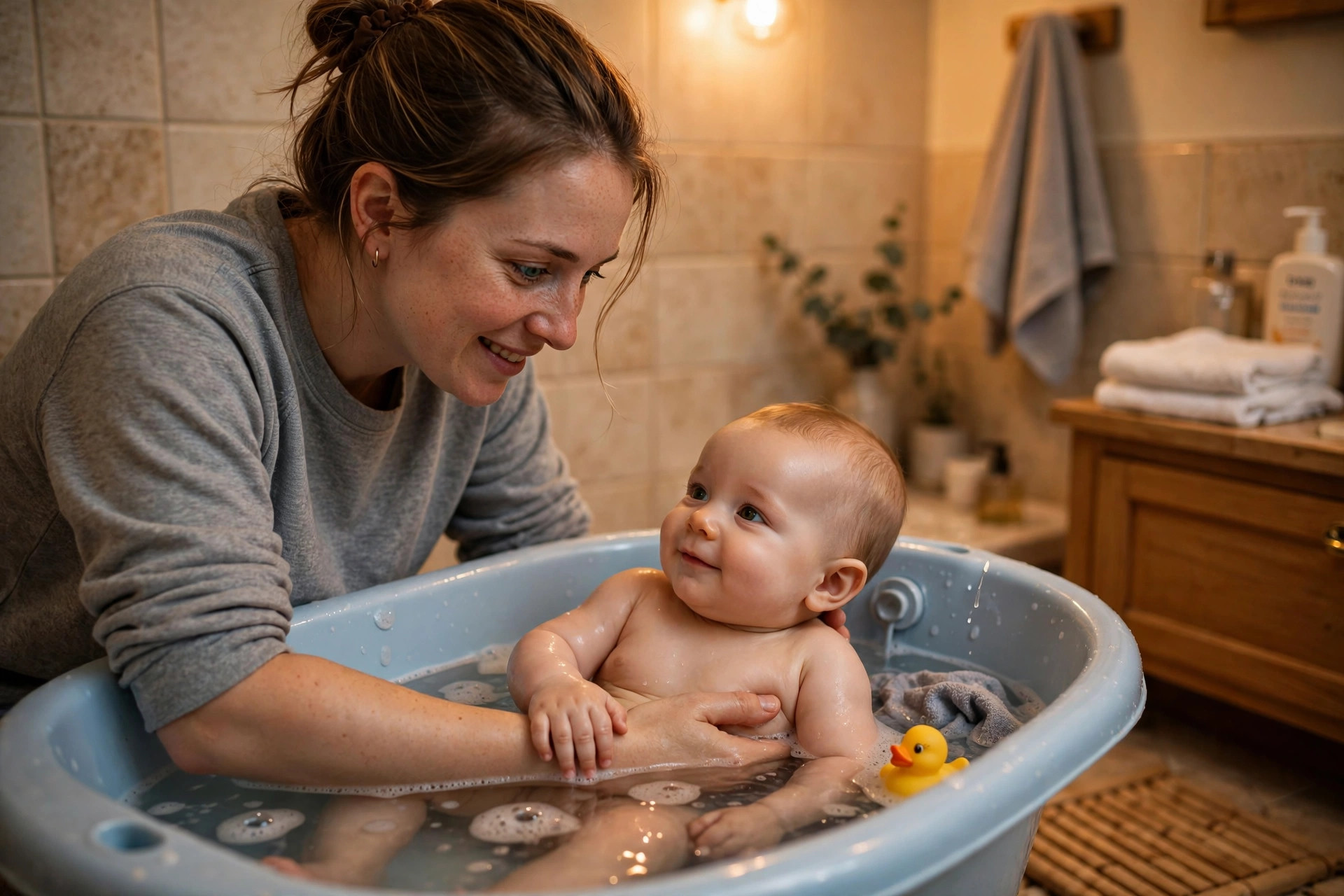
If you want extra confidence, a simple bath thermometer takes the guesswork out. Also check the room: a comfortably warm bathroom (without drafts) keeps your baby from getting cold between the water and the towel. Run warm water into the tub first, then add a little cool water while swirling it so there are no hot pockets.
How Often Should You Bathe Your Newborn?
Here’s a relief: newborns don’t need a daily bath. Two to three times a week is plenty. Their skin is delicate and still adjusting to the world outside the womb, and over-bathing can dry it out. Between baths, the “top and tail” routine — wiping the face, neck, hands, and diaper area daily — keeps them fresh.
Once your baby is crawling around and getting into messier territory (hello, sweet potato everywhere), you can bathe more often. But even then, keep baths short — about five to ten minutes — and skip the soap on most days. Plain warm water does the job.
Step-by-Step: Your First Tub Bath
Once the cord stump has fallen off, you can graduate to a baby bathtub. Here’s the routine, start to finish.
- Set up first. Fill the baby tub with about 5 cm (2 inches) of warm water. Place it on a stable surface at a comfortable height — many parents use the bathroom counter or the kitchen table.
- Undress your baby and gently lower them into the tub, supporting the head and neck with one hand and guiding the body with the other. Keep one hand on your baby at all times.
- Wash face first with a plain damp washcloth — no soap near the eyes.
- Wash the body from the neck down. Use a small amount of mild, fragrance-free baby wash on the washcloth for the creases: neck, armpits, behind the ears, and the diaper area last.
- Rinse by cupping warm water over the body with your free hand, keeping soap away from the face.
- Wash the hair (if needed — once or twice a week is enough for most newborns). Support the head, apply a pea-sized drop of baby shampoo, massage gently, and rinse by tilting the head slightly back so water runs away from the face.
- Lift out and wrap in a warm hooded towel immediately. Newborns lose heat fast, so don’t linger.
- Pat dry — don’t rub — paying attention to skin folds. Apply a light, fragrance-free moisturizer if the skin looks dry, then dress your baby.
Bath time works best as part of a rhythm, not a battle. Pick a calm moment of the day — many families love it as the first step of the bedtime routine — and keep it short, warm, and relaxed. A calm parent makes a calm baby.
Choosing Bath Products for Newborns
Less is more with newborn skin. Choose a mild, fragrance-free cleanser made for babies, and use only a tiny amount. Avoid adult soaps, bubble baths, and anything with heavy fragrance or dyes — these can irritate delicate skin and eyes. You don’t need a separate product for every body part; one gentle wash for body and a mild baby shampoo (or the same wash, if it’s labeled for hair too) is enough.
After the bath, if your baby’s skin looks dry or flaky, a thin layer of fragrance-free baby moisturizer helps. Flaky skin in the first couple of weeks is very common and usually resolves on its own. For more on keeping newborn skin comfortable, see our guide to newborn skin care basics.
Baby Bath Safety Tips Every Parent Should Know
- Never leave your baby unattended — not for a second, not even in a shallow inch of water. If the doorbell rings or the phone buzzes, wrap your baby in a towel and take them with you.
- Keep one hand on your baby at all times in the tub. Newborns are surprisingly slippery when wet.
- Set your water heater to 49°C (120°F) or lower to prevent accidental scalds from the tap.
- Skip bath seats and rings as safety devices. They can tip or give a false sense of security — they never replace your hands and eyes.
- Use a small baby tub rather than a full-size bathtub until your baby can sit steadily on their own.
- Keep supplies within arm’s reach so you never have to step away mid-bath.
- Be careful with the faucet. Turn it off fully, or cover it with a soft spout cover, so your baby can’t bump into hot metal.
What If My Baby Cries During Bath Time?
Some babies take to water immediately; others protest loudly. Both are normal. If your baby cries, check the basics first: is the water too warm or too cool? Is the room drafty? Are they hungry or overtired? Timing baths for a calm, alert window — not right before a feed or nap — helps a lot.
For a reluctant bather, try easing in slowly: start with the feet in the water, keep a warm washcloth on their tummy, and talk or sing softly. Over a few baths, most babies come around. If crying escalates into real distress, it’s fine to cut the bath short and try again another day — there’s no rule that says every bath must be a full production. If fussiness is a bigger pattern, our guide to understanding baby cries can help you read the signals.
Making Bath Time Part of the Routine
Bath time earns its place as a beloved ritual because it signals the day is winding down. A warm bath, a soft towel, a quiet feed, and dim lights tell your baby’s body that sleep is coming. It doesn’t need to happen every night to work — even a few evenings a week builds the association.
Many parents pair bath time with a gentle baby massage afterward, which can be wonderfully calming for both of you. Keep the lights low, keep your voice soft, and let the routine do its quiet work.
When to Call Your Pediatrician
Bath time can reveal little things worth mentioning at your next visit: a cord stump that smells bad, oozes, or bleeds beyond a few drops; a rash that spreads or doesn’t improve; or skin that’s persistently dry, cracked, or scaly despite gentle care. And if bath water ever gets into the ears, don’t panic — a gentle pat dry of the outer ear is all that’s needed; call your pediatrician only if you notice discharge or your baby seems in pain.
This article is for general information and isn’t a substitute for professional medical advice.
Frequently Asked Questions
How often should I bathe my newborn?
Two to three times a week is plenty for a newborn. Between baths, wipe the face, neck, hands, and diaper area daily. Once your baby is older and messier, you can bathe more often, but keep baths short and skip soap most days.
What water temperature is safe for a baby bath?
Aim for comfortably warm water around 37°C (98.6°F). Test it with the inside of your wrist or elbow — it should feel warm, not hot. For extra confidence, use a bath thermometer, and set your home water heater to 49°C (120°F) or lower.
Can I use soap on my newborn?
Yes, but sparingly. Use a small amount of mild, fragrance-free baby wash on the creases (neck, armpits, diaper area) and plain water everywhere else. Skip soap on the face, and avoid adult soaps, bubble baths, and heavily fragranced products.
When can I switch from sponge bath to tub bath?
Once the umbilical cord stump falls off and the area is healed — usually within one to two weeks. If your baby boy was circumcised, wait until that site is fully healed too. Until then, stick to sponge baths.
How long should a baby bath last?
Five to ten minutes is ideal. Newborns lose body heat quickly, so keep it short, and wrap your baby in a warm towel the moment they’re out of the water.
My baby hates baths. What should I do?
Check the water temperature and room warmth, and try bathing at a calm, alert time of day. Ease in slowly, keep a warm washcloth on their tummy, and talk or sing softly. Most babies warm up to baths within a few tries — and it’s always okay to cut a bath short and try again tomorrow.
Ready for the next everyday skill? Our complete diapering guide walks you through changes step by step, and feeding your newborn covers the other big daily routine.