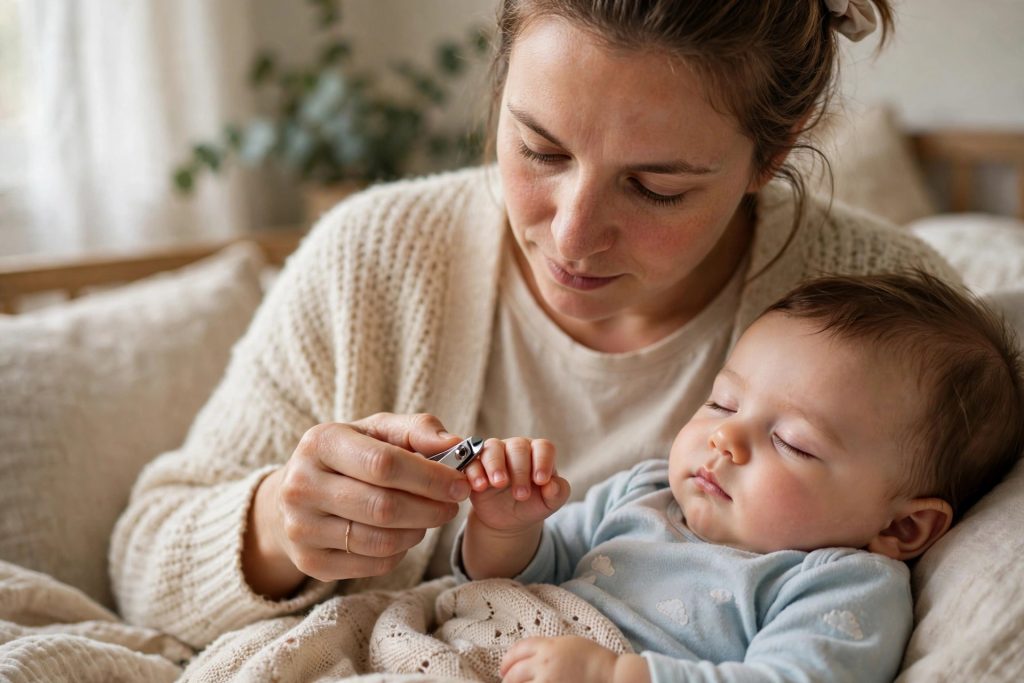
Baby nails are absurdly tiny — and absurdly sharp. Many newborns arrive with nails like little paper edges, and within days those flailing hands find their cheeks, leaving red scratches that make every parent’s heart sink. Then comes the real hurdle: actually trimming them. The fingers are minuscule, the baby is squirming, and the fear of nicking that paper-thin skin is very real. Here’s the reassuring truth: once you know the timing and technique, cutting baby nails becomes a quick, calm, two-minute job.
When Can I Start Cutting My Baby’s Nails?
From birth, if needed. There’s no minimum age — if your newborn’s nails are long or scratching their face, you can trim or file them in the first week. Newborn nails are soft and thin, which makes them easy to trim but also easy to tear accidentally (long sleeves and swaddles catch on them constantly). Many parents find that gently filing with an emery board is enough for the first couple of weeks, moving on to clippers once the nails firm up a little.
Don’t be surprised if a nail tears on its own in the early days — it happens, and a quick smooth with a file fixes it. The newborn period is full of these tiny learning curves, from caring for the umbilical cord stump to figuring out feeds. Nail care is just one more small skill you’ll pick up faster than you expect.
The Best Time to Trim (Timing Is Everything)
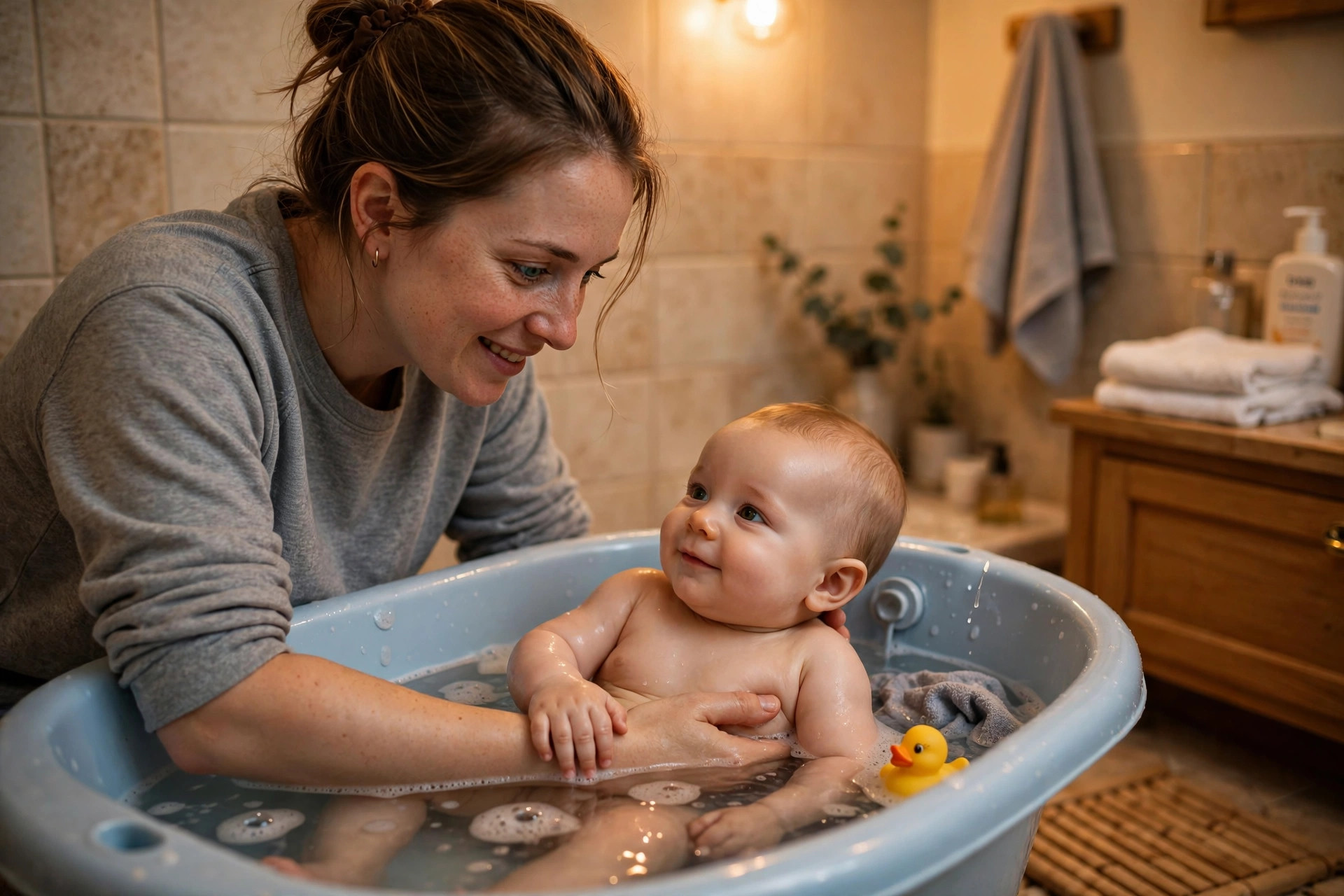
Most nail-trimming disasters happen because of bad timing, not bad technique. A wide-awake, hungry, wriggly baby and sharp clippers are a stressful combination. Instead, choose one of these calm windows:
- Right after a bath. Nails are softer and easier to cut, and babies are often drowsy and relaxed afterward. This is the single best time.
- While your baby is sleeping. Deep sleep — limp limbs, slow breathing — is ideal. Many parents make this their regular routine, trimming one hand per nap.
- While feeding. A baby nursing or taking a bottle is often still enough for a quick, careful trim.
- During a calm, content moment. That drowsy, milk-drunk window after a feed works well too.
Good lighting matters as much as timing — natural daylight or a bright lamp, never a dim nursery at midnight. If your baby wakes mid-trim and starts fussing, stop. There’s no rule that says all ten fingers must be done in one sitting. Learning your baby’s rhythms is part of the broader picture of newborn sleep basics — and a sleeping baby is a still baby, which is exactly what you want here.
Baby Nail Clippers vs. File: Which Should You Use?
There’s no single right tool — it depends on your baby’s age and your own confidence. Here’s how the options compare:
- Baby nail clippers. Small, with curved blades sized for tiny nails. Fast and effective once nails firm up (usually after the first month), but they demand good light and a steady hand. This is what most parents graduate to.
- Baby nail scissors. Rounded-tip scissors designed for infants. They give you more control than clippers for some parents, especially on toenails.
- Emery board or baby nail file. The gentlest option and the best starting point for newborns. Virtually impossible to cut the skin with, though it takes longer and needs repeating more often.
- Electric baby nail trimmers. Battery-powered files with cushioned heads. Very safe and popular with nervous first-timers, though slower than clippers.
For the first few weeks, a simple emery board is honestly enough. Move to clippers or scissors when the nails get thicker and filing starts feeling like a chore — or when your confidence catches up, whichever comes first.
How to Cut Baby Nails: A Calm Step-by-Step
Once you’ve picked your moment (after a bath is ideal, while the nails are soft), the technique itself is straightforward:
- Get positioned. Sit somewhere comfortable with good light. Hold your baby securely — on your lap, in the crook of your arm while feeding, or beside you while they sleep.
- Isolate one finger. Gently hold the finger and press the fingertip pad down and away from the nail. This pulls the skin back from the cutting edge — the single most important move for avoiding nicks.
- Cut straight across. Follow the natural curve of the nail, cutting less than you think you need to. Leave a thin white edge; cutting into the pink quick hurts and bleeds.
- Smooth the edges. Run a baby emery board over the cut edge to remove any sharp corners that could scratch.
- Move to toenails. Toenails grow more slowly and need trimming less often — every couple of weeks is usually plenty. Cut straight across, not curved, to discourage ingrown edges.
- Leave the cuticles alone. Never cut or push back cuticles; they protect the nail bed from infection.
Cut less than you think you need to — you can always file the rest. A conservative trim with smooth edges beats a short, jagged one every time.
What to Do If You Nick the Skin
It happens to nearly every parent at least once, so first: don’t panic, and don’t feel guilty. Here’s what to do:
- Stay calm. Your baby takes emotional cues from you. A nick looks dramatic because tiny fingers bleed freely, but the cut is superficial.
- Apply gentle pressure. Press a clean piece of gauze or a soft cloth against the spot for a few minutes. The bleeding almost always stops quickly on its own.
- Don’t use bandages on fingers or toes. Small bandages are a choking hazard if they come loose and end up in your baby’s mouth.
- Skip the alcohol and hydrogen peroxide. They sting and aren’t needed — clean water and gentle pressure are enough.
- Watch it over the next day or two. If you notice increasing redness, swelling, warmth, or pus around the nail, check in with your pediatrician.
After a nick, many parents switch to filing for a while until their confidence returns. That’s a perfectly fine strategy — the file doesn’t care about your nerves.
The Mittens Debate: Should Newborns Wear Mittens?
Mittens are the classic shortcut for preventing face scratches, and in the very early days they’re harmless enough. But they’re a workaround, not a solution — and they come with trade-offs worth knowing:
- The case for mittens: they prevent scratches immediately, no skill required, and they’re useful in the first week or two before you’ve worked up the courage to trim.
- The case against: mittens block the sensory feedback babies get from their hands — touching their face, grasping your finger, exploring. Hands are a newborn’s primary learning tool. Mittens can also overheat little hands, and loose threads inside cheap mittens can wrap around tiny fingers.
The balanced approach most parents land on: use mittens sparingly in the first week or two if scratches are a real problem, but make trimmed nails the actual goal. If you want to keep those scratchy hands contained at night without mittens, a proper swaddle does the job while your baby sleeps — see how to swaddle your baby safely for the technique. Those constantly moving hands are no accident, by the way — they’re driven by fascinating newborn reflexes that explain why little fingers are always in motion.
When to Call Your Pediatrician
Nail care rarely needs medical attention, but check in with your pediatrician if you notice redness, swelling, or pus around a nail (possible infection), a nail that looks ingrown or is growing into the surrounding skin, or any nail that looks misshapen, discolored, or isn’t growing normally. As your baby grows out of the newborn nail phase, the next frontier is usually the mouth — our guide to baby teething symptoms and remedies will have you ready for that.
Frequently Asked Questions
When can I start cutting my baby’s nails?
From birth, whenever they’re long enough to scratch. Newborn nails are soft, so many parents start with a gentle emery board in the first week or two and move to baby clippers or scissors once the nails firm up. There’s no age you need to wait for — go by need, not the calendar.
Are baby nail clippers safe?
Yes — baby clippers are designed with small, curved blades for tiny nails and are perfectly safe when used with good lighting and a calm, still baby. The keys are pressing the fingertip pad away from the nail before cutting and trimming less than you think you need. If you’re nervous, start with a file and graduate to clippers when you feel ready.
What should I do if I cut the skin while trimming?
Don’t panic — it happens to most parents. Apply gentle pressure with clean gauze until the bleeding stops (it usually stops quickly), and skip bandages on little fingers since they’re a choking hazard. Watch the spot for a day or two; if redness, swelling, or pus develops, call your pediatrician.
Should newborns wear mittens?
Mittens are fine as a short-term fix for face scratches in the first week or two, but they’re not a long-term solution — they block the sensory exploration babies do with their hands. Regularly trimmed nails are the better answer, and a safe swaddle can keep hands contained at night.
This article is for general information and isn’t a substitute for professional medical advice. When something doesn’t look right, trust your instincts and check with your pediatrician.