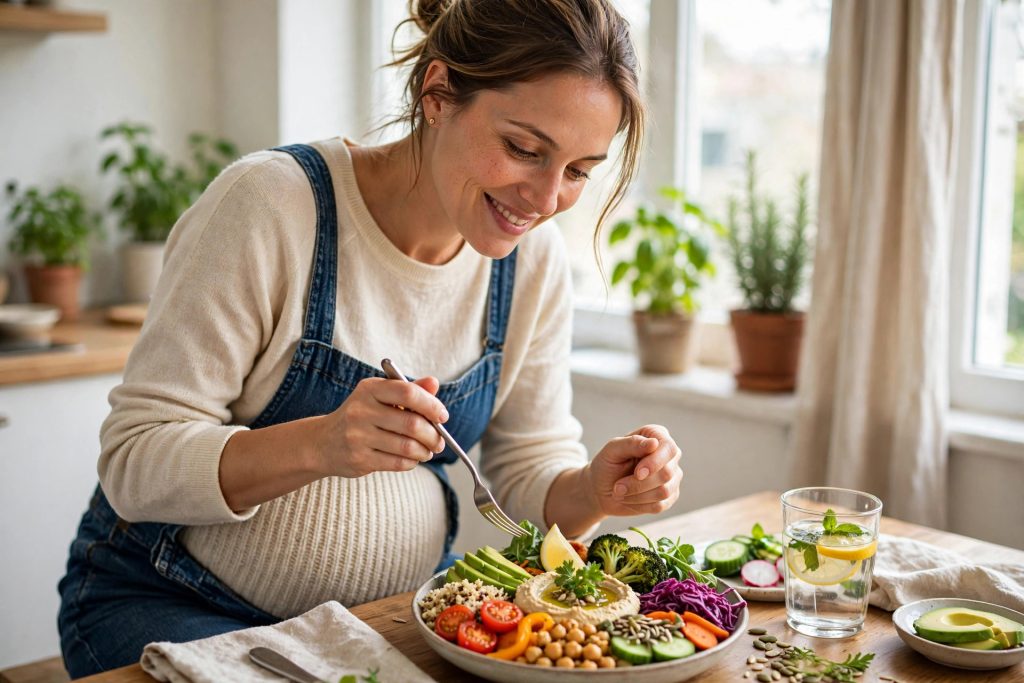
Eating well during pregnancy isn’t about perfection — it’s about giving your growing baby a steady supply of the nutrients that matter most, while keeping yourself fueled through one of the most demanding things a body can do. The good news: you don’t need a complicated diet or expensive superfoods. A varied, balanced way of eating built on real foods covers nearly everything you and your baby need.
This guide covers the key nutrients of pregnancy, how much you actually need to eat, simple meal ideas for each stage, and how to handle the realities — nausea, aversions, cravings — that can make “eating well” feel aspirational.
How Much Should You Eat During Pregnancy?
Despite the old “eating for two” saying, you don’t need double the food. In the first trimester, most people need roughly their usual intake. In the second trimester, needs rise modestly — think one extra healthy snack, not a second dinner. The third trimester adds a bit more. Your provider will track your weight gain and can give you personalized guidance, since the right amount depends on your starting point and your pregnancy.
A more useful mindset than counting calories: eat regularly, don’t skip meals, and make most of what you eat genuinely nourishing. Blood sugar crashes make nausea, fatigue, and mood dips worse — steady meals and snacks are one of the simplest ways to feel better day to day.
The Key Nutrients That Matter Most
Folate and folic acid
Folate is critical in early pregnancy for your baby’s neural tube development — the structure that becomes the brain and spinal cord. Because this development happens very early, ideally starting before conception, most providers recommend a daily prenatal vitamin containing folic acid (the supplement form of folate) from the time you start trying. Food sources include lentils, chickpeas, asparagus, spinach, and fortified cereals. If you haven’t been taking folic acid, mention it at your first prenatal visit — it’s a common situation, not a catastrophe.
Iron
Your blood volume increases substantially during pregnancy, and iron is what carries oxygen in that blood — to you and to your baby. Low iron is common in pregnancy and can leave you exhausted beyond normal pregnancy tiredness. Pair iron-rich foods (lean red meat, poultry, lentils, beans, spinach, fortified cereals) with vitamin C (citrus, bell peppers, strawberries) to boost absorption. Many prenatal vitamins include iron; if yours doesn’t sit well, ask your provider about options rather than skipping it.
Calcium and vitamin D
Your baby needs calcium to build bones and teeth — and if your intake is low, your body will draw it from your own bones. Dairy products, fortified plant milks, tofu made with calcium sulfate, and leafy greens are good sources. Vitamin D helps your body use calcium; many people are low, especially with limited sun exposure, so it’s worth discussing with your provider.
DHA (an omega-3 fatty acid)
DHA supports your baby’s brain and eye development. Low-mercury fatty fish — salmon, sardines, trout — are the best food sources, and most guidance suggests a couple of servings a week. If you don’t eat fish, talk to your provider about whether a DHA supplement makes sense for you.
Protein
Protein needs rise during pregnancy to support your baby’s growing tissues, the placenta, and your expanding blood supply. Aim to include a protein source at each meal: eggs, Greek yogurt, legumes, nuts, poultry, fish, or tofu. If meat aversions strike in the first trimester (extremely common), lean on dairy, eggs, beans, and nut butters instead.
Iodine and choline
Two underappreciated nutrients: iodine supports thyroid function and brain development (iodized salt and dairy are easy sources), and choline — found in eggs, meat, and soy — also supports brain development. Most prenatal vitamins include iodine; choline is worth getting from food since many prenatals skimp on it.
Simple Meal Ideas by Trimester
First trimester: survival eating
If nausea rules your days, the goal is simply to eat something, regularly. Bland, carb-rich foods often sit best: toast, crackers, rice, bananas, plain pasta. Ginger tea or ginger candies help some people. Small, frequent meals beat three big ones. Don’t stress about perfect nutrition right now — your prenatal vitamin is covering the critical bases, and appetite typically returns in the second trimester.
Second trimester: building the routine
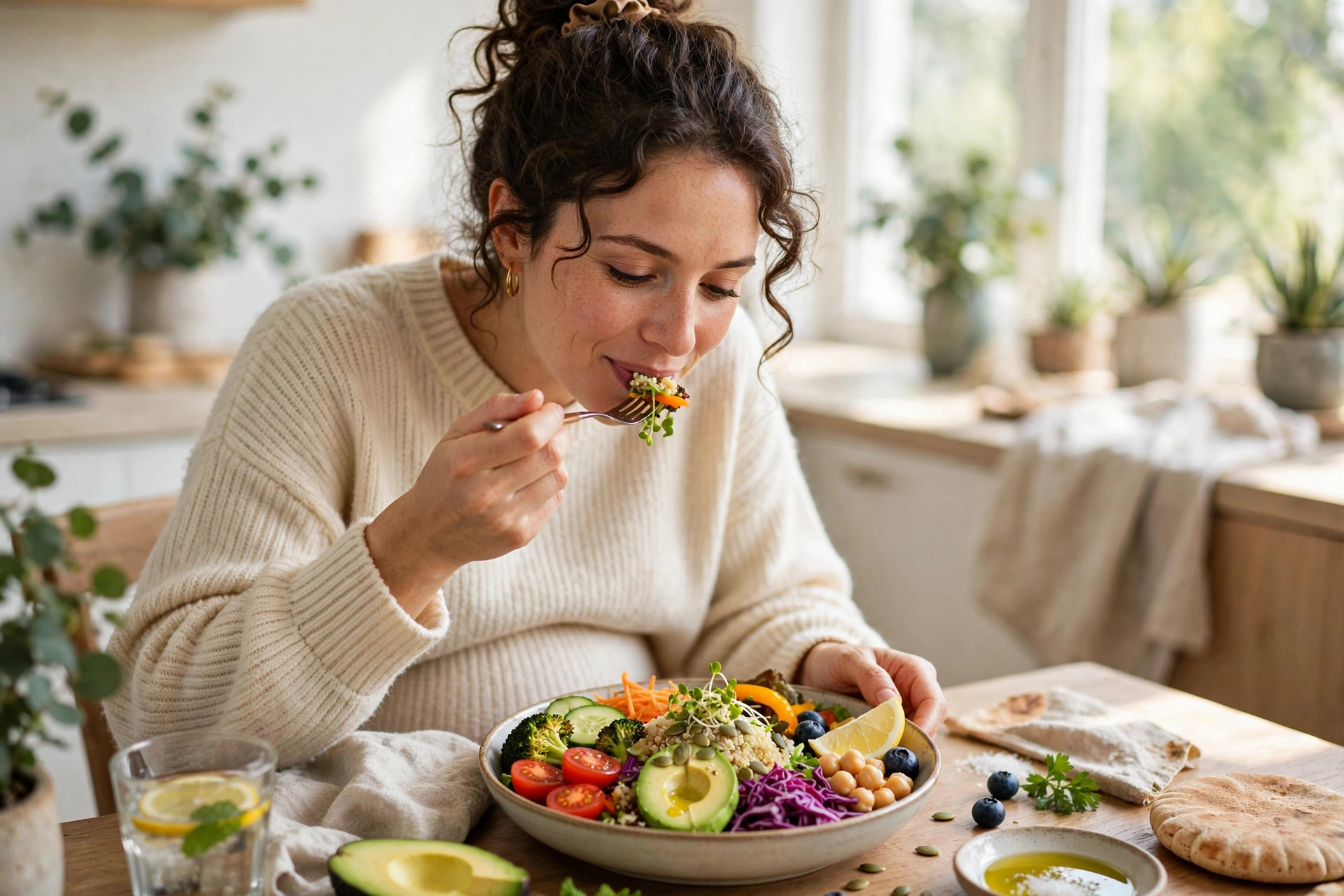
With appetite back, this is the time to establish your rhythm. Think in simple templates rather than recipes: a protein + a whole grain + vegetables + a healthy fat. Examples: Greek yogurt with berries and nuts for breakfast; a lentil soup with whole-grain bread for lunch; salmon, roasted sweet potato, and greens for dinner. Keep snacks real — apple with peanut butter, hummus with vegetables, a handful of trail mix.
Third trimester: small and frequent
As your uterus crowds your stomach, big meals become uncomfortable. Shift to five or six smaller meals. Nutrient-dense and easy to digest wins: smoothies with Greek yogurt and frozen fruit, oatmeal topped with nuts, bean and cheese quesadillas, hard-boiled eggs with whole-grain crackers. Keep iron-rich foods in the rotation and stay on top of hydration — it helps with swelling, constipation, and those late-pregnancy headaches.
The simplest pregnancy nutrition rule: eat real food, regularly, in reasonable amounts, with protein at every meal. Everything else — the specific nutrients, the meal timing — is refinement on top of that foundation.
Hydration: The Underrated Essential
Water needs rise in pregnancy — you’re building amniotic fluid, increasing blood volume, and flushing waste for two. Aim to drink steadily through the day rather than chugging large amounts at once. Signs you’re falling behind include dark urine, headaches, dizziness, and constipation. Keep a water bottle with you always; if plain water bores you, add lemon, cucumber, or a splash of juice. Limit sugary drinks, which add calories without nourishment.
Can You Eat Well on a Vegetarian or Vegan Diet?
Absolutely — with a bit of planning. Vegetarian pregnancies are well-supported by the evidence as long as key nutrients are covered: protein from varied plant sources, iron (with vitamin C for absorption), B12 (supplement this — it’s not reliably available from plant foods), calcium, DHA (algae-based supplements exist), and zinc. Vegan pregnancies deserve a conversation with your provider or a dietitian to make sure B12, iron, iodine, and DHA are genuinely covered, ideally with blood work to confirm. It’s very doable — it just shouldn’t be improvised.
What About Cravings and Aversions?
Cravings (pickles and ice cream earned its cliché honestly) and aversions (suddenly unable to face chicken) are normal, driven by hormonal shifts in smell and taste. Indulge cravings in moderation — they’re harmless unless they displace real meals or involve non-food items. If you find yourself craving things like ice, clay, or starch, mention it to your provider: it can signal iron deficiency, a condition with a name (pica) and a straightforward fix.
For aversions, work around them rather than fighting them. Can’t face meat? Get protein elsewhere. Vegetables repulsive? Try fruit, which offers many of the same vitamins. This, too, usually passes.

Foods to Be Careful With
While most foods are fine, a short list deserves caution during pregnancy — raw or undercooked meats and fish, unpasteurized dairy, high-mercury fish, deli meats eaten cold, and alcohol. Caffeine is best kept moderate. Our complete guide to foods to avoid during pregnancy explains the why behind each one, calmly and without fear-mongering.
Frequently Asked Questions
What are the most important nutrients in pregnancy?
Folate/folic acid, iron, calcium, vitamin D, DHA, protein, iodine, and choline top the list. A daily prenatal vitamin covers the baseline; food fills in the rest. If you eat a varied diet with protein at every meal plus fruits, vegetables, and whole grains, you’re covering most of it.
How much should I eat during pregnancy?
Not double. Needs stay roughly normal in the first trimester and rise modestly in the second and third — think an extra snack or small meal, not a second dinner. Your provider will monitor your weight gain and give personalized guidance.
Can I be vegetarian while pregnant?
Yes, with attention to protein variety, iron (paired with vitamin C), B12, calcium, and DHA. Vegan pregnancies should involve your provider or a dietitian to confirm B12, iron, iodine, and DHA are covered, ideally with blood work.
What snacks are good during pregnancy?
The best snacks combine protein with fiber or healthy fat: apple with peanut butter, Greek yogurt with berries, hummus with vegetables, a small handful of nuts, or cheese with whole-grain crackers. They steady your blood sugar and keep nausea and energy dips at bay.
Do I need to take a prenatal vitamin if I eat well?
Yes — even excellent diets commonly fall short on folic acid, iron, and iodine during pregnancy, and needs are higher than usual. Think of the prenatal as insurance, not a replacement for good food. If yours causes nausea, try taking it at night or with food, or ask your provider about alternatives.
And when your baby arrives, your nutrition journey continues — our guide to healthy eating while breastfeeding picks up where this one leaves off.
This article is for general information and isn’t a substitute for professional medical advice. Talk to your provider or a registered dietitian about your individual nutrition needs during pregnancy.