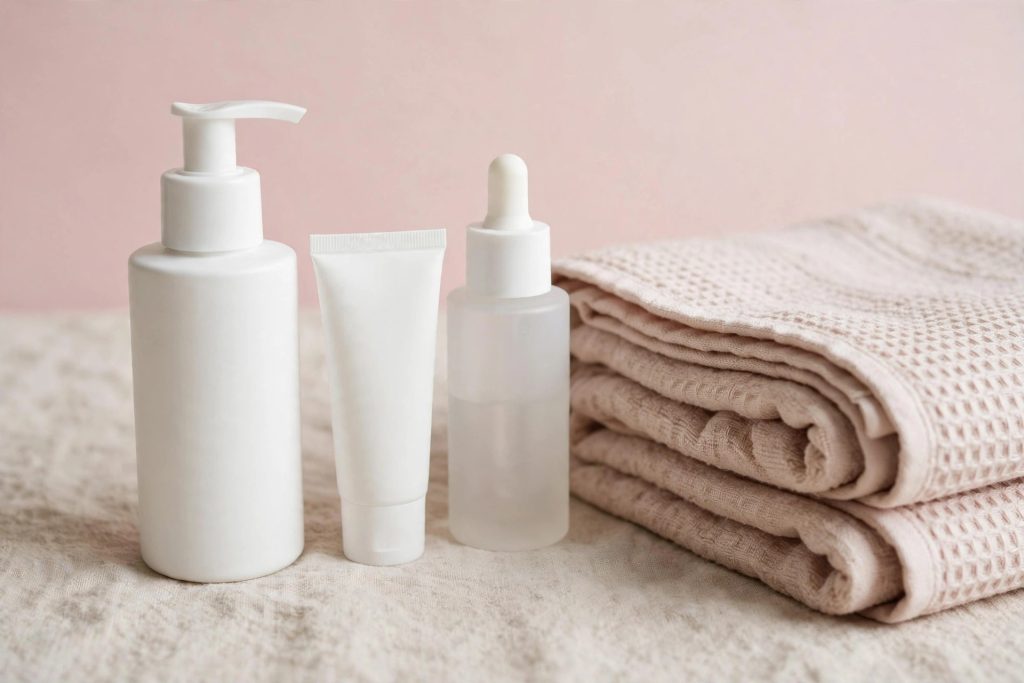
Standing in the baby aisle — or scrolling through hundreds of lotions, washes, and balms online — can leave any new parent feeling overwhelmed. Every bottle promises something: gentler, more natural, pediatrician-recommended, tear-free. But when it comes to your newborn’s delicate skin, the truth is refreshingly simple: less is almost always more. You don’t need a twelve-step skincare routine. You need a handful of safe basics, the ability to read a label, and the confidence to skip everything else.
This guide walks you through exactly what your baby’s skin actually needs, which products are worth buying, what to look for in baby lotion and other essentials, and how to spot the ingredients worth avoiding — all without recommending a single brand.
What Newborn Skin Actually Needs (Hint: Very Little)
Newborn skin is thinner and more permeable than adult skin, which means it absorbs substances more readily and dries out faster. That doesn’t mean it needs heavy-duty treatment, though. For the first weeks of life, most babies need nothing more than warm water for bathing and a simple fragrance-free baby product or two when the occasion calls for it.
Your baby’s skin is also still learning how to do its job. In the first days, you may notice flaky patches, tiny white bumps (milia), or a few newborn pimples. These are almost always normal and resolve on their own. Slathering products on healthy, intact skin “just in case” can actually cause more problems than it solves, including irritation and rashes that weren’t there to begin with.
The guiding principle: if your baby’s skin looks comfortable and isn’t dry, red, or cracked, you may not need any product at all.
Newborn Skincare Essentials: What You Actually Need
A well-stocked diaper bag doesn’t need a pharmacy inside it. Here are the true newborn skincare essentials:
A gentle, fragrance-free cleanser
You don’t need a separate shampoo, body wash, and bubble bath. One mild, fragrance-free cleanser formulated for babies can do it all in the early months. Look for a liquid wash with a short ingredient list — anything designed to foam aggressively or lather into a cloud is doing more work than your baby’s skin needs.
A simple moisturizer for dry spots
This is where knowing what to look for in baby lotion matters. A good baby lotion or cream should be fragrance-free, dye-free, and hypoallergenic. Creams and ointments (thicker formulas) moisturize better than thin lotions for dry areas like cheeks, hands, and knees. Many parents find a plain, unscented moisturizer covers every situation: post-bath moisture, dry winter cheeks, and patchy elbows.
Diaper-area protection
A zinc-based barrier cream is one of the few products nearly every parent ends up using. Applied at each diaper change when redness appears, it protects delicate skin from moisture. During your first newborn checkups and pediatrician visits, feel free to ask which type of barrier product your pediatrician prefers — it’s a common and welcome question.
What you can skip (at least for now)
- Baby powder: Pediatricians have moved away from recommending it; inhaled powder can irritate tiny lungs.
- Bubble bath and scented soaps: Fun-smelling, but fragrance is one of the most common sources of irritation.
- Multiple “system” products: If one gentle cleanser and one simple moisturizer work, you don’t need a matching line of six.
- Sunscreen for young infants: For babies under six months, shade and protective clothing are the recommended approach — ask your pediatrician about sunscreen use in the early months.
Reading Labels: What to Look for in Baby Lotion and Other Products
The front of the bottle is marketing; the back is where the truth lives. Here’s how to read it like someone who knows what matters.
Choose fragrance-free, not just “unscented”
This distinction trips up a lot of parents. “Fragrance-free” means no fragrances or masking scents were added to the product. “Unscented” can mean the product contains masking fragrances to hide the smell of its ingredients. For fragrance-free baby products that are genuinely gentle, look for the words “fragrance-free” on the label — and scan the ingredient list for “parfum,” “perfume,” or “fragrance,” which are catch-all terms that can hide dozens of chemicals.
Look for dye-free formulas
Baby products have no business being pink, blue, or purple. Dyes add nothing but color, and they add one more thing that can irritate sensitive skin. The best baby lotions and washes are white or clear.
Ingredients to approach with caution
Brand-neutral doesn’t mean we can’t talk specifics about ingredients. Common ones worth avoiding or minimizing in baby products include:
- Fragrance/parfum: As above — a leading cause of contact irritation in babies.
- Phthalates: Sometimes hiding inside “fragrance,” so another reason to go fragrance-free.
- Parabens: Preservatives many parents prefer to avoid; plenty of effective products skip them.
- Formaldehyde-releasing preservatives (such as DMDM hydantoin or quaternium-15): used to extend shelf life, but potentially irritating.
- Sodium lauryl sulfate (SLS): A harsh foaming agent; gentler cleansers use milder alternatives.
- Essential oils in high concentrations: “Natural” doesn’t automatically mean gentle for newborns — more on that below.
A short ingredient list isn’t a guarantee of safety, but it’s a good starting point. The fewer unfamiliar ingredients, the fewer variables your baby’s skin has to contend with.
Are “Natural” or “Organic” Baby Products Safer?
This is one of the most common questions parents ask, and the honest answer is: not necessarily. “Natural” is not a regulated term on personal care products, so a label can claim it while still containing ingredients that irritate newborn skin. Poison ivy is natural, after all.
Some plant-derived ingredients — like certain essential oils, citrus extracts, or botanical fragrances — can actually be more irritating to delicate skin than their synthetic counterparts. An “organic lavender baby lotion” can still cause a rash if your baby is sensitive to lavender oil.
That said, many natural and organic products are genuinely simple and gentle. The rule stays the same regardless of the marketing: read the full ingredient list, choose fragrance-free and dye-free, and judge the product by what’s in it — not by the leaf on the packaging.
Labels like “natural,” “organic,” and “hypoallergenic” aren’t regulated guarantees. The ingredient list is the only label that matters — read it every time, even for products you’ve bought before, because formulas change.
How to Patch-Test a New Product (Every Time)
Even the gentlest product can disagree with your baby’s particular skin. A patch test takes two minutes and can save you a full-body rash. Here’s how:
- Pick a small test area — the inside of the forearm or a small patch on the thigh works well.
- Apply a thin layer of the new product, just as you would during normal use.
- Wait 24 hours before using it more broadly. Keep the area clean and watch it.
- Look for signs of irritation: redness, small bumps, dryness, swelling, or any change in how your baby behaves (extra fussiness when the area is touched).
- If the test area looks fine, go ahead and use the product normally — but introduce only one new product at a time, so you’ll know the culprit if a reaction appears later.
This one-at-a-time rule is especially important in the newborn months. If you start a new lotion, wash, and diaper cream on the same day and a rash appears, you’ll have no idea which one caused it.
A Simple Routine That Covers Most Babies
Put it all together and a sensible newborn skincare routine looks like this:
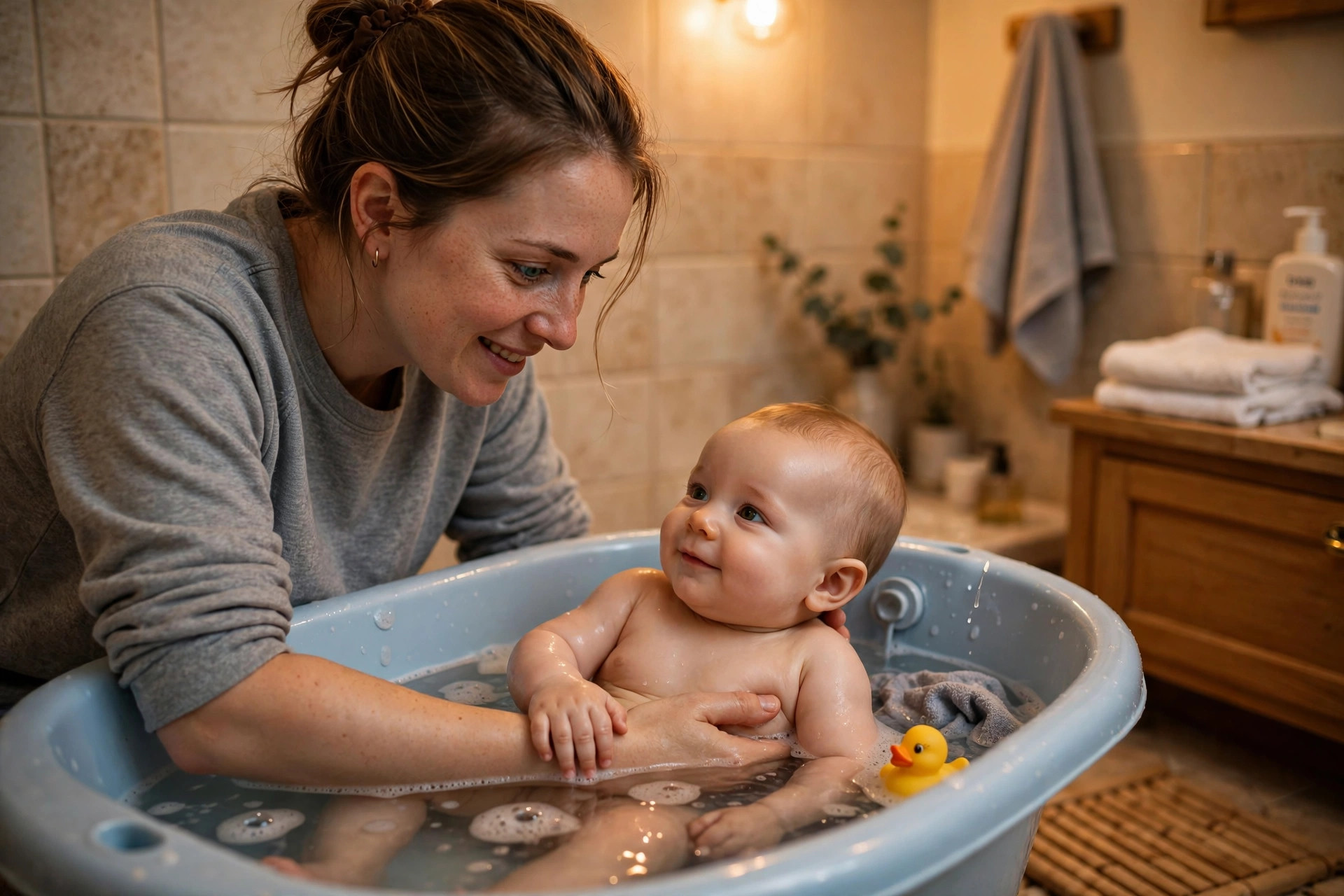
- Bathing: 2–3 times per week with warm water and a small amount of fragrance-free cleanser (daily sponge-cleaning of the face, neck folds, and diaper area in between). You’ll find more detail in our newborn skin care basics guide.
- After bathing: Pat dry gently — don’t rub — and apply a thin layer of fragrance-free moisturizer to any dry areas while skin is still slightly damp.
- Daily: Moisturizer on dry spots as needed; barrier cream in the diaper area at the first sign of redness.
- Massage time: If you enjoy baby massage, a small amount of plain, unscented oil or lotion makes it smoother — see our guide to baby massage benefits and techniques for how to get started.
When to Call Your Pediatrician
Most newborn skin quirks are harmless, but contact your pediatrician if you notice a rash that spreads quickly, blisters, oozing or crusting, swelling, skin that feels hot to the touch, or any rash accompanied by fever or unusual fussiness. Also check in if a dry patch doesn’t improve after a week or two of gentle moisturizing, or if you suspect an allergic reaction to a product. And if flaky patches appear on your baby’s scalp rather than their skin, our guide to cradle cap causes and treatment explains what’s normal and what to do about it.
This article is for general information and isn’t a substitute for professional medical advice.
Frequently Asked Questions
Does my newborn need lotion?
Not necessarily. Many newborns do fine with no moisturizer at all in the early weeks. If you notice dry, flaky patches — common on the hands, feet, and around the ankles — a thin layer of fragrance-free baby lotion or cream on those spots is plenty. Healthy, comfortable skin doesn’t need product “just in case.”
What ingredients should I avoid in baby products?
The big ones to skip are added fragrances (listed as “fragrance,” “parfum,” or “perfume”), dyes, parabens, phthalates, formaldehyde-releasing preservatives, and harsh foaming agents like sodium lauryl sulfate. When in doubt, choose products with short ingredient lists that are labeled fragrance-free and dye-free.
Are “natural” baby products safer than regular ones?
Not automatically. “Natural” isn’t a regulated claim, and some plant-derived ingredients — including essential oils and botanical fragrances — can irritate newborn skin. Judge every product by its full ingredient list rather than its marketing, and patch-test new products regardless of how they’re labeled.
How do I patch-test a new baby product?
Apply a small amount to a patch of skin on your baby’s inner forearm or thigh, wait 24 hours, and watch for redness, bumps, dryness, or swelling. If the skin looks normal, you can use the product more broadly. Introduce only one new product at a time so you can identify the cause if a reaction ever appears.
How often should I bathe my newborn?
Two to three baths per week is plenty for most newborns, with daily gentle cleaning of the face, neck folds, hands, and diaper area in between. Over-bathing can dry out delicate skin, so warm water and a small amount of gentle cleanser is all you need.