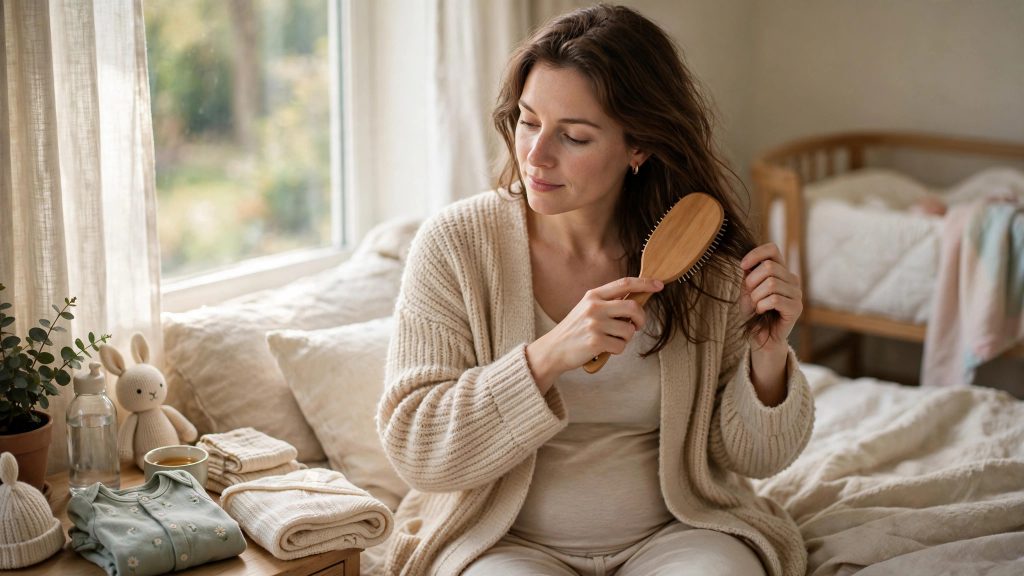
It usually starts around three or four months after birth. You’re brushing your hair, and suddenly the brush is full. You pull a clump from the shower drain that stops you cold. Strands appear on the baby, on your clothes, in your food — everywhere. For many new mothers, postpartum hair loss is genuinely distressing, and because nobody warned them, the first thought is often: is something wrong with me?
Almost certainly not. Postpartum shedding is one of the most common — and most temporary — aftereffects of pregnancy. Here’s what’s actually happening, how long it lasts, what you can do while you wait it out, and when it’s worth mentioning to your doctor.
Why Does Hair Fall Out After Pregnancy?
To understand postpartum shedding, you need to know how hair normally grows. Each hair on your head cycles through a growing phase (which lasts years), a brief transition phase, and a resting/shedding phase (a few months). At any given time, most of your hair is growing and a small fraction is shedding — that’s why finding some hair in the brush is normal every day.
Pregnancy disrupts this rhythm. High estrogen levels keep more hairs than usual in the growing phase and delay shedding — which is why many women enjoy thicker, glossier hair while pregnant. After birth, estrogen drops sharply, and all those hairs that were “held” in the growing phase shift into the shedding phase together. The result isn’t true hair loss so much as delayed, synchronized shedding — months of normal hair loss happening all at once.
This has a name — telogen effluvium — but you don’t need the jargon. What matters is the mechanism: it’s hormonal, it’s expected, and it is not a sign that your hair is damaged or that you’re going bald.
How Long Does Postpartum Shedding Last?
The typical timeline looks like this: shedding ramps up around 2 to 4 months postpartum, peaks somewhere around 4 months, and gradually eases over the following months. Most women notice things returning to normal somewhere between 6 and 12 months after birth. By your baby’s first birthday, your hair cycle has usually reset itself.
That said, bodies don’t read timelines. Some women shed heavily for a few dramatic weeks; others notice a slow thinning that drags on for months. Breastfeeding doesn’t cause it and weaning won’t stop it — it’s driven by the hormonal shift after delivery, not by feeding choices. And if you’re pregnant again quickly or experiencing major stress or illness, shedding can be more pronounced or prolonged, because those are additional triggers for the same mechanism.
One reassurance worth repeating: the hair you’re losing was always going to shed. You’re not losing “extra” hair in the long run — you’re losing it on a compressed schedule. Regrowth is already underway beneath the shedding, which is why many mothers notice frizzy baby hairs sprouting along the hairline just as the worst of the shedding eases.

Gentle Hair Care While You Shed
You can’t stop the hormonal process, but you can treat your hair kindly while it runs its course — and avoid breakage that makes shedding look worse than it is.
- Be gentle when wet. Hair is most fragile when wet. Use a wide-tooth comb instead of a brush on wet hair, and work from the ends upward.
- Loosen up. Tight ponytails, buns, and braids add traction that can snap already-vulnerable hairs. Soft scrunchies and loose styles are kinder.
- Turn down the heat. Give the flat iron and high-heat blow dryer a rest, or at least use the lowest effective setting with heat protection.
- Wash wisely. Washing doesn’t cause the shedding — skipping washes just means more hair comes out at once next time, which looks scarier. Wash as often as your hair needs.
- Consider a cut. Many mothers find a shorter style makes thinning less noticeable and regrowth easier to manage. Layers can add the illusion of volume.
- Be skeptical of miracle products. Shampoos and serums marketed for postpartum hair loss can’t change your hormones. Some may improve the appearance of fullness, but none will stop the shed.
Eating for Hair Recovery
Hair is built from protein and fueled by the same nutrients your recovering body needs. While no diet will override the hormonal shed, steady nourishment supports healthy regrowth — and it’s one more reason to eat well during the postpartum months.
Focus on adequate protein (eggs, lentils, dairy, meat, fish), iron (especially after the blood loss of childbirth — our guide to iron-rich foods is useful here), and a generally varied diet with fruits, vegetables, and healthy fats. Our postpartum nutrition guide covers the full picture, and nutrient-dense eating benefits the whole household as your baby approaches solids.
What about supplements? If your diet is reasonable, extra “hair vitamins” are unlikely to change the timeline — and some high-dose supplements can do more harm than good, especially while breastfeeding. If you suspect a true deficiency (you’re vegetarian, had heavy blood loss, or feel unusually fatigued), that’s a conversation for your doctor, ideally with bloodwork rather than guesswork.

When to Mention It to Your Doctor
For most women, postpartum shedding needs no medical attention — just time. But mention it to your provider if:
- Shedding is still heavy well past 12 months postpartum
- You’re losing hair in distinct patches or your part is widening dramatically
- You have other symptoms like extreme fatigue, feeling cold all the time, or unexplained weight changes — these can point to thyroid issues, which are more common postpartum and very treatable
- The hair loss is causing you significant distress (that alone is reason enough)
A simple thyroid check is often the first step, and it’s worth doing if anything feels off beyond typical shedding. Thyroiditis after birth is common, treatable, and frequently missed because its symptoms — fatigue, mood changes, hair loss — masquerade as ordinary new-parent exhaustion. If you’re navigating other postpartum body changes too, our guides to breastfeeding challenges and pelvic floor recovery may help you feel less alone in the process.
This article is for general information and isn’t a substitute for professional medical advice. If your hair loss seems severe or comes with other symptoms, check in with your healthcare provider.
Postpartum shedding looks dramatic but follows a simple logic: pregnancy paused your normal hair loss, and birth pressed play again. It peaks, it passes, and your hair comes back — this is a season, not a new reality.
Frequently Asked Questions
Is postpartum hair loss normal?
Yes — it’s one of the most common postpartum experiences. The hormonal drop after birth shifts many hairs into the shedding phase at once. It’s temporary and not a sign of illness or poor health.
How long will my hair keep falling out?
Shedding usually starts around 2–4 months, peaks near 4 months, and resolves by 6–12 months postpartum. Timelines vary, but steady improvement — not sudden stopping — is the normal pattern.
Will my hair grow back?
Yes. The follicles aren’t damaged; they’re just cycling. Regrowth is typically already underway during the shedding phase, and most women return to their pre-pregnancy fullness within the first year.
Does breastfeeding cause hair loss?
No. The shedding is driven by the estrogen drop after delivery, not by breastfeeding. Weaning won’t stop it, and continuing to nurse won’t make it worse.
Should I take supplements for postpartum hair loss?
Probably not necessary if you eat reasonably well — no supplement changes the hormonal timeline. If you suspect a deficiency or have heavy blood loss history, talk to your doctor about testing rather than self-supplementing, especially while breastfeeding.
When should I worry about postpartum hair loss?
Mention it to your provider if shedding continues heavily past a year, comes out in patches, or is accompanied by fatigue, feeling cold, or weight changes — a thyroid check is a sensible first step.
It’s hard to watch handfuls of hair circle the drain and not feel a pang of loss — on top of everything else your body has been through. But this, too, is your body working as designed: resetting, recalibrating, and growing you a fresh start, one baby hair at a time.