You run your fingers through your baby’s soft hair and feel it: rough, scaly patches across the scalp, maybe a little yellowish and flaky. Your stomach drops — is it an infection? An allergy? Something you did wrong? Take a breath. What you’re almost certainly looking at is cradle cap, one of the most common and most harmless skin conditions in babies. It looks alarming, feels worrying, and usually needs nothing more than patience and a gentle touch.
This guide covers what cradle cap is, what causes it, how to get rid of cradle cap safely at home, what not to do, and when it’s worth calling your pediatrician.
What Is Cradle Cap?
Cradle cap is the common name for infantile seborrheic dermatitis — scaly, sometimes greasy patches that appear on a baby’s scalp. It typically shows up in the first few weeks or months of life and usually clears on its own within the first year. It can look like:
- Yellowish, greasy scales or crusty patches on the scalp
- White or light flaking that resembles dandruff
- Mild redness underneath the scales in some babies
- Occasionally, similar patches behind the ears, on the eyebrows, or in skin folds
Here’s the reassuring part: cradle cap doesn’t hurt, it doesn’t itch the way eczema does, and it isn’t contagious. Most babies are completely unbothered by it — they’re not scratching, they’re not fussy because of it, and it doesn’t interfere with hair growth. Understanding how safe baby skincare products work can also help you choose gentle shampoos if you decide to treat it.

What Causes Cradle Cap?
The exact cause isn’t fully pinned down, but the leading explanation is refreshingly undramatic. Before birth, a mother’s hormones circulate through the baby’s body, and in the weeks after delivery those lingering hormones can overstimulate the baby’s oil (sebaceous) glands. The scalp produces extra oil, dead skin cells stick to that oil instead of shedding normally, and the result is those characteristic scaly patches.
A few things worth knowing about what causes cradle cap — and what doesn’t:
- It’s not caused by poor hygiene. Washing more aggressively won’t prevent it and can irritate the scalp.
- It’s not an allergy. Changing formulas, soaps, or your own diet (if breastfeeding) won’t make it go away.
- It’s not contagious. Siblings, caregivers, and other babies can’t catch it.
- It’s very common. A large share of infants develop some degree of cradle cap, so you’re in plenty of company.
Some babies seem more prone to it than others, and it can come and go in waves over several months. That’s normal, and it’s not a sign that anything is wrong with your baby’s skin.
Cradle Cap vs Eczema: How to Tell the Difference
Parents often confuse cradle cap with eczema (atopic dermatitis), and the distinction matters because the two are managed differently. Here’s how they differ:
Cradle cap
- Mainly on the scalp, sometimes eyebrows, behind ears, or skin folds
- Yellowish, greasy, or waxy scales
- Baby seems comfortable — no scratching, no distress
- Usually appears in the first months and fades within the first year
Eczema
- Often on the cheeks, the creases of elbows and knees, and the body — not just the scalp
- Red, dry, rough, sometimes oozing or intensely itchy patches
- Baby may scratch, rub, or seem uncomfortable and fussy
- Tends to be a longer-term, recurring condition
The simplest rule of thumb: if the patches are confined to the scalp, look greasy or scaly, and your baby seems perfectly happy, it’s most likely cradle cap. If the skin is red, angry, and itchy — or the rash is spreading across the body — that’s worth a pediatrician’s look. If you’re unsure, don’t guess: a quick check at one of your newborn checkups and pediatrician visits can settle it in seconds.
How to Get Rid of Cradle Cap Safely
Mild cradle cap needs no treatment at all — it resolves on its own. But if the flakes bother you (or they’re thick enough that you’d like to help them along), this gentle routine is all you need. The key word is gentle: the scalp underneath those scales is delicate.
Step 1: Soften the scales with oil
About 15 minutes before a bath, massage a small amount of plain mineral oil, petroleum jelly, or a simple baby oil into the scaly areas. This loosens the scales so they lift away easily. A light scalp massage at this stage doubles as lovely bonding time — our guide to baby massage benefits and techniques covers gentle touch that works for the whole body, scalp included.
Step 2: Wash with a mild baby shampoo
During the bath, wash your baby’s hair with a gentle, fragrance-free baby shampoo. Work up a soft lather with your fingertips — not your nails — and rinse thoroughly. Any oil left behind can trap new flakes, so a good rinse matters.
Step 3: Brush softly while damp
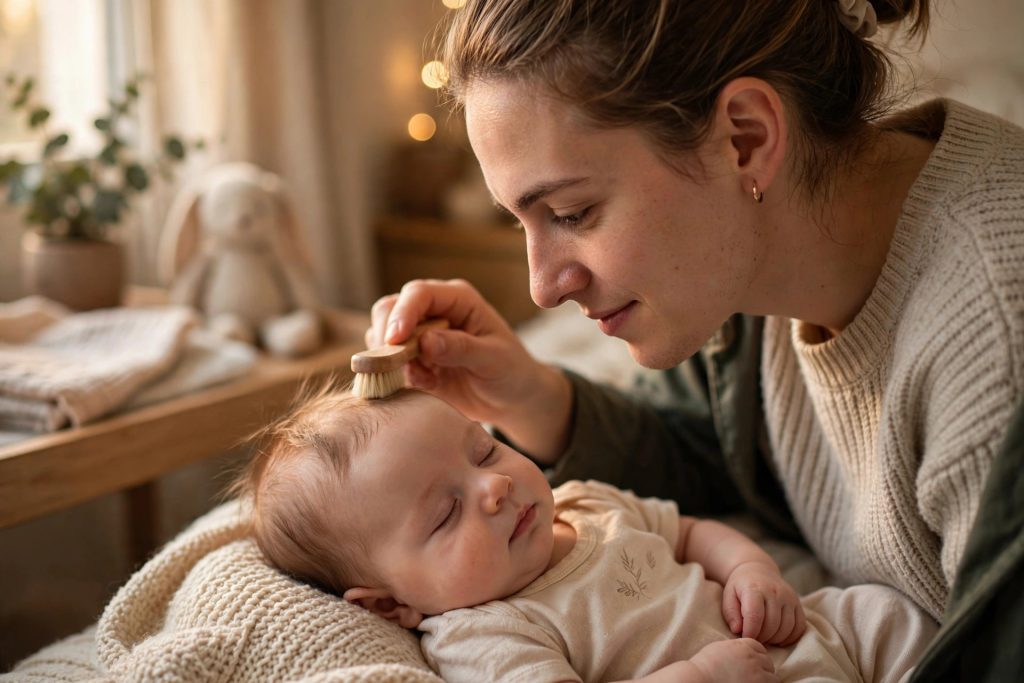
While the hair is still damp, use a soft-bristled baby brush to gently sweep across the scalp in small circles. You’ll see loosened flakes lift away. Use light pressure only — if a scale doesn’t come off easily, leave it for another day rather than forcing it.
Step 4: Repeat as needed, not obsessively
Once a day at most is plenty, and many parents do this routine every few days. Thick cradle cap may take a week or two of gentle sessions to clear. That’s fine. Slow and steady wins here.
What NOT to Do
The fastest way to turn harmless cradle cap into a real problem is overtreating it. Avoid these common mistakes:
- Don’t pick or peel the scales. Pulling off flakes that aren’t ready can break the skin underneath, cause bleeding, and open the door to infection.
- Don’t use adult dandruff shampoos or medicated products unless your pediatrician specifically recommends them — they’re formulated for adult scalps, not infants.
- Don’t scrub hard with a brush or washcloth. Aggressive scrubbing irritates the scalp and can make flaking worse.
- Don’t apply essential oils, hydrocortisone, or home remedies you found online without checking with your pediatrician first.
- Don’t bathe more often to “fix” it. Extra washing dries the scalp and doesn’t address the cause. For general guidance on gentle routines, see our newborn skin care basics guide.
Cradle cap is a “less is more” situation. Soften, wash gently, brush softly — and leave alone anything that doesn’t lift easily. Forcing flakes off does more harm than the cradle cap itself ever would.
Will Cradle Cap Come Back?
Possibly, yes — and that’s normal. Cradle cap can clear up and then reappear in a milder form over several months as your baby’s oil glands settle down. Each recurrence tends to be lighter than the last, and most babies are completely clear by their first birthday.
If it keeps returning, just repeat the gentle routine when the scales build up. There’s no need to treat the scalp every day as prevention — dealing with it when it appears is enough. Think of it like trimming nails: maintenance when needed, not a daily battle.
When to Call the Doctor About Cradle Cap
Cradle cap is almost always harmless, but a few situations deserve a pediatrician’s attention:
- The patches spread to the face, neck, armpits, or diaper area and look red, raw, or oozing
- The skin underneath looks infected — increasing redness, swelling, warmth, yellow crusts, or pus
- Your baby seems uncomfortable: scratching, rubbing, unusual fussiness, or trouble sleeping
- The cradle cap hasn’t improved at all after a couple of weeks of gentle care, or keeps getting thicker
- You’re simply unsure whether it’s cradle cap or something else, like eczema
When in doubt, call. Pediatricians see cradle cap constantly, and a quick look is all it takes to confirm what you’re dealing with — no parent has ever been judged for asking.
This article is for general information and isn’t a substitute for professional medical advice.
Frequently Asked Questions
Is cradle cap painful for babies?
No. Cradle cap is not painful and usually doesn’t itch. Babies with cradle cap are typically completely comfortable and unaware of it. If your baby seems bothered — scratching, fussing, or rubbing their head — that’s a sign to have your pediatrician take a look, since it may be something else like eczema.
How do I remove cradle cap safely?
Soften the scales first by massaging a little plain mineral oil or baby oil into the scalp about 15 minutes before a bath. Then wash with a gentle, fragrance-free baby shampoo, rinse well, and sweep a soft-bristled baby brush across the damp scalp in light circles. Never pick or peel flakes that don’t lift easily — leave them for another day.
Will cradle cap come back after it clears?
It can. Cradle cap often comes and goes in waves over the first several months as your baby’s oil glands settle down. Recurrences are usually milder each time, and most babies outgrow it completely within the first year. Just repeat the gentle routine whenever scales build up again.
When should I call the doctor about cradle cap?
Call your pediatrician if the rash spreads beyond the scalp and looks red or raw, if the skin shows signs of infection (swelling, warmth, oozing, yellow crusts), if your baby seems uncomfortable or itchy, or if gentle home care hasn’t helped after a couple of weeks. Also call if you’re unsure whether it’s cradle cap or eczema.
Can I prevent cradle cap?
Not really — it’s driven by maternal hormones and your baby’s oil glands, not by anything you’re doing or not doing. Regular gentle washing keeps the scalp clean, but no routine reliably prevents cradle cap from appearing. The good news is that it’s harmless and temporary.