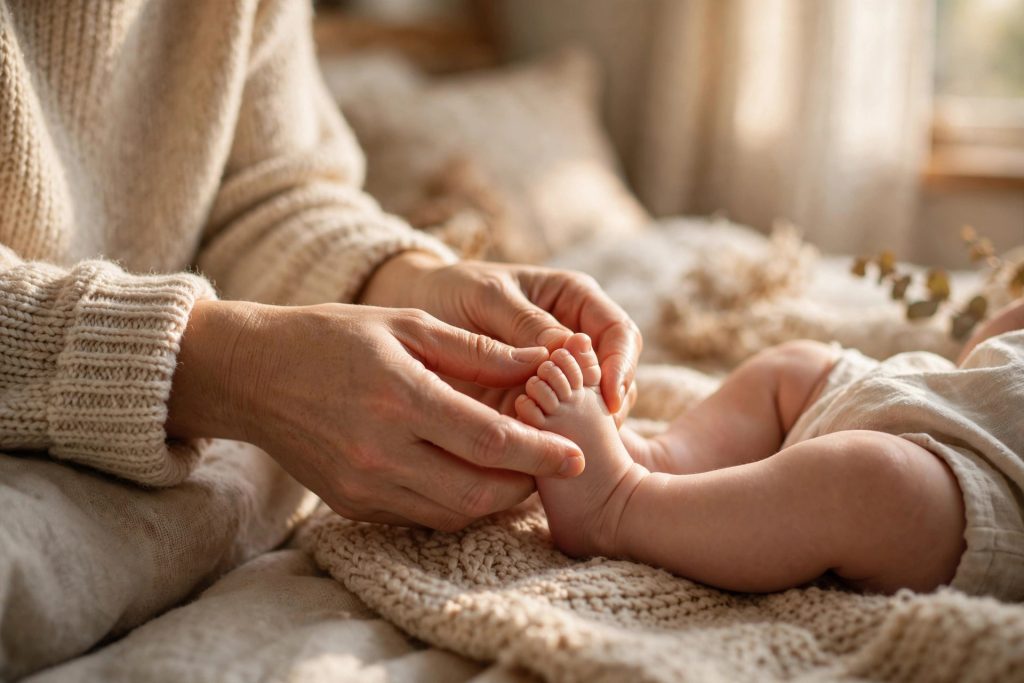
There’s a moment during a baby massage — usually about three minutes in — when something shifts. The squirming slows. The tiny fists unclench. Your baby’s eyes find yours, and for a second the whole world narrows down to your hands and their skin. It feels like magic, but it’s actually one of the oldest, simplest parenting practices on earth: baby massage.
Long before it was a parenting trend, infant massage was just what caregivers did — in India, in West Africa, in countless cultures where touch is understood as a baby’s first language. Modern parents are rediscovering it for good reason: regular, gentle massage supports bonding, eases gas and fussiness, and can genuinely improve sleep. And unlike most baby gear, it costs nothing and requires no batteries. Here’s how to do it well, starting today.
Why Baby Massage Is Worth Your Time
Baby massage benefits go well beyond “it’s nice.” Touch is a newborn’s most developed sense, and intentional, loving touch during massage does real work on several fronts:
- Bonding and attachment: Massage floods both of you with oxytocin — the bonding hormone. For parents who feel awkward or disconnected in the early weeks (far more common than anyone admits), massage creates a structured, low-pressure way to connect. Eye contact, skin-to-skin warmth, and your voice narrating what you’re doing all build the relationship.
- Gas and digestive relief: Gentle, directional tummy strokes help move trapped gas and stool through the intestines. Parents of gassy, grunting babies often see relief within a single session — which, at 3 a.m., feels nothing short of miraculous.
- Better sleep: Massage calms the nervous system, lowering stress hormones and settling babies into the drowsy state that precedes real sleep. A short massage as part of the bedtime routine can shorten the wrestling match between “tired” and “asleep.”
- Body awareness: Your baby is still figuring out where they end and the world begins. Regular massage helps them map their own body — legs, feet, tummy, arms — which supports motor development and body confidence down the line.
- Fussiness and crying: A calm, rhythmic massage session can interrupt the crying-tension cycle. It won’t fix hunger or a wet diaper, but for the fussy-but-fine stretches, it’s one of the most reliable tools you have.
- It’s good for you, too: Parents who massage their babies regularly report feeling calmer and more confident. Slowing down to focus entirely on your baby for ten unhurried minutes is a small daily reset for your own nervous system.
When Can You Start Massaging Your Baby?
For a healthy, full-term baby, you can start gentle massage in the first few weeks — there’s no need to wait for a milestone. Start with very light touch in the newborn days and build up pressure gradually as your baby grows and shows you what they enjoy. If your baby was premature or spent time in the NICU, check with your pediatrician first; preemies often need a gentler approach and a later start.
The massage itself matters less than the setup. A few ground rules make every session better:
- Warm room, warm hands: Babies lose heat fast, and cold hands will end the session before it starts. Aim for a comfortably warm room (around 75°F / 24°C), and rub your hands together — with a little oil — before you begin.
- Pick a calm, alert moment: The sweet spot is when your baby is awake, calm, and content — not hungry, not overtired, not mid-meltdown. Mid-morning or after a nap often works beautifully. About 30–45 minutes after a feed is ideal; massaging a full tummy invites spit-up.
- Avoid the umbilical cord area: Until the cord stump falls off and the belly button heals (usually 1–3 weeks), keep massage away from that area entirely. Work around it, not over it.
- Use gentle, confident pressure: Think of the pressure you’d use to test a ripe peach — firm enough to feel, never pressing hard. Your baby’s cues are the real guide: relaxed limbs and steady breathing mean “more, please”; arching, crying, or pushing away mean “we’re done.”
- Keep it short at first: Five minutes is plenty for a newborn. As your baby grows to love it, sessions naturally stretch to 10–15 minutes.
One more setup note: undress your baby down to the diaper (or fully undressed on a warm towel) so you have skin access, and lay them on a soft blanket on a safe, flat surface — the floor, your bed with pillows cleared away, or a changing mat. Never massage on a high surface where they could roll off.
Step-by-Step Baby Massage Techniques
You don’t need a certification or a routine memorized from a video. A good baby massage is just a slow, loving sequence from legs up to head (or head down to toes — the order matters far less than your calm presence). Warm a coin-sized amount of oil between your palms, then follow this simple flow. Narrate what you’re doing in a soft voice — “now I’m doing your legs” — because your voice is part of the massage.
1. Legs and feet
Start here — legs are the least sensitive area, so they’re the gentlest entry point. Wrap your hands around one thigh and glide down to the ankle with smooth, milking strokes, like you’re gently squeezing toothpaste down a tube. Then switch: thumbs on the sole of the foot, pressing in small circles from heel to toe, and a gentle tug on each tiny toe. Babies who “didn’t like massage” often change their minds once you get to the feet. Repeat on the other leg.
2. Tummy — the gas-relief zone
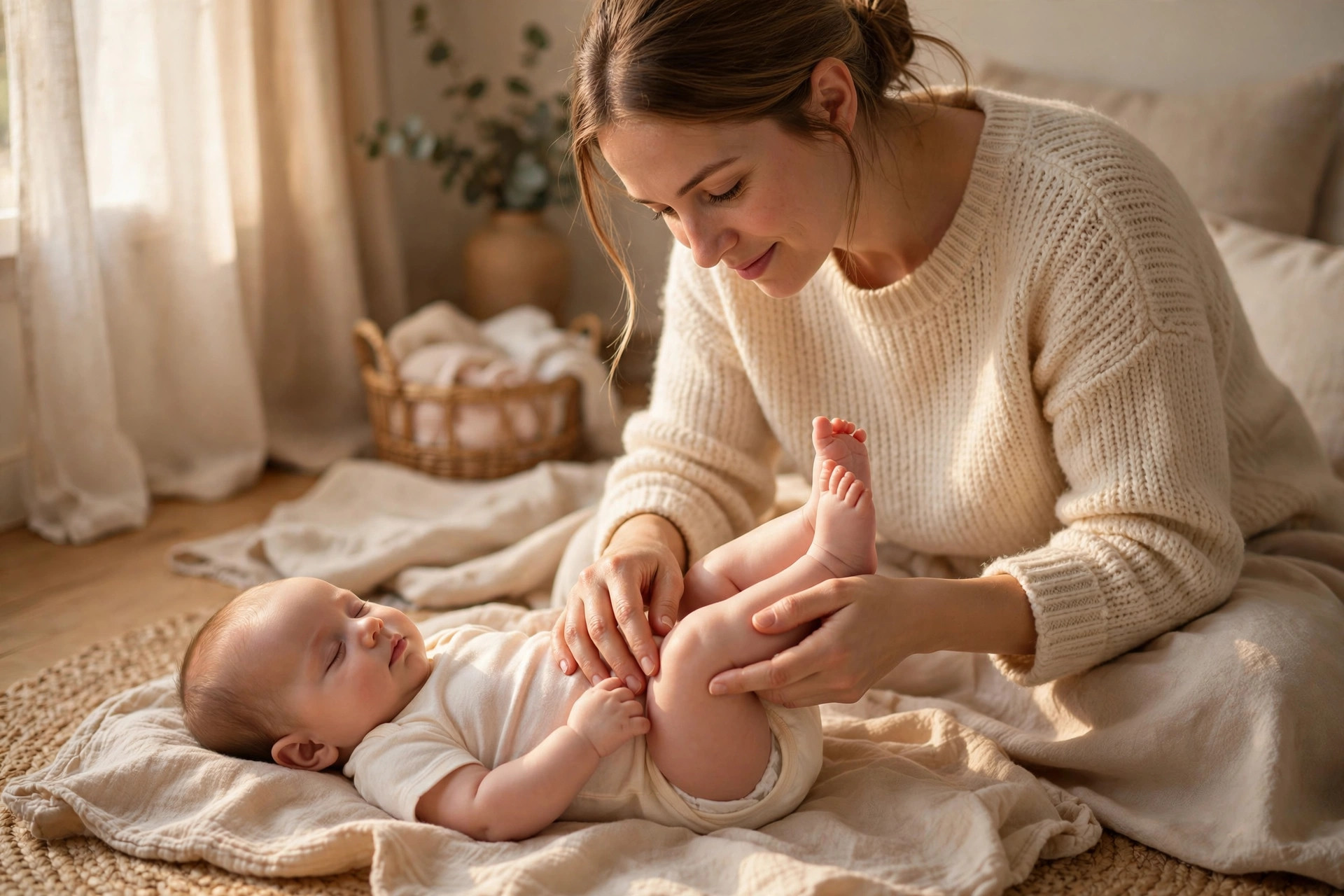
This is the technique gassy babies (and their parents) care about most. With flat, warm hands, stroke downward from just below the ribs toward the diaper — always in the direction of digestion. Then try the classic “I Love U” stroke: trace an I down your baby’s left side, an upside-down L across the belly and down the left side, and an upside-down U from the lower right, up, across, and down the left. It sounds fussy, but after two tries it becomes muscle memory. Finish with gentle clockwise circles around the belly button, and softly “bicycle” your baby’s legs — alternating knees toward the tummy — to help move trapped gas along.
3. Chest and arms
Place both hands flat on the center of your baby’s chest and smooth outward toward the shoulders, like you’re opening a book. Repeat a few times — this opens the chest and feels deeply calming. For arms, use the same milking stroke as the legs: shoulder to wrist, then small circles on the palms and a gentle pull on each finger.
4. Face and head
Use just your fingertips here, with barely-there pressure. Small circles on the temples, gentle strokes from the center of the forehead outward, and a soft sweep from the nose bridge out across the cheeks. Many babies melt at the forehead stroke in particular — it’s a lovely way to end a session.
5. Back (optional finisher)
If your baby is happy on their tummy — some are, some emphatically aren’t — lay them tummy-down across your lap or on the blanket and stroke long lines from neck to bottom with flat hands. Skip this entirely if your baby protests; back massage is a bonus, not a requirement.
The best baby massage technique is the one your baby enjoys. Watch their cues more than any diagram: relaxed muscles and happy sounds mean continue, while fussing, stiffening, or turning away mean it’s time to stop and cuddle instead.
Can Massage Help With Baby Gas?
Yes — this is one of the most practical baby massage benefits, and the tummy techniques above are specifically designed for it. The combination of downward strokes, the “I Love U” sequence, and bicycling the legs physically helps move gas bubbles and stool through the intestines. Many parents notice a satisfying round of toots mid-massage, followed by a visibly more comfortable baby.
A few gas-specific tips: massage works best between gassy episodes rather than at the peak of one — a screaming baby won’t relax enough for it to help. Pair the massage with the usual gas playbook (burping mid-feed, upright time after feeds, gentle tummy time), and if gas seems excessive or is paired with poor weight gain, blood in the stool, or projectile vomiting, skip the home remedies and call your pediatrician.
Baby Massage for Sleep: The Best Time of Day
If you’re going to massage once a day, make it part of the bedtime routine. A 5–10 minute massage after the evening bath and before the final feed creates a powerful wind-down signal: warm water, warm hands, dim lights, then sleep. Babies thrive on predictable sequences, and “massage means bedtime is coming” becomes a cue their bodies learn within a week or two.
Keep the bedtime massage slower and quieter than a daytime one — long, smooth strokes, minimal talking, lights low. The goal is drowsy, not stimulated. When the massage is done, you can move straight into the rest of your sleep routine. If you swaddle, massage first and then swaddle your baby safely while they’re drowsy — the combination of released tension and snug containment is a potent sleep setup. For the full picture on building healthy sleep from the start, our newborn sleep basics guide covers safe sleep habits alongside the routines that support them.
Massage also earns its place during fussy evenings that aren’t quite bedtime. When your baby is overtired and wired — the classic witching-hour scenario — a calm massage session can break the tension cycle. If you’re looking for more tools for those rough patches, our soothing techniques for fussy babies pair well with massage. And for the months when fussiness has a sharper edge — sore, swollen gums at midnight — see our guide to teething symptoms and soothing remedies; a gentle gum rub plus a leg massage has rescued many a teething night.
What Oil Is Safe for Baby Massage?
You can massage with clean, dry hands, but a little oil reduces friction and makes strokes smoother. Not all oils are equal for baby skin, though. Safe, simple choices include:
- Coconut oil: widely available, absorbs well, and has natural moisturizing properties. Use virgin, unrefined coconut oil. (Note: if there’s a family history of nut or coconut allergy, check with your pediatrician first.)
- Sunflower seed oil: a great everyday option that’s gentle and high in linoleic acid, which supports the skin barrier.
- Grapeseed or sweet almond oil: light, nearly scentless, and easy to find. Almond oil is a tree nut product, so skip it if nut allergies run in the family.
Oils to avoid or use with caution: olive oil can irritate eczema-prone skin for some babies, and any oil with added fragrance, essential oils, or “baby oil” mineral-oil blends with heavy perfume is best skipped on newborn skin. Always do a small patch test on your baby’s forearm first and wait 24 hours to check for redness or irritation. For a deeper dive into reading labels and choosing gentle products, see our guide to choosing baby skincare products.
Safety Notes: When to Skip or Stop the Massage
Baby massage is wonderfully safe, with a few common-sense exceptions. Skip the massage (or at least the tummy portion) if your baby:
- Has a fever, a skin infection, rash, or open wound in the area you’d massage
- Was recently vaccinated at the injection site — give sore spots a day or two
- Has just eaten (wait 30–45 minutes) or is clearly hungry, tired, or upset
- Has a medical condition affecting bones, joints, or skin — check with your pediatrician first
And during any session, your baby’s cues overrule every technique in this article. Crying, arching away, stiffening up, or going quiet and still are all ways of saying “not now.” Stop, offer a cuddle instead, and try again another day. There’s no quota to hit — a two-minute massage your baby loved beats a fifteen-minute one they endured.
This article is for general information and isn’t a substitute for professional medical advice. If your baby has a health condition or you’re unsure about starting massage, check with your pediatrician first.
Frequently Asked Questions
When can I start massaging my baby?
For a healthy full-term baby, you can start gentle massage in the first few weeks of life — there’s no milestone to wait for. Begin with very light touch and short sessions of just a few minutes. If your baby was premature or had a NICU stay, ask your pediatrician when to begin, as preemies often need a gentler, later start.
What oil is safe for baby massage?
Coconut oil, sunflower seed oil, grapeseed oil, and sweet almond oil are all good choices — plain, unfragranced, and food-grade. Avoid heavily fragranced baby oils and essential oils on newborn skin. Do a patch test on a small area of skin first, and skip nut-derived oils if nut allergies run in your family until you’ve checked with your pediatrician.
Can massage help with baby gas?
Yes. Gentle downward tummy strokes, the “I Love U” abdominal stroke sequence, and bicycling your baby’s legs help move trapped gas and stool through the intestines. Massage works best between gassy episodes rather than during a full meltdown. If gas comes with poor weight gain, blood in the stool, or projectile vomiting, call your pediatrician.
How long should a baby massage last?
Start with about five minutes for a newborn and let sessions grow naturally to 10–15 minutes as your baby shows they enjoy it. There’s no minimum for benefits — even a few minutes of calm, focused touch counts. Always end the session when your baby signals they’re done, even if that comes early.
What’s the best time of day to massage my baby?
The most popular choice is as part of the bedtime routine — after the evening bath, before the final feed — because it doubles as a sleep cue. But any calm, alert moment works: mid-morning or after a nap are lovely too. Just avoid right after feeds (wait 30–45 minutes) and skip it when your baby is overtired or hungry.