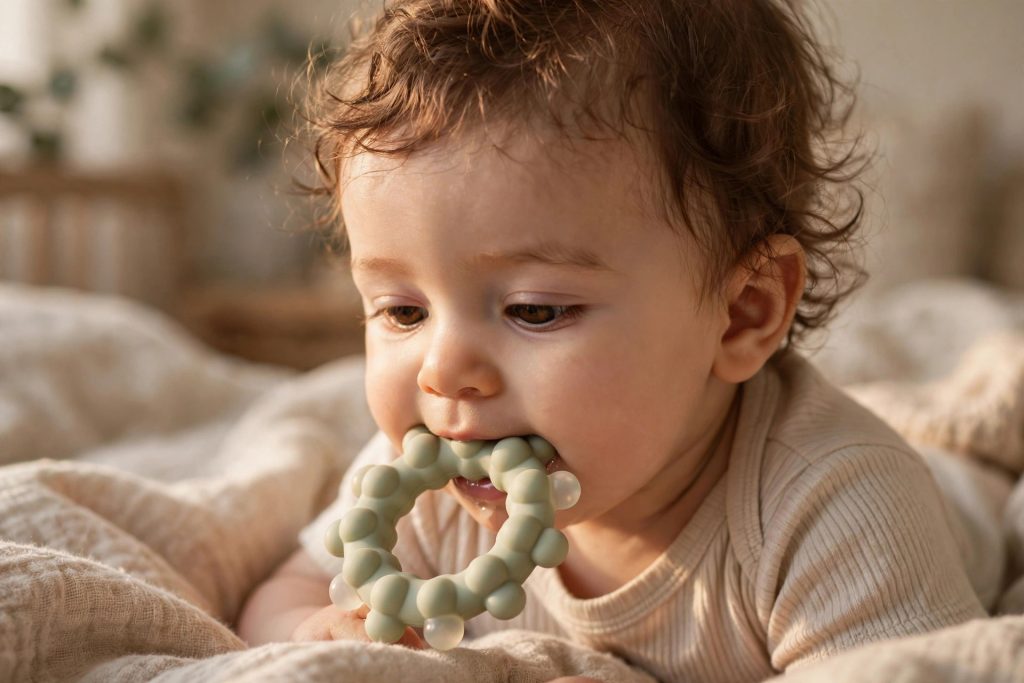
One day your sweet, easygoing baby is giggling at the dog, and the next they’re gnawing on your finger like it’s a personal vendetta, drooling through two bibs an hour, and waking up at 2 a.m. screaming at the ceiling. If you’ve been wondering whether this is teething — and more importantly, what on earth you’re supposed to do about it — welcome. You’re in the thick of one of parenting’s most misunderstood milestones.
Here’s the good news: teething is completely normal, it’s temporary, and there are genuinely effective ways to help your baby through it. The bad news? A lot of what gets passed around about teething — the fever talk, the numbing gels, the amber necklaces — is either wrong or unsafe. This guide separates fact from folklore: the real teething timeline, the symptoms that actually mean a tooth is coming, safe baby teething remedies that work, and the ones worth avoiding.
The Teething Timeline: When Do Babies Start Teething?
Most babies cut their first tooth somewhere between 4 and 7 months, with 6 months being the classic average. But “average” is doing a lot of heavy lifting here. Some babies sprout a tooth at 3 months, others stay gummy and cheerful until their first birthday — and both are completely normal. Girls and boys, firstborns and fifth-borns: the calendar varies wildly from child to child.
The order teeth arrive in is much more predictable than the timing. Here’s the typical sequence:
- Bottom front teeth (lower central incisors): usually 6–10 months
- Top front teeth (upper central incisors): usually 8–12 months
- Upper lateral incisors (beside the front teeth): usually 9–13 months
- Lower lateral incisors: usually 10–16 months
- First molars: usually 13–19 months — these are the wide, achy ones
- Canines (the pointy “fang” teeth): usually 16–22 months
- Second molars: usually 23–31 months — the grand finale
By around age 3, most children have their full set of 20 primary teeth. Molars tend to cause more fuss than front teeth simply because they’re bigger and blunter — a front tooth can slice through gum relatively cleanly, while a molar has to grind its way up. If your toddler is suddenly cranky and chewing everything in sight at 14 months, it’s almost certainly not a phase. It’s a molar.
One more thing worth knowing: teething is a marathon, not a sprint. Teeth don’t erupt in one continuous parade — they come in bursts with calm weeks in between. That on-and-off pattern is exactly why teething gets blamed for every bad night and every sniffle for two straight years. Some of that blame is fair. A lot of it isn’t, as we’ll see.
Signs Your Baby Is Actually Teething
So how do you know a tooth is really on the way, versus your baby just being a baby? (Babies drool. Babies chew. Babies cry at 3 a.m. for reasons known only to them.) The real signs of teething tend to cluster together — you rarely get just one:
- Chewing on everything: fingers, toys, the crib rail, your collarbone. Counter-pressure on the gums genuinely relieves the ache, so your baby is self-medicating in the smartest way they know.
- Drooling — a lot more than usual: teething stimulates extra saliva. If you’re changing soaked bibs multiple times a day and noticing a little drool rash on the chin, that’s a classic tell.
- Swollen, tender gums: run a clean finger along the gum line and you may feel a hard ridge or see a small white bud under the surface. This is the most reliable sign there is.
- Fussiness and irritability: a tooth pushing through gum tissue hurts. Expect crankiness, especially in the late afternoon and evening when tiredness piles on top of the discomfort.
- Disrupted sleep: babies who were sleeping through may start waking again during an active teething burst. The pain is often worse at night when there are no distractions.
- Refusing food or nursing differently: sore gums can make sucking uncomfortable. Some babies nurse more for comfort; others pull away or bite down. Both are normal teething behavior.
- Ear pulling or cheek rubbing: the nerves in the gums, ears, and cheeks share pathways, so pain radiates. Tugging at an ear during a teething burst is usually referred pain — not necessarily an ear infection.
Now, the other side of the coin: plenty of things get blamed on teething that teething doesn’t actually cause. Diarrhea, vomiting, rashes beyond mild drool rash, a true fever, congestion, and a full-blown cold are not teething symptoms. This matters because “it must be the teeth” has a way of delaying a call to the doctor when a baby is actually sick. If your baby is genuinely ill, the teeth are a coincidence — treat the illness, not the gums.
When the fussy days pile up, remember that comfort is the whole game. Calm, warm routines — a cozy bath, quiet cuddles, an early bedtime — can reset a rough teething day better than any gadget. Teething won’t last forever, but your baby’s memory of being soothed through it will.
The Teething Fever Myth: Does Teething Cause Fever?
Ask a dozen grandparents and eleven will tell you teething causes fever. Pediatricians hear it constantly. And it’s one of the most persistent myths in parenting — so let’s clear it up properly.
Teething can cause a slight rise in body temperature. The inflammation in the gums can nudge your baby’s temperature up a fraction of a degree, sometimes into the 99–100°F range. What teething does not cause is a true fever — generally defined as 100.4°F (38°C) or higher. That threshold matters, because a real fever in a baby means something else is going on: a virus, an ear infection, or another illness that deserves attention on its own terms.
This is where the myth gets dangerous. If you assume a 101°F fever is “just teething,” you might skip the pediatrician visit your baby actually needs. The rule is simple and worth memorizing:
A slight temperature bump can come with teething. A true fever (100.4°F / 38°C or higher) is not teething — check for another cause and call your pediatrician if you’re unsure.
When your baby feels warm during a teething burst, take their temperature rather than guessing. If you’re not sure you’re doing it right, our guide on how to take your baby’s temperature walks through the safest methods step by step. A rectal reading is the most accurate for babies under three months, and a digital thermometer beats a forehead strip every time. Write down the number and the time — it makes the pediatrician’s job much easier if you end up calling.
Baby Teething Remedies That Actually Work
Forget the crowded pharmacy aisle for a moment. The most effective teething relief is simple, drug-free, and mostly things you already own. Here’s what genuinely helps, in order of “start here”:
- Gum massage: Wash your hands, then rub your baby’s gums firmly with a clean finger for a minute or two. The counter-pressure is immediately soothing, and many babies visibly relax. This is the single most underrated teething remedy there is.
- A cold washcloth: Wet a clean washcloth, twist it, chill it in the fridge for 15–20 minutes, and let your baby gnaw on it. The cold numbs the ache while the texture gives those gums something to work against. Keep a few in rotation so one is always ready.
- Chilled (not frozen) teething rings: A solid silicone or rubber teething ring from the fridge provides cold plus chewable resistance. Avoid liquid-filled rings — they can puncture — and skip the freezer, which can make them painfully hard and damage tender gums.
- Cold foods for older babies: Once your baby is eating solids, chilled applesauce, cold yogurt, or a frozen banana in a mesh feeder can work wonders. The cold soothes, the flavor distracts, and the chewing does the rest.
- Distraction and comfort: Sometimes the best remedy isn’t for the gums at all. A walk outside, a new toy, extra cuddles, or a gentle baby massage can break the pain-fuss cycle, especially in the evening when everything feels worse.
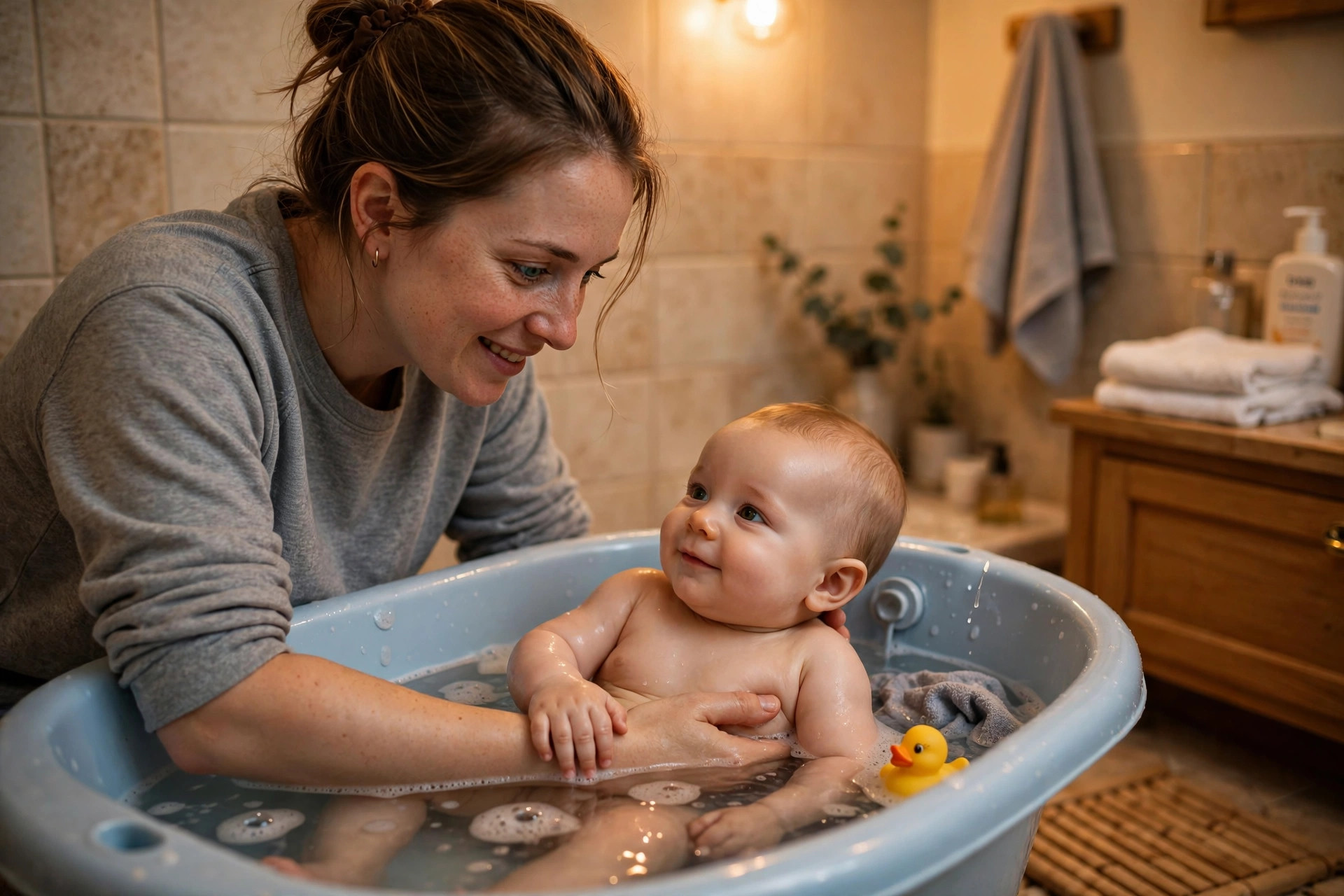
- A warm, calming bath: On the hardest teething days, a warm bath before bed works like a reset button. The warm water relaxes tense little muscles, the change of scenery breaks the crankiness loop, and the wind-down routine signals that sleep is coming. Pair it with dim lights and a quiet song, and you’ve got a proper evening ritual.
For pain relievers like infant acetaminophen or ibuprofen (for babies over 6 months), the honest answer is: they can help on genuinely rough nights, but talk to your pediatrician first about dosing and whether it’s warranted. Medication shouldn’t be the default for every teething day — save it for the nights when nothing else is touching the pain, and always dose by your baby’s current weight, not their age.
One practical note while your baby is chewing everything in sight: little hands go straight into little mouths, so this is a good season to stay on top of baby nail care. Short, smooth nails mean less scratching on sore gums and less grime making its way into the mouth.
What Helps Teething Pain at Night?
Nighttime is when teething pain hits hardest. During the day, play and movement distract your baby from the ache; at night, lying still in a dark, quiet room, there’s nothing to compete with it. If your previously good sleeper is suddenly waking up crying and nothing seems wrong, teething is a prime suspect.
Here’s a nighttime game plan that actually works:
- Start the wind-down earlier. An overtired baby feels pain more intensely. Move bedtime up by 20–30 minutes during an active teething burst.
- Offer comfort before the crib. A chilled teething ring, a gum massage, or a nursing/feeding session right before bed can take the edge off so your baby falls asleep before the ache ramps back up.
- Keep nighttime wake-ups boring and brief. Dim lights, quiet voice, a quick cuddle or gum rub, then back down. Save the playfulness for morning.
- Protect the sleep environment. Teething babies are still babies — the same safe-sleep rules apply every night. If sleep has gotten rocky, our guide to newborn sleep basics and safe sleep habits is worth a refresher.
And if the night wakings come with daytime meltdowns too, you’re not failing — you’re parenting through a painful developmental stage. Our soothing techniques for fussy babies pair well with teething-specific comfort, especially the motion and white-noise strategies that work when nothing else does.
Teething Remedies to Avoid
Not every remedy on the shelf — or in the family group chat — is safe. Some popular options carry real risks, and it’s worth knowing exactly why before you try them:
- Numbing gels with benzocaine or lidocaine: The FDA has warned against benzocaine teething products for children under 2 because benzocaine can cause methemoglobinemia, a rare but serious condition that reduces oxygen in the blood. Lidocaine gels and “teething tablets” carry their own risks of accidental overdose and seizures. The short version: skip the numbing gels entirely.
- Amber teething necklaces (and bracelets): These are marketed with claims about “healing” succinic acid, but there’s no evidence they do anything for pain — and they pose genuine strangulation and choking hazards. Babies have been strangled and injured by teething necklaces. Pediatric and safety organizations advise against them, full stop.
- Frozen solid objects: A frozen washcloth edge or a rock-hard frozen teether can bruise or damage delicate gum tissue. Chilled is soothing; frozen solid is too much.
- Whiskey, brandy, or any alcohol on the gums: An old folk remedy that should stay in the past. Even small amounts of alcohol are unsafe for babies.
- Hard foods for babies who can’t handle them: Whole raw carrots or hard crackers given as “teething chew toys” to young babies are choking hazards. If you offer food for chewing, it needs to match your baby’s developmental stage — soft, appropriately sized, and always supervised.
The pattern here is worth noticing: the riskiest remedies are the ones that promise to numb or cure teething. Teething doesn’t need curing — it needs comfort. Cold, pressure, cuddles, and patience cover it.
When to Call Your Pediatrician
Teething itself never requires a doctor’s visit, but the illnesses that get mistaken for teething absolutely do. Call your pediatrician if your baby:
- Has a rectal temperature of 100.4°F (38°C) or higher — especially under 3 months, when any fever warrants a prompt call
- Has diarrhea, vomiting, or a widespread rash
- Is unusually lethargic, inconsolable for hours, or refusing to eat for an extended stretch
- Is pulling at their ears with a fever, or has fluid draining from an ear
- Has symptoms that don’t improve once the tooth breaks through
When in doubt, call. Pediatricians would far rather reassure you about a tooth than miss an ear infection. That’s literally what they’re there for.
This article is for general information and isn’t a substitute for professional medical advice. If you’re ever worried about your baby’s health, trust your instincts and check with your pediatrician.
Frequently Asked Questions
When do babies start teething?
Most babies get their first tooth between 4 and 7 months, with around 6 months being the most common. But the range is wide — anywhere from 3 months to after the first birthday can be perfectly normal. What matters more than the calendar is the pattern: swollen gums, heavy drooling, and chewing on everything usually mean a tooth is on its way.
Does teething cause fever?
Teething can cause a very slight rise in temperature, but it does not cause a true fever of 100.4°F (38°C) or higher. If your baby has a real fever, something else is going on — likely a viral illness or infection — and it’s worth a call to your pediatrician rather than assuming it’s the teeth.
What helps teething pain at night?
Start bedtime a little earlier, offer a chilled teething ring or a gentle gum massage before sleep, and keep nighttime wake-ups calm, dim, and brief. A warm bath as part of the bedtime routine can also help your baby relax before bed. If your baby is truly miserable, ask your pediatrician whether an appropriate dose of infant pain reliever makes sense for the night.
Are teething necklaces safe?
No. Amber teething necklaces (and bracelets or anklets) pose strangulation and choking hazards, and there’s no scientific evidence that they relieve teething pain. Pediatric and child-safety organizations recommend against them. Stick with chilled teethers, gum massage, and cuddles instead.
How long does teething pain last for each tooth?
The worst discomfort usually lasts a few days — typically the 3 to 5 days before the tooth breaks through the gum, plus a day or two after. Once the tooth has erupted, the pain fades quickly. Remember that teething comes in waves over about two and a half years, so you’ll get plenty of calm stretches in between.
Should I still brush a brand-new tooth?
Yes — start right away. As soon as that first tooth appears, gently brush it twice a day with a soft infant toothbrush and a smear of fluoride toothpaste about the size of a grain of rice. Early brushing builds the habit before your toddler has opinions about it, and it protects those new teeth from decay from the very beginning.