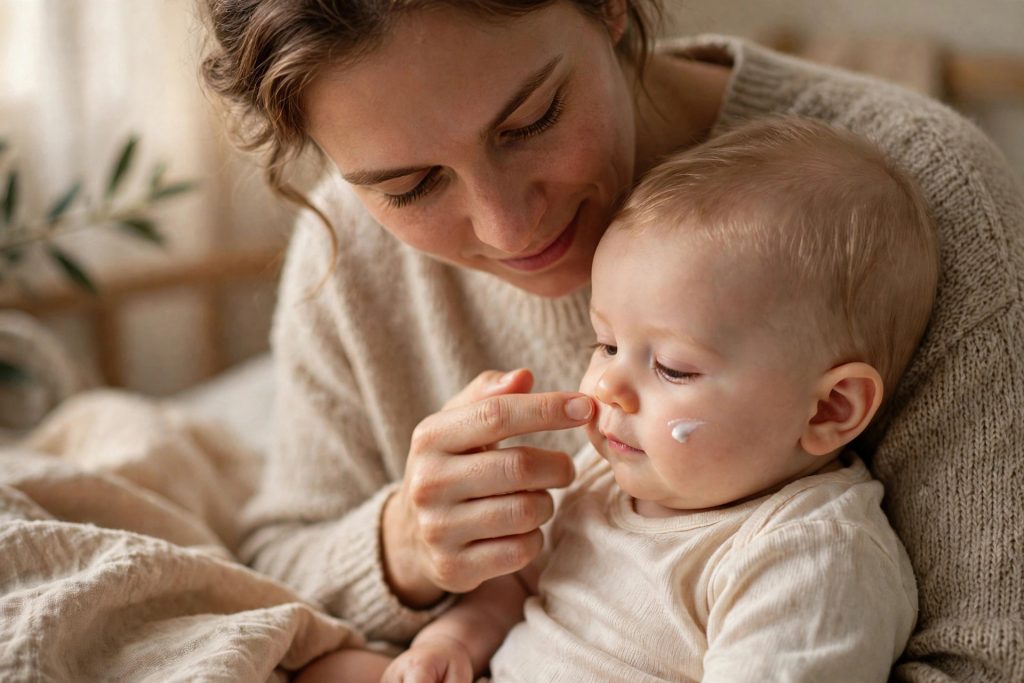
If you’re wondering where those tiny bumps on your newborn’s face came from overnight, take a deep breath — nearly every baby develops a rash in the first year, and most are harmless. Newborn skin is thinner and more reactive than yours, still learning to handle the outside world. This guide covers the most common baby skin rash types, gentle home remedies, and the red flags that mean calling the pediatrician.
Why Baby Skin Gets Rashes So Easily
A newborn’s skin is thinner than an adult’s, and its protective barrier is still under construction. It loses moisture faster, reacts more strongly to heat and friction, and is more easily irritated by saliva, urine, laundry products, and even plain water.
Then there’s adjustment: after nine months in a perfectly controlled environment, your baby now faces dry air, clothing, diapers, and drool all at once. Most rashes appear early, then fade as the skin barrier matures.
One note before we continue: this guide describes common rashes so you can understand what you’re seeing, but it can’t diagnose your baby’s skin. When you’re unsure, your pediatrician is the right person to ask.
5 Common Baby Skin Rash Types (And What Each Looks Like)
These are the rashes pediatricians see most often. Compare the descriptions with what you’re seeing — and remember that mild cases of all five are extremely common.
1. Milia: Tiny White Bumps on the Face
Milia look like miniature whiteheads scattered across the nose, cheeks, or chin — but they’re not acne, and you should never try to pop them. They’re tiny cysts formed when dead skin cells get trapped near the surface, and they appear in a large share of newborns in the first days of life. No treatment needed: gentle washing with plain water, and they fade within a few weeks.
2. Baby Acne (Neonatal Acne): Red Bumps on the Cheeks
Baby acne usually shows up at two to four weeks — right when you thought the skin was settling down. Small red bumps, sometimes with white centers, cluster on the cheeks, nose, and forehead, and tend to look worse when your baby is warm or fussy. It’s temporary and resolves on its own within weeks to a couple of months. Wash daily with lukewarm water and leave it alone — never use adult acne products on newborn skin.
3. Eczema (Atopic Dermatitis): Dry, Red, Itchy Patches
Eczema is the rash most likely to stick around. It appears as dry, red, scaly patches — on the cheeks and scalp in young babies, later in the creases of elbows and knees. The telltale difference: it’s itchy, so you may notice your baby rubbing their face against the sheet. It often runs in families with allergies or asthma. It can’t be cured but manages well: short lukewarm baths, pat dry, and moisturize damp skin with a thick fragrance-free cream. Ask your pediatrician about a plan for stubborn flare-ups.
4. Heat Rash (Miliaria): Prickly Red Bumps in Warm Weather
Heat rash happens when sweat gets trapped under the skin. It looks like clusters of small red bumps in the spots where heat and moisture collect: neck folds, armpits, chest, and diaper area. Overdressed babies are the usual candidates. The remedy: cool your baby down — fewer layers, loose cotton, and air time. Skip heavy creams, which trap heat. It usually clears within days.
5. Diaper Rash: Red, Irritated Skin in the Diaper Area
The one almost every parent meets: red, tender-looking skin across the buttocks and thighs, caused by prolonged contact with moisture — urine, stool, or both. The fastest fix is dryness: change diapers frequently, clean gently, pat dry, and give daily diaper-free air time on a towel. A zinc oxide barrier cream at every change protects skin while it heals. If it isn’t improving after a few days, check in with your pediatrician.
Gentle Home Remedies for Common Baby Rashes
Whatever rash you’re dealing with, these principles apply across the board — the same habits that support healthy newborn skin care in general:
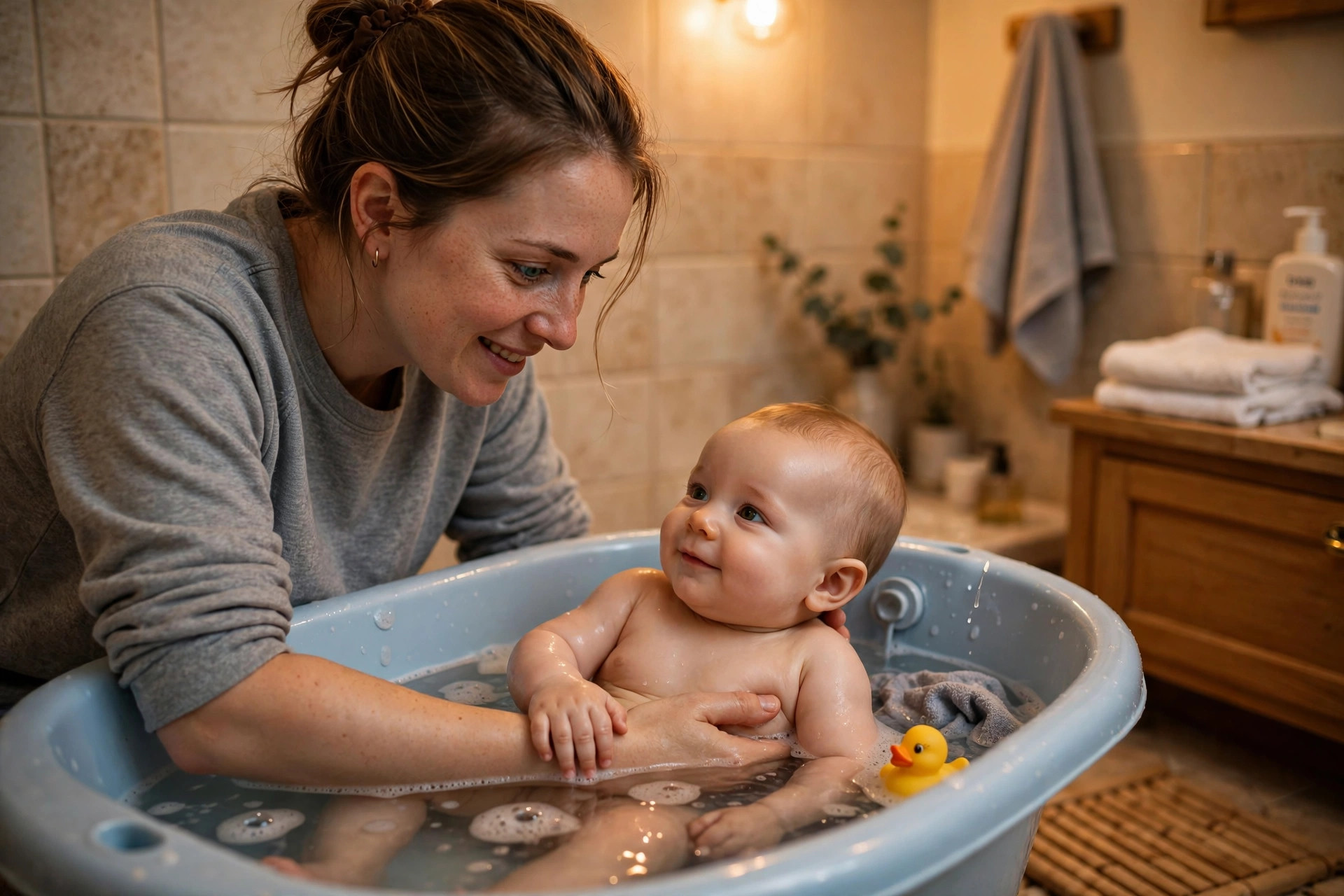
- Keep baths short and lukewarm. Five to ten minutes is plenty; hot water worsens dryness and itching.
- Pat dry, don’t rub. Press a soft towel gently against the skin instead of rubbing.
- Moisturize damp skin. Apply fragrance-free cream within minutes of bathing to lock in moisture — the most helpful habit for eczema-prone skin.
- Go fragrance-free. Choose fragrance-free soaps, lotions, detergent, and wipes.
- Dress in soft cotton. Loose, breathable layers prevent overheating and reduce friction on irritated patches.
- Give rashes air. Diaper-free time for diaper rash, uncovered tummy time for heat rash — airflow speeds healing.
- Keep nails short. An itchy rash plus sharp newborn nails means broken skin. Trim regularly.
One special case: while the umbilical cord stump is still attached, stick to gentle sponge baths and keep the stump clean and dry. Our umbilical cord care guide walks you through those early days. And if an itchy rash is making your baby fussy, our guide to understanding your baby’s cries can help you read what they’re telling you.
What Cream Is Safe for Baby Rashes?
- Diaper area: thick barrier creams with zinc oxide or petroleum jelly — safe for daily use at every change.
- Dry, eczema-prone skin: fragrance-free creams or ointments (ointments usually beat thin lotions). Apply generously, several times a day during flare-ups.
- Heat rash and milia: usually nothing — these clear best when skin is left clean, cool, and product-free.
Avoid adult moisturizers and acne treatments, scented products, essential oils, and anything with alcohol. Be cautious with hydrocortisone or other steroid creams: they can suit some rashes, but only under your pediatrician’s guidance, since baby skin absorbs them more readily. When in doubt about any product, ask the pediatrician first.
When to Worry About a Baby Rash: Red Flags
Most baby rashes are harmless and temporary. Call your pediatrician promptly if you notice:
- Rash paired with fever, unusual sleepiness, or poor feeding
- Blisters, oozing, yellow crusts, or swelling — possible signs of infection
- A rash spreading rapidly, or purple spots that don’t fade when pressed gently
- Itching that disrupts sleep or feeding
- A rash that seems painful to touch
- No improvement after a week or two of gentle home care
- Any rash in a very young newborn you’re unsure about — check early
This is exactly what regular pediatrician visits are for — and don’t wait for the next appointment if something worries you now. If the rash is making your baby miserable, these soothing techniques for a fussy baby can help keep everyone calmer while you sort out the skin.
Most newborn rashes are temporary, harmless, and need nothing more than gentle care and patience. But “probably fine” is never a diagnosis — when you’re unsure, a quick call to your pediatrician is always the right move.
Frequently Asked Questions
What does baby eczema look like?
Dry, red, slightly scaly or rough patches — on the cheeks, forehead, and scalp in young infants, later in the creases of elbows, knees, and neck. Unlike milia or baby acne, eczema is usually itchy, so you might see your baby rubbing their face against bedding. It tends to come and go in flare-ups, often worsening in dry weather.
Are newborn face rashes normal?
Yes — very. Milia and baby acne affect a large share of newborns and are considered normal newborn skin changes, not true problems. They appear in the first days to weeks, don’t bother the baby, and fade without treatment. What’s not normal: rashes with blisters, oozing, or fever, or any rash that seems painful — those deserve a pediatrician’s eyes.
When should I take my baby to the doctor for a rash?
Call if the rash comes with fever, blisters, oozing or yellow crusting, rapid spreading, or purple spots that don’t fade when pressed. Also call for intense itching or pain, or a rash that hasn’t improved after a week or two of gentle care. For newborns under a few weeks old, err on the side of calling early.
What cream is safe for baby rashes?
Zinc oxide or petroleum-based barrier creams for the diaper area; thick fragrance-free creams or ointments for dry, eczema-prone skin. Heat rash and milia usually need no cream at all. Skip adult products, essential oils, and fragranced lotions, and use hydrocortisone or steroid creams only if your pediatrician recommends them.
Does baby acne need any treatment?
Usually not. It’s a temporary, hormone-related change that clears on its own over weeks to a couple of months. Gentle daily washing with lukewarm water is enough — no creams or acne products. If bumps look infected, aren’t improving after a few months, or you’re unsure it’s acne, have your pediatrician take a look.
This article is for general information and isn’t a substitute for professional medical advice.