
Every new parent knows the sound — that satisfying little urp that signals a feed went well. Burping looks simple, but when you’re holding a squirming newborn at 3 a.m. and nothing is happening, it can feel anything but. Some babies burp if you look at them sideways; others need patience, position changes, and a bit of technique.
The good news: burping is a short-lived skill. You’ll use it intensely for a few months and then barely think about it again. This guide covers why babies need burping, the three positions that actually work, how long to try, what to do when no burp comes, and how to tell normal spit-up from something worth calling the doctor about.
Why Babies Need Burping
Newborns swallow air along with milk — during vigorous sucking, crying before feeds, or gulping from a fast bottle flow. That trapped air sits in the tiny stomach and causes discomfort: fussiness during or after feeds, pulling away mid-feed, or spit-up. Burping simply gives that air an escape route.
Breastfed babies tend to swallow less air than bottle-fed babies, but they still benefit from a burp, especially if the letdown is fast or the latch is shallow. Bottle-fed babies usually need more deliberate burping, and paced bottle-feeding (holding the bottle more horizontally so your baby works a little for the milk) can reduce how much air they take in. If you haven’t yet settled your feeding rhythm, our feeding your newborn guide covers the fundamentals that make burping easier in the first place.
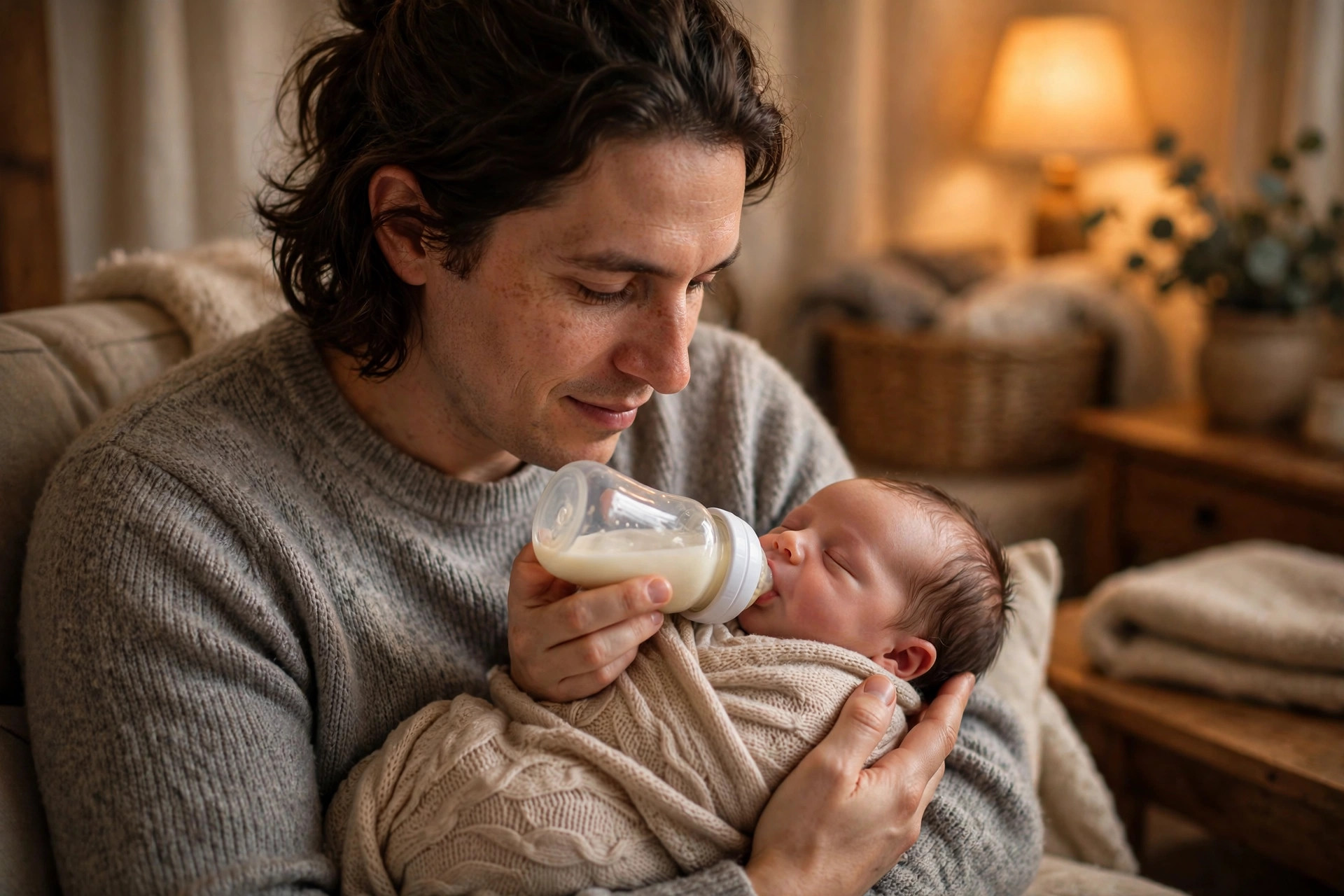
Three Burping Positions That Actually Work
There’s no single “correct” position — there’s the one that works for your baby today. Try each of these, giving each a fair few minutes before switching.
1. Over the shoulder
The classic. Drape a burp cloth over your shoulder, hold your baby upright against your chest with their chin resting on your shoulder, and support their bottom with one hand. With your other hand, pat or rub their back firmly — newborns are sturdier than they look, and a too-gentle pat often does nothing. The upright position lets gravity help the air bubble rise.
2. Sitting upright on your lap
Sit your baby on your lap facing away from you. Lean them slightly forward, supporting their chest and chin with one hand (your thumb and forefinger cradling the jaw — never press on the throat), and pat their back with the other. This position works well for babies who spit up easily in the over-the-shoulder position, since they’re more upright.
3. Face-down across your lap
Lay your baby tummy-down across your lap, with their head turned to one side and slightly higher than their chest (prop your knees up a little to create a gentle incline). Support them securely and pat or rub their back. The gentle pressure on the tummy helps move the air bubble along. Many stubborn burps surrender to this one.
A few technique notes that apply to all three: firm pats beat timid ones — think rhythmic and confident, not hard. Circular rubbing works for some babies better than patting. And a little gentle bouncing or walking while patting adds motion that helps dislodge the bubble. For a baby who’s also fussy, combining burping with gentle calming holds can settle two problems at once.
How Long Should You Try?
A reasonable burping session lasts a few minutes — not half an hour. Try mid-feed (when switching breasts or halfway through a bottle) and again at the end. If a good burp comes quickly, great. If you’ve tried for three to five minutes across two positions with no result, it’s fine to move on.
Here’s the part that surprises parents: not every feed produces a burp, and that’s normal. Some babies simply don’t swallow much air, especially calm breastfeeders with a good latch. If your baby seems comfortable — relaxed, not fussy, no arching — the absence of a burp is not a problem to solve.
What If Your Baby Won’t Burp?
First, rule out the obvious: try a different position, pat a little more firmly, add some gentle movement. Sometimes a baby needs a minute upright before the air moves — try holding them vertical against your chest for a bit without patting, then resume.
If your baby consistently doesn’t burp but also isn’t fussy or spitty, congratulations: you may just have an efficient feeder. Stop worrying about it. On the other hand, if your baby regularly seems uncomfortable after feeds — squirming, arching, crying within 20 minutes of eating — the issue may be more than burping can fix. Revisit feeding technique (latch, bottle flow speed, pacing), check our guide to understanding your baby’s cries to decode persistent post-feed fussiness, and mention it at your next newborn checkup.
One more scenario: your baby falls asleep mid-feed and you dread waking them to burp. Try burping while they’re drowsy but not fully out — a gentle upright hold for a few minutes often coaxes a sleepy burp without fully waking them. If they sleep through it peacefully, let them sleep; you can keep them upright on your chest for 10–15 minutes as a compromise.
Spit-Up vs. Vomit: What’s Normal
Nearly all newborns spit up, and it’s one of the most needlessly anxiety-producing parts of early parenthood. Normal spit-up is:
- Small amounts — though it always looks like more than it is on your shirt
- Effortless — it just flows out, without retching or distress
- Unbothered — your baby spits up and carries on as if nothing happened
This is different from vomiting, which is forceful, involves stomach muscles contracting, and often upsets the baby. Call your pediatrician if vomiting is forceful or projectile, contains green or yellow bile, or is tinged with blood — or if your baby is vomiting repeatedly and can’t keep feeds down. Also call if spit-up is accompanied by poor weight gain, choking, or breathing difficulty. Frequent, uncomfortable spit-up with arching and crying may indicate reflux worth discussing at a checkup — and our article on newborn hunger cues can help you distinguish reflux fussiness from hunger fussiness in the meantime.
When Can You Stop Burping?
Most babies need less burping somewhere between four and six months, as they get better at feeding efficiently, spend more time upright, and their digestive systems mature. You’ll notice the signs naturally: burps come easily or not at all, your baby seems comfortable after feeds without intervention, and sitting upright on their own does half the work for you.
There’s no ceremony to it — you’ll simply realize one day that you haven’t burped the baby in a week. Until then, keep the burp cloth handy and the pats confident.
Burp mid-feed and after, try two positions, give it a few minutes — and if no burp comes but your baby is comfortable, let it go. A content baby doesn’t need a burp on principle.
Frequently Asked Questions
How long should I try to burp my baby?
A few minutes per position is plenty — try mid-feed and after the feed, switching positions once if nothing happens. Three to five minutes of genuine effort is a reasonable session. Marathon burping isn’t necessary and just frustrates everyone.
What if my baby won’t burp?
If your baby seems comfortable, it’s fine — not every baby swallows enough air to need burping every time. Try a different position and firmer pats first. But if your baby is regularly fussy, archy, or spitty after feeds, revisit feeding technique and mention it to your pediatrician.
Do breastfed babies need to be burped?
Usually yes, though often less than bottle-fed babies. Breastfed babies can still swallow air, especially with a fast letdown or shallow latch. A brief burp when switching sides and at the end of the feed is a good habit.
Is it okay if my baby falls asleep before burping?
Yes — don’t fully wake a sleeping baby for a burp. Try a gentle upright hold for a few minutes; sleepy burps often emerge on their own. If your baby sleeps peacefully through it, let them sleep.
When can I stop burping my baby?
Most babies naturally need less burping between four and six months as feeding becomes more efficient and they spend more time upright. Follow your baby’s lead: when post-feed comfort is consistent without burping, you’re done.
Burping is one small piece of the after-feed routine — the other is settling. Once your baby is burped and content, a snug wrap using our safe swaddling steps and the back-to-sleep position from our newborn sleep basics guide complete the picture.