
For many expecting parents, prenatal checkups are equal parts reassuring and mysterious. You show up, get weighed, hear the heartbeat, give some blood, and leave with a vague sense of “everything’s fine” — but what actually happened in there? Understanding the rhythm of prenatal care — what happens at each visit, which tests are offered when, and what the results mean — turns those appointments from a blur into one of the most empowering parts of pregnancy.
When Should You Schedule Your First Prenatal Visit?
Most providers schedule the first prenatal visit around weeks 8 to 10 — early enough to confirm the pregnancy and establish a baseline, but late enough for a meaningful ultrasound. If you have a history of miscarriage, ectopic pregnancy, chronic health conditions, or you’re taking regular medications, call as soon as you get a positive test; your provider may want to see you sooner.
That first visit is usually the longest. Expect a thorough medical history (yours and your family’s), a physical exam, blood work (blood type, Rh factor, immunity to certain infections, blood count), a urine test, and often a dating ultrasound to confirm how far along you are. Bring a list of every medication and supplement you take, your vaccination history if you know it, and any questions — no matter how small they seem.
The Typical Prenatal Checkup Schedule
For a routine, low-risk pregnancy, the standard cadence looks like this:
- Weeks 8–28: one visit per month
- Weeks 28–36: one visit every two weeks
- Weeks 36–delivery: one visit per week
High-risk pregnancies — twins, gestational diabetes, hypertension, or other complications — follow a more frequent, individualized schedule. If your appointments feel too sparse or too frequent for your comfort, say so; the schedule serves you, not the other way around.
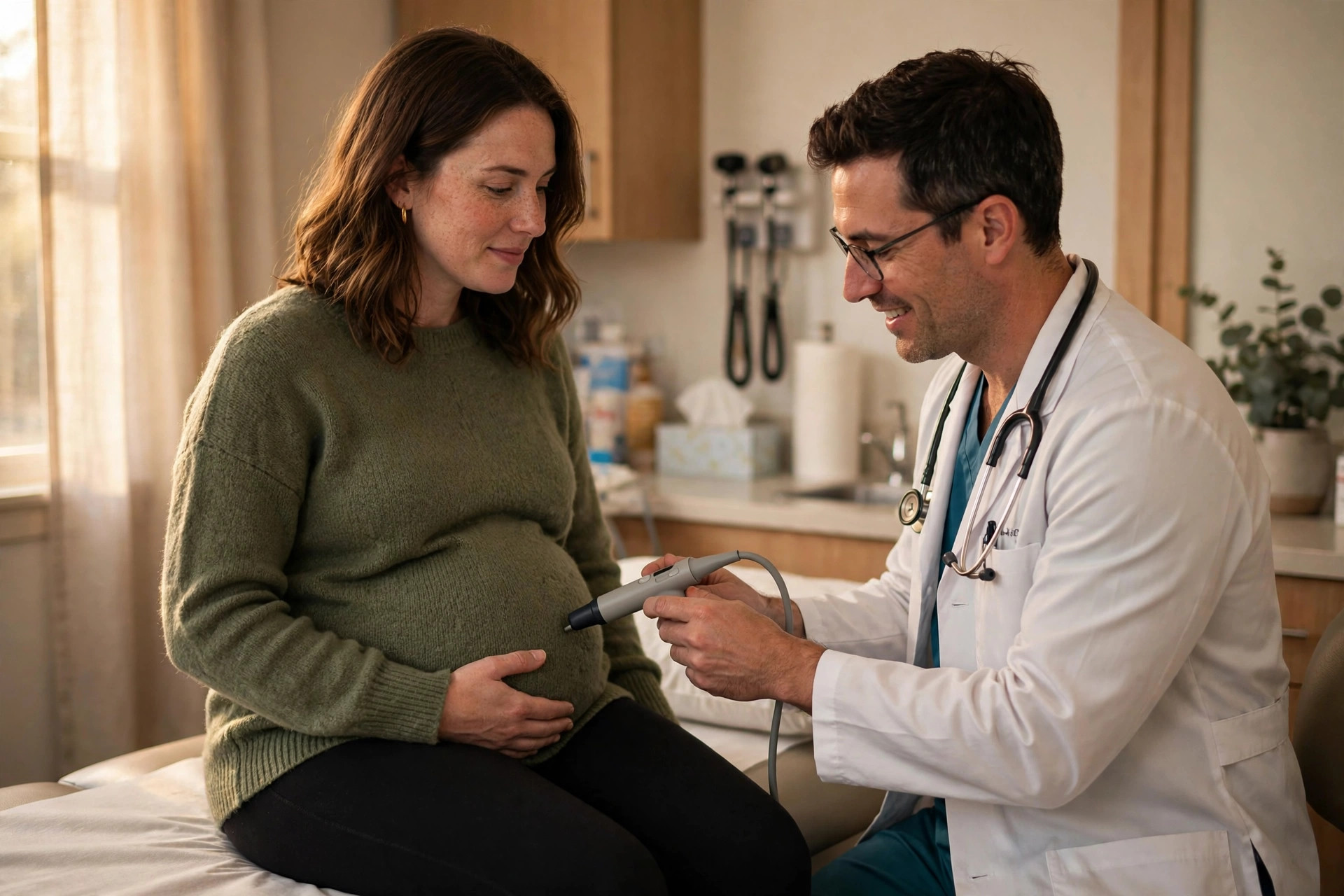
A routine visit usually includes: your weight and blood pressure, a urine check (for protein and sugar), measurement of your fundal height (the distance from pubic bone to top of uterus, tracking growth), listening to the baby’s heartbeat, and time for your questions. Quick, but each element is doing quiet, important work — blood pressure and urine protein screening, for instance, is how preeclampsia gets caught early.
First Trimester: Confirmation and Baseline
Beyond the first visit’s blood work and dating ultrasound, the first trimester may include screening options for chromosomal conditions. The details vary by provider and region, but commonly offered approaches include first-trimester combined screening (a blood test plus a nuchal translucency ultrasound measurement, usually weeks 11–14) or cell-free DNA screening (a blood test analyzing fragments of placental DNA, available from around week 10). These are screening tests — they estimate likelihood, not diagnose — and they’re optional. Your provider should explain what each test can and can’t tell you before you decide.
If you had a difficult first trimester with heavy nausea or other concerns, these early visits are also where those get addressed — don’t save worries for later.
Second Trimester: The Anatomy Scan and Glucose Screening
The second trimester hosts the most famous prenatal appointment: the anatomy scan (usually weeks 18–22). This detailed ultrasound examines your baby’s brain, heart, spine, kidneys, limbs, and other structures; measures growth; assesses the placenta and amniotic fluid; and can usually reveal sex if you want to know. It takes 30–45 minutes and is one of the most information-rich appointments of the pregnancy.
Around weeks 24–28 comes glucose screening for gestational diabetes: you drink a sweet glucose solution, wait about an hour, and have your blood drawn. If your result is elevated, you’ll do a longer follow-up test to confirm. Gestational diabetes is common and very manageable — it’s about monitoring and adjustments, not failure — and it usually resolves after delivery.
This is also when many parents first feel consistent fetal movement, which becomes its own delightful form of monitoring.
Third Trimester: Watching and Waiting
As visits become biweekly then weekly, the focus shifts to readiness. Your provider tracks the baby’s growth and position (most babies settle head-down between weeks 32 and 36), monitors your blood pressure and urine closely, and near term may check your cervix for effacement and dilation — though these checks predict timing poorly, so don’t read too much into the numbers.
Around weeks 35–37, you’ll have the Group B strep screening — a quick, painless swab. Group B strep bacteria are common and usually harmless to you, but they can affect newborns during delivery, so a positive result simply means you’ll receive antibiotics during labor. Standard and simple.
Our third trimester guide covers how to use these final appointments well — including the two questions worth asking every time: “What should I watch for this week?” and “When should I call versus head to the hospital?”
Prenatal checkups aren’t just box-ticking — each visit layers another piece of information onto the picture of your pregnancy. The parents who get the most from them are the ones who arrive with questions and leave with answers. Keep a running list on your phone.
Ultrasounds: What to Expect and When
Most routine pregnancies include at least two ultrasounds: the dating/first-trimester scan and the mid-pregnancy anatomy scan. Additional ultrasounds may be ordered if there’s a specific question — growth concerns, position checks, fluid levels. Ultrasounds in pregnancy are considered safe; they’re sound waves, not radiation. If you’re offered extra scans, it’s worth asking what question each one is trying to answer, so you understand the purpose rather than just accumulating images.
Questions Worth Asking at Every Stage
- Is there anything in my results we should discuss or follow up on?
- Are there screening or diagnostic tests I should consider before the next visit?
- What symptoms should prompt a call between now and my next appointment?
- Who do I contact after hours, and what’s the fastest way to reach the practice?
- Are my current medications and supplements still appropriate?
- Is there anything about my diet, activity, or daily routine you’d like me to adjust?
Bring a notebook or use your phone. Pregnancy brain is real, and “I’ll remember what she said about the glucose test” is a promise your future self won’t keep.

When the Schedule Changes
Sometimes the routine path diverges: extra monitoring for high blood pressure, additional growth scans, a referral to a maternal-fetal medicine specialist. This can feel alarming, but most deviations from the standard schedule are precautionary — more information, not worse news. Ask directly: “What are we watching for, and what would change our plan?” Concrete answers beat vague worry every time.
And if something feels off between visits — decreased movement once you’ve established a pattern, bleeding, fluid leaking, severe headache, vision changes — don’t wait for your next appointment. Call. The schedule is for routine monitoring; your instincts are for everything else.
Frequently Asked Questions
When should I schedule my first prenatal visit?
Around weeks 8 to 10 for most pregnancies. Call as soon as you get a positive test if you have a history of miscarriage or ectopic pregnancy, chronic health conditions, or take regular medications — your provider may want to see you earlier.
How often are prenatal checkups?
Typically monthly until week 28, every two weeks from 28 to 36, then weekly until delivery. High-risk pregnancies follow a more frequent, individualized schedule set by your provider.
What tests are done during pregnancy?
Standard testing includes first-visit blood work (blood type, Rh factor, infection immunities, blood count), optional first-trimester screening for chromosomal conditions, the mid-pregnancy anatomy ultrasound, glucose screening around weeks 24–28, and Group B strep screening around weeks 35–37. Your provider tailors this to your history and risk factors.
What is the glucose screening test?
It’s a screening for gestational diabetes: you drink a sweet glucose drink, wait about an hour, then have blood drawn to see how your body processes sugar. An elevated result leads to a longer confirmatory test. It’s routine, not a judgment — gestational diabetes is common and manageable.
Are ultrasounds safe during pregnancy?
Yes — obstetric ultrasound uses sound waves, not radiation, and is considered safe in pregnancy. Most routine pregnancies include at least a dating scan and the anatomy scan; additional scans are ordered when there’s a specific clinical question.
Once your baby arrives, the appointment rhythm continues on their side too — our guide to newborn checkups and pediatrician visits picks up where prenatal care leaves off.
This article is for general information and isn’t a substitute for professional medical advice. Your provider will tailor testing and visit schedules to your individual pregnancy.