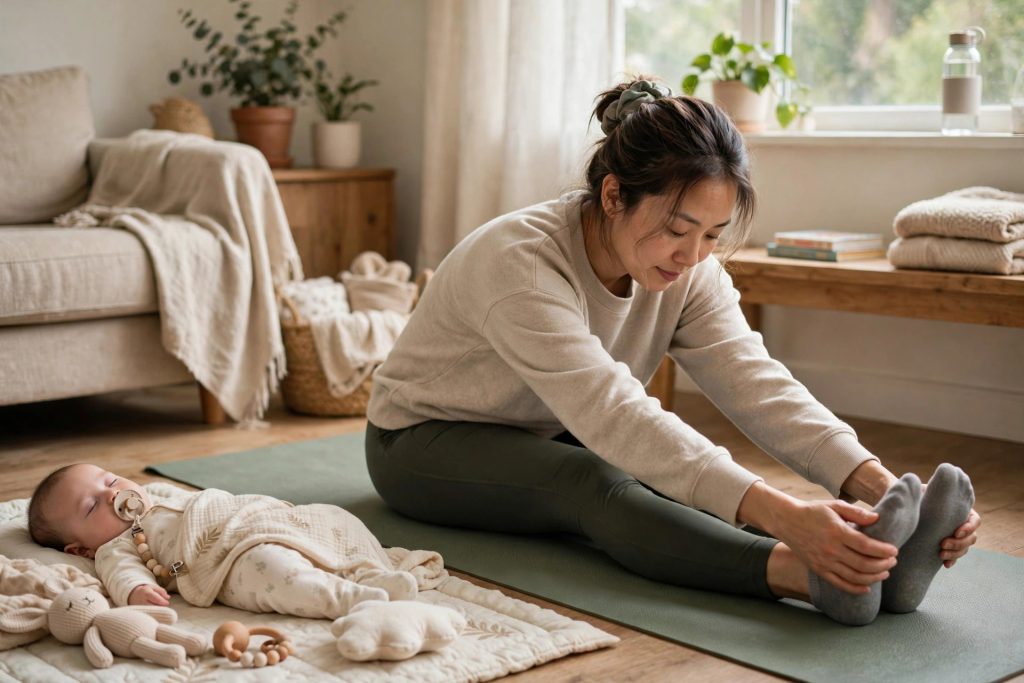
At some point in the postpartum haze, the thought surfaces: I’d like to move my body again. Maybe you miss running, or yoga, or simply feeling strong. Maybe you just want to walk around the block without feeling fragile. Whenever the urge arrives, it’s worth honoring — exercise, done right, is one of the best things you can do for your postpartum recovery, mood, and energy.
The key phrase is “done right.” Your body has been through a nine-month transformation and a major physical event; it needs a rebuild, not a race back. This guide lays out a safe, sane timeline for returning to exercise — what to do when, what to avoid, and how to know you’re overdoing it.
The Recovery-First Mindset
Forget “bouncing back.” The goal of postpartum exercise isn’t reclaiming your old body on a deadline — it’s rebuilding a body that’s been fundamentally remodeled. Muscles stretched, joints loosened by pregnancy hormones, an abdominal wall that may have separated, a pelvic floor that’s still regaining its strength: these need progressive rehabilitation, not punishment workouts.
This mindset shift matters because the fitness world is full of “six weeks and you’re cleared for everything” thinking. In reality, “cleared to exercise” at your postpartum checkup means cleared to begin progressing — not cleared to resume your pre-pregnancy routine at full intensity. Women who rebuild gradually end up stronger, with fewer injuries and setbacks, than women who rush. Patience here isn’t weakness; it’s strategy.
The foundations come first: our guides to pelvic floor recovery and the first six weeks postpartum cover the groundwork that makes everything else safe.
A Safe Timeline: Phase by Phase
Every recovery is individual — this is a framework, not a prescription. Move to the next phase when the current one feels easy and symptom-free, not merely when the calendar says so.
Phase 1: The first days to 2 weeks — reconnect
Forget “exercise” for now. Focus on gentle reconnection: pelvic floor activations (the gentle squeezes from our pelvic floor guide), deep diaphragmatic breathing, short walks around the house, and ankle circles in bed to promote circulation. If you had a C-section, walking — even slow hallway laps — is genuinely important for recovery; start as soon as your team encourages it.
Phase 2: Weeks 2–6 — build the base
Add short outdoor walks, gradually increasing duration as comfort allows. Continue pelvic floor work, progressing holds and positions. Introduce gentle deep-core reconnection: heel slides, dead bugs at their easiest level, glute bridges. Everything should feel like activation, not strain. Stop if you feel heaviness, dragging, or leaking — those are signs to stay at this phase longer.
Phase 3: After provider clearance (~6 weeks, often 8+ for C-sections) — rebuild
With your provider’s go-ahead, begin structured exercise: longer walks, postnatal yoga or Pilates classes, light strength training with an emphasis on form, swimming once bleeding has stopped and incisions are healed. Increase one variable at a time — duration, then intensity, then impact — never all three at once.
Phase 4: Weeks 12+ — return to full activity
Running, high-impact classes, heavy lifting: these come last, and only when you can walk briskly for 30–45 minutes, do single-leg activities, and manage impact without leaking, heaviness, or pain. Many physiotherapists suggest a specific return-to-running progression rather than just lacing up — your pelvic floor will thank you for the patience.

C-Section Considerations
C-section mothers are recovering from major abdominal surgery while caring for a newborn — respect that. The incision needs weeks to heal: no lifting anything heavier than your baby, no intense abdominal work, no driving until cleared. Watch the incision for increasing redness, swelling, discharge, or fever, and report concerns promptly.
The good news: walking is your superpower after a C-section. Start with short, slow walks as soon as your medical team encourages it — it aids healing, prevents complications, and lifts mood. Core rehab after a C-section progresses the same way as after vaginal birth, just often on a slightly longer timeline. And the scar itself may feel numb, tight, or tender for months; gentle scar massage (once fully healed and with guidance) can help, but never rush it.
Warning Signs: When to Stop and Scale Back
Your body gives clear feedback if you’re pushing too hard. Treat any of these as a signal to stop the activity and drop back a phase:
- Heaviness, dragging, or a bulging sensation in the vagina or perineum
- Leaking urine (or stool) during or after exercise
- Bleeding that increases or restarts after it had tapered
- Pelvic, back, or incision pain during or after workouts
- A visible bulge along the midline of your abdomen when you exert yourself (possible diastasis recti needing assessment)
- Exhaustion that doesn’t resolve with rest — overtraining on top of sleep deprivation digs a deep hole
None of these mean exercise is off the table forever. They mean this exercise, at this intensity, is premature. Scale back, rebuild the foundation, and try again in a week or two. If symptoms persist, a pelvic floor physiotherapist or your provider can assess what’s going on — which beats both pushing through and giving up.

Fueling Your Active Recovery
Exercise increases your body’s demands on top of already-high postpartum needs. Don’t train on an empty tank: eat a small protein-and-carb snack before longer sessions, refuel afterward, and hydrate aggressively — especially if breastfeeding, where thirst can be intense. Our postpartum nutrition guide and hydration basics cover the details.
And be honest about energy accounting. In the early months, a workout competes with sleep for your limited recovery budget. Some days the right call is a nap instead of a workout — that’s not laziness, it’s physiology. Our self-care guide and sleep deprivation survival guide will back you up on this.
The goal isn’t your old fitness level by a deadline — it’s a stronger foundation than rushing would ever build. Progress phase by phase, heed the warning signs, and let patience do the heavy lifting.
This article is for general information and isn’t a substitute for professional medical advice. Always get your provider’s clearance before resuming exercise, and consult a professional about any concerning symptoms.
Frequently Asked Questions
When can I exercise after giving birth?
Gentle reconnection (pelvic floor activations, short walks) can begin within days once acute pain eases. Structured exercise typically waits for provider clearance around 6 weeks (often 8+ after C-section), with gradual progression from there. Let symptoms, not just the calendar, guide you.
Is walking safe in the first weeks postpartum?
Yes — walking is one of the best early activities. Start with short, easy strolls and build duration gradually. After a C-section, walking as soon as your medical team encourages it actively supports healing.
What exercises should I avoid after birth?
In the early phases, avoid high-impact exercise, heavy lifting, intense abdominal work like crunches, and anything that causes leaking, heaviness, or pain. Reintroduce these gradually only after rebuilding foundational strength.
How do I know I’m overdoing it?
Warning signs include vaginal heaviness or bulging, leaking during exercise, bleeding that restarts or increases, pelvic or incision pain, and exhaustion that rest doesn’t fix. Scale back a phase and rebuild — or see your provider if symptoms persist.
Can I exercise while breastfeeding?
Yes. Moderate exercise is compatible with breastfeeding — stay hydrated, wear a supportive bra, and feed or express before vigorous sessions for comfort. Extreme, exhaustive training can temporarily affect milk supply in some women, so build gradually.
What about abdominal separation (diastasis recti)?
Some separation of the abdominal muscles is normal after pregnancy and often narrows with proper rehab. Avoid movements that cause visible doming along the midline, focus on deep-core reconnection first, and get assessed by a physiotherapist if the gap seems wide or isn’t improving.
Your body did something extraordinary. Returning to movement is a celebration of that — not a race away from it. Start gently, progress patiently, and enjoy the feeling of strength coming back online, one phase at a time.