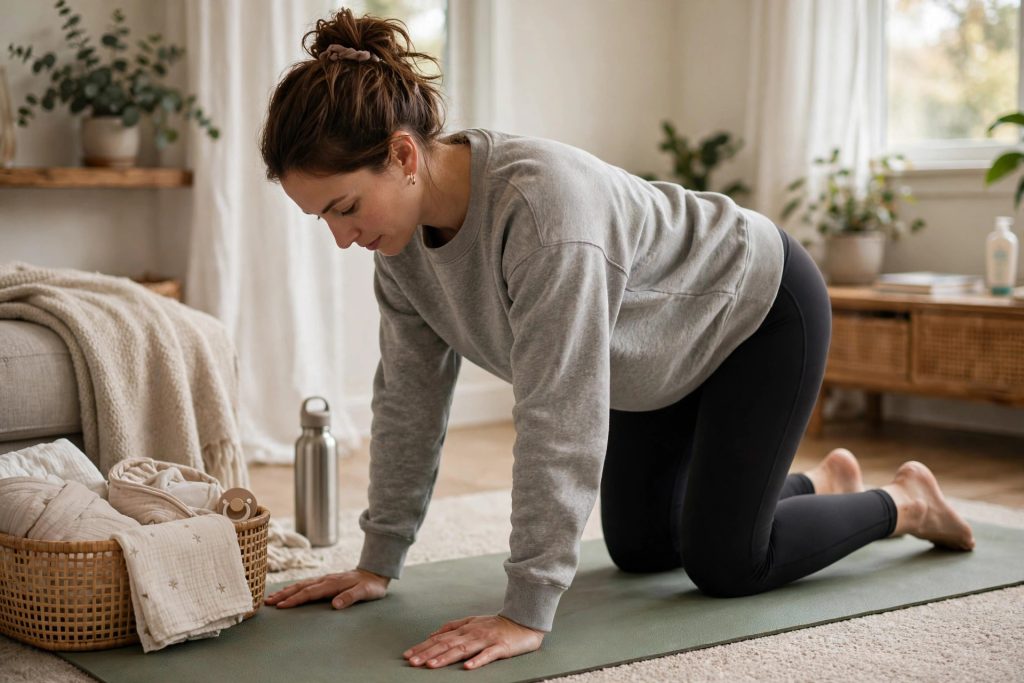
Nobody applauds your pelvic floor, but it deserves a standing ovation. For nine months it carried the growing weight of your baby, and then — whether you delivered vaginally or by C-section — it went through one of the most demanding physical events of your life. If you’re now dealing with leaking when you laugh, a heavy feeling “down there,” or a core that feels like it belongs to someone else, welcome to one of the least discussed and most fixable parts of postpartum recovery.
This guide explains what happened to your pelvic floor, how to reconnect with those muscles, a safe beginner routine, and when to get professional help. It applies after both vaginal and cesarean births — because pregnancy itself, not just delivery, loads these muscles.
What Your Pelvic Floor Went Through
Your pelvic floor is a sling of muscles stretching from your pubic bone to your tailbone, holding up your bladder, uterus, and bowel. During pregnancy, it supported steadily increasing weight for months. During a vaginal birth, it stretched enormously to let your baby through. During a C-section, it still carried nine months of load — and then you had major abdominal surgery on top of it.
So it’s no surprise that these muscles emerge from pregnancy weakened, overstretched, or simply “offline” — your brain struggling to find and activate them. Common aftermath includes leaking urine when you cough, sneeze, laugh, or exercise (stress incontinence), a sensation of heaviness or dragging in the vagina, difficulty fully emptying the bladder or bowel, and reduced core stability. These are common, affecting a large share of new mothers — but “common” doesn’t mean “just live with it.” Most pelvic floor issues improve significantly with the right rehabilitation.
Finding and Engaging the Right Muscles
Before doing a single Kegel, you need to find the right muscles — and about a third of women initially squeeze the wrong ones (buttocks, thighs, or abs) instead. Here’s how to locate them:
- Lie down comfortably with knees bent — gravity isn’t working against you in this position.
- Imagine you’re trying to stop the flow of urine midstream, or imagine picking up a blueberry with your vagina. That lifting, drawing-in sensation is your pelvic floor engaging.
- You should feel a gentle lift and squeeze inside, without your buttocks clenching, thighs pressing together, or breath holding. Place a hand on your belly — it should stay soft.
- Try it a few times. If you feel nothing at all, don’t panic — the connection often returns gradually in the weeks after birth. Keep practicing the attempt; the neural pathways rebuild with repetition.
A note on the old “stop your urine” test: it’s a one-time locating tool, not an exercise. Regularly stopping urine flow can interfere with bladder emptying, so don’t make it a habit.

A Beginner Routine for the Early Weeks
Once you can identify the muscles, start gently. In the first days and weeks after birth — once any acute pain has eased and your provider has cleared basic movement — this simple routine rebuilds the mind-muscle connection.
The basic Kegel
- Slow holds: Squeeze and lift the pelvic floor, hold for 5 seconds while breathing normally, then fully release for 5 seconds. Repeat 8–10 times. The release matters as much as the squeeze — muscles need to let go fully to work properly.
- Quick flicks: Do 8–10 quick squeezes and releases in a row, like pulsing. These train the fast-twitch fibers that catch leaks when you sneeze.
- Frequency: Aim for 2–3 short sessions a day. Tie them to existing habits — while feeding the baby, waiting for the kettle, or during a red light.
Progression over the weeks
As the basics get easier — usually within a few weeks — extend your holds toward 10 seconds, add more repetitions, and practice in harder positions: first sitting, then standing, then while walking. Eventually, practice “the knack”: a quick pre-emptive squeeze before you cough, sneeze, or lift the baby. This one technique prevents more leaks than anything else.
Pair pelvic floor work with gentle whole-body recovery. Our guides to the first six weeks postpartum and returning to exercise safely lay out how everything fits together, and coping with postpartum body changes covers the rest of what you’re noticing in the mirror.
What to Avoid While You Heal
Good rehab isn’t only about what you do — it’s about what you don’t do while tissues are still vulnerable:
- Heavy lifting and straining in the early weeks, including intense “bounce back” workouts. High-impact exercise too soon can worsen leaking and heaviness.
- Deep squats and heavy core work (like crunches) before you’ve rebuilt basic pelvic floor control — they raise intra-abdominal pressure that pushes down on a healing floor.
- Constipation and straining on the toilet. Use a footstool, lean forward, and let things happen without bearing down. Keep fiber and fluids up — our hydration guide is baby-focused, but the drink-water-often message applies to you too.
- “Just in case” pees. Hovering over public toilets and urinating before you truly need to can train your bladder into urgency patterns. Sit fully and empty completely.

Leaking after birth is common, but it isn’t something you have to accept as your new normal. With consistent, gentle rehab, most women see real improvement — and for persistent issues, pelvic floor physiotherapy works remarkably well.
When to See a Pelvic Floor Physiotherapist
Think of a pelvic floor physio the way you’d think of a physio for a knee injury — a specialist for a specific, treatable problem. Book an appointment if:
- Leaking hasn’t meaningfully improved after 6–8 weeks of consistent exercises
- You feel heaviness, dragging, or a bulge sensation in the vagina (possible prolapse — needs assessment, and it’s very treatable)
- You can’t feel your pelvic floor muscles at all after several weeks of trying
- You have ongoing pain with intercourse, or pelvic/back pain that isn’t resolving
- You had a severe tear, instrumental delivery, or a complicated birth
A good assessment is undramatic: history, movement screening, and — only with your consent — an internal exam to check muscle strength and coordination. Many women wish they’d gone sooner. There’s no prize for suffering quietly through something a professional could have fixed in a few sessions.
This article is for general information and isn’t a substitute for professional medical advice. If you have heaviness, bulging, severe pain, or heavy bleeding, contact your healthcare provider.
Frequently Asked Questions
When can I start pelvic floor exercises after birth?
Gentle activation can usually begin within days, once acute pain has eased — these are small, internal muscle contractions, not workouts. If you had stitches, a severe tear, or a C-section, check with your provider first, but most women are encouraged to start reconnecting early.
How do I do Kegels correctly?
Squeeze and lift the muscles you’d use to stop urine flow, hold for 5 seconds while breathing normally, then release fully for 5 seconds. Your buttocks, thighs, and belly should stay relaxed. Quality beats quantity — a few perfect reps beat dozens of sloppy ones.
Is leaking urine after birth normal?
It’s very common in the weeks after birth, especially when coughing, sneezing, laughing, or exercising. But “common” isn’t the same as “permanent” — most leaking improves substantially with pelvic floor rehab, so treat it as a rehab project, not a life sentence.
Do I need pelvic floor rehab after a C-section?
Yes. Pregnancy itself loads the pelvic floor for nine months regardless of delivery method, and C-section recovery adds abdominal healing to the mix. Gentle pelvic floor reconnection benefits C-section mothers too — just coordinate with your provider on timing.
When should I see a pelvic floor therapist?
If leaking persists beyond 6–8 weeks of consistent exercise, you feel vaginal heaviness or bulging, can’t locate the muscles, or have pain that isn’t resolving. Earlier is better — don’t wait a year hoping it fixes itself.
Can pelvic floor exercises help with core strength?
Absolutely — the pelvic floor is the base of your deep core system. Rebuilding it first gives you a stable foundation before progressing to abdominal and full-body strength work.
Your pelvic floor carried you through pregnancy and birth without complaint. A few minutes of daily attention is a small repayment — and the return on investment, measured in confidence on trampolines and sneeze-filled allergy seasons, is enormous.