
At six weeks, your baby gives you a real smile — not gas, not a reflex, but a smile aimed directly at your face. It’s a small moment that rearranges something in you. That smile is the opening note of your child’s social and emotional development: the years-long process of learning to connect, to trust, to handle big feelings, and eventually to care about how other people feel.
Unlike rolling over or saying “mama,” emotional milestones don’t arrive with a clear date you can circle. They unfold inside the relationship between you and your child, built from thousands of tiny daily interactions. Here’s what’s happening under the surface, roughly when, and how your ordinary caregiving is already doing the most important work.
The First Relationship: Attachment in Plain Language
“Attachment” sounds technical, but the concept is simple: your baby is learning whether the world is a safe, predictable place where needs get met. Every time you respond to a cry, a coo, or a reaching hand, you’re answering that question with a yes.
This doesn’t require perfection. Researchers who study attachment emphasize “good enough” responsiveness — being attuned most of the time, and repairing the connection when you miss. You will misread cues. You will be too tired to be warm at 3 a.m. sometimes. What matters is the overall pattern: when your baby signals, someone reliably shows up. Over months, that pattern becomes their internal template for relationships.
It’s also worth saying plainly: attachment forms with whoever consistently cares for a child — mothers, fathers, grandparents, nannies. There’s nothing magical about one specific person; there’s something powerful about reliable ones.
Social Milestones, Roughly in Order
Emotional development has its own timeline, just a quieter one than the physical milestones:
- Social smile (6–8 weeks): The first deliberate social signal. Your baby is telling you that faces matter most.
- Social laughter (3–4 months): Real giggles during peekaboo or silly faces — early evidence of shared joy.
- Stranger wariness (6–9 months): Suddenly Grandma gets the cold shoulder. This isn’t rudeness; it’s cognitive progress. Your baby can now tell familiar from unfamiliar, and caution around strangers is a healthy instinct.
- Separation anxiety (8–14 months): Peaks around the first birthday for many babies. Clinginess, tears at daycare drop-off, waking at night to check you’re there. It means attachment is working.
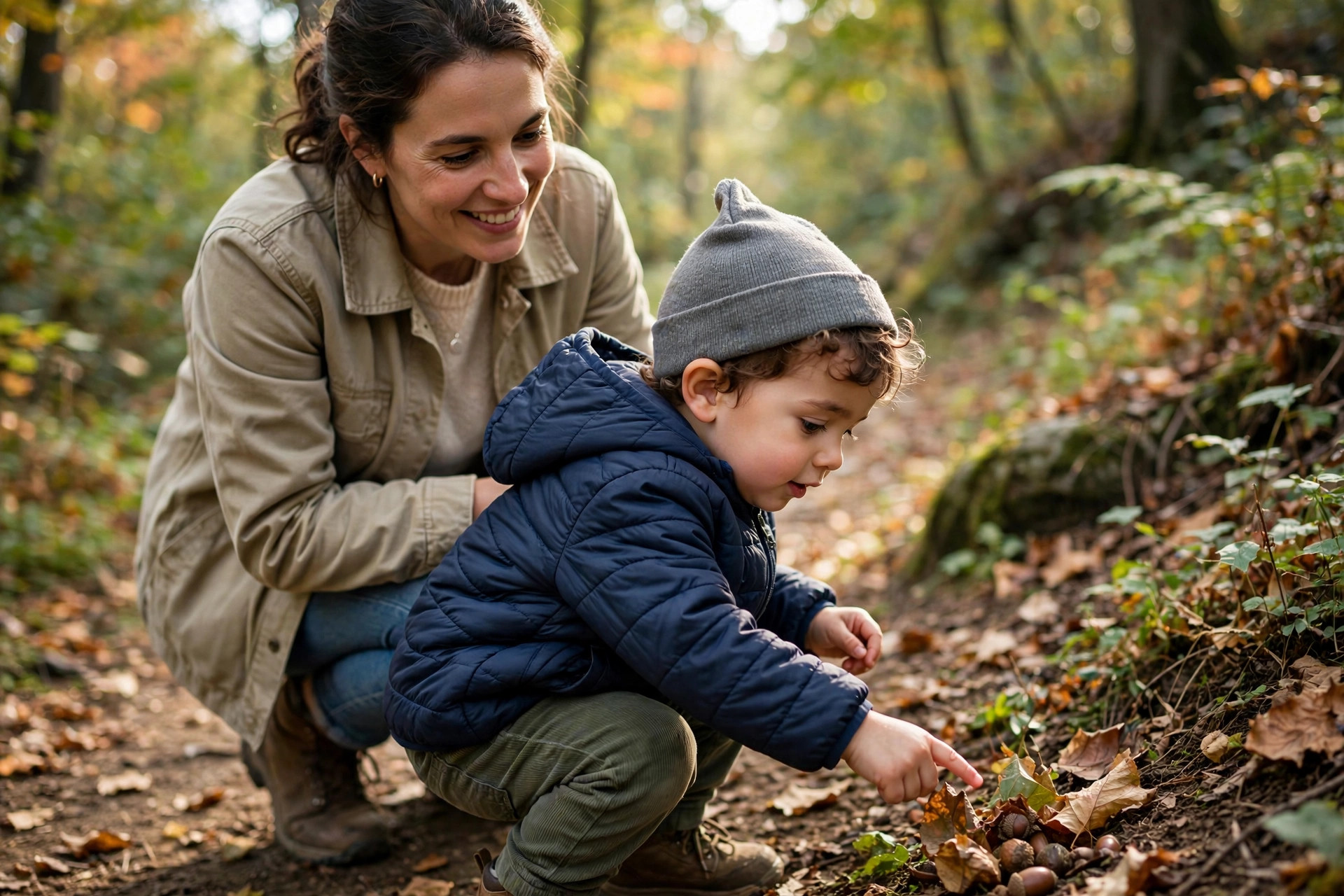
- Showing and pointing (9–12 months): Holding up a soggy cracker for you to admire is a social milestone — your baby wants to share attention, not just get needs met.
- Early empathy (18–24 months): A toddler patting a crying friend, or bringing you their blanket when you “cry.” It’s rudimentary, but it’s the seed of caring about others’ inner lives.
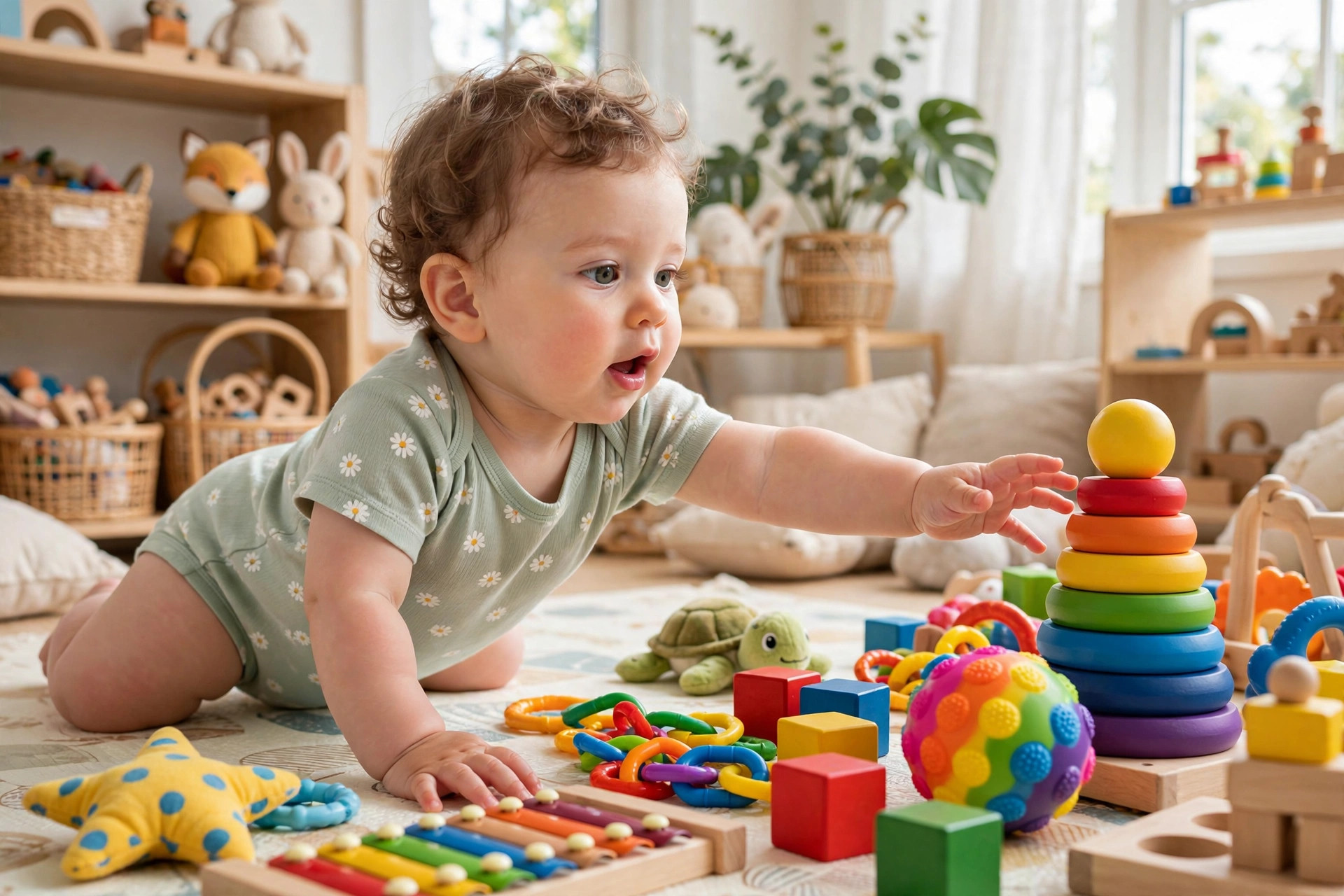
These phases overlap and loop back. A confident 14-month-old can become clingy again during teething, travel, or a new sibling’s arrival. Regression during stress is normal — it’s your child reaching for extra security while they cope. (And if a brand-new skill like crawling has just unlocked a bigger world, expect emotions to run a little higher while they adjust.)
Separation Anxiety and Stranger Wariness: Normal Phases, Real Feelings
Nothing tests a parent’s heart quite like a baby who screams when you leave the room — including the bathroom. It helps to reframe what’s happening: your baby isn’t being manipulative or “spoiled.” They’ve achieved object permanence (you exist when unseen) without yet grasping that you reliably return. From their perspective, you vanishing around a corner is genuinely alarming.
A few things that genuinely help:
- Practice with tiny separations. Step into the next room for thirty seconds, narrate it (“Mummy’s just getting your cup!”), and come back cheerfully. Short, successful reunions teach the pattern.
- Keep goodbyes short and warm. Sneaking out tends to backfire — it teaches your baby that people disappear without warning. A quick, confident “Bye-bye, love you, I’ll be back after nap” is kinder, even through tears.
- Build a bridge person. At daycare or with a sitter, a consistent caregiver plus a comfort object from home smooths the transition enormously.
- Don’t take it personally. The baby who wails at drop-off and plays happily two minutes later isn’t faking either emotion. Both are real, and both pass.
Most separation anxiety eases between 18 months and 2 years as memory and understanding of routines mature. If intense distress persists well beyond that or is getting worse rather than better, it’s worth mentioning to your pediatrician — not as an emergency, just as a check-in.
Everyday Ways to Build Emotional Security
You don’t need special programs. The building blocks of emotional development are embedded in ordinary days:
- Respond, don’t just react. When your baby cries, the goal isn’t instant silence — it’s communicating “I hear you, I’m here.” Sometimes that’s a feed; sometimes it’s just being held while upset. Both count.
- Name feelings out loud. “You’re frustrated that the block won’t stay up!” Toddlers can’t regulate emotions they can’t identify. Giving feelings names is like handing them a map of their own inner weather. This pairs beautifully with calm tantrum strategies later on — and with cozy rituals like reading together, where stories give feelings even more names.
- Keep rhythms predictable. Regular mealtimes, naps, and bedtime routines tell a small child the world runs on reliable patterns — deeply reassuring when everything else feels big and new.
- Repair after rupture. You will lose your patience. Everyone does. What matters enormously is the repair: getting down to their level later and saying “I shouted, and that was too loud. I’m sorry.” Children who see rupture-and-repair learn that relationships survive hard moments — one of the most valuable lessons there is.
- Let them feel. Resist the urge to immediately distract from every upset. “You’re sad. It’s okay to be sad” teaches that emotions are survivable weather, not emergencies.
When Feelings Get Big: The Basics of Co-Regulation
Babies and toddlers can’t calm themselves down — their nervous systems literally aren’t built for it yet. They borrow your calm. That’s co-regulation: your steady voice, your slow breathing, your unhurried holding teaches their body what “settling” feels like, thousands of times over, until they can eventually do it alone.
In practice, this looks unglamorous. It looks like sitting on the supermarket floor next to a screaming toddler instead of hissing threats. It looks like breathing slowly while your baby arches and wails at 2 a.m. It looks like being the calmest person in the room when you least feel like it.
And here’s the part nobody tells you: co-regulation regulates you too, eventually. The slow breathing you do for them starts working on you. Parenting a small child’s emotions is genuinely one of the hardest things humans do — which is why setting kind, consistent boundaries matters as much as warmth. Children feel safest with adults who are both loving and clearly in charge.
Your child’s emotional development isn’t built in milestone moments. It’s built at 2 a.m., in the grocery store, during the tenth reading of the same book — in every small instance of “I’m here, I’ve got you.”
Frequently Asked Questions
When do babies start developing socially?
From birth — newborns prefer faces and voices immediately. The first unmistakable social milestone is the social smile around 6–8 weeks, followed by laughter, stranger wariness, separation anxiety, and eventually sharing attention and early empathy across the first two years.
Is separation anxiety normal?
Completely. It typically appears around 8–10 months, peaks near the first birthday, and eases by 18–24 months. It’s actually a sign of healthy attachment — your baby understands you exist when unseen and cares deeply that you’re gone. Short, warm goodbyes and predictable routines help most.
How can I support my baby’s emotional development?
Respond consistently to their cues, name their feelings out loud, keep daily rhythms predictable, stay calm during their storms (co-regulation), and repair the connection when you lose your cool. Warmth plus clear, kind boundaries is the whole formula.
When do babies start showing empathy?
Rudimentary empathy — comforting someone who’s upset, offering a toy — typically emerges between 18 and 24 months. Before that, babies may cry when they hear another baby cry, which is emotional contagion: feeling with someone before understanding their separate feelings.
My toddler is suddenly clingy again. Is something wrong?
Probably not. Clinginess often resurfaces during illness, teething, travel, moves, or a new sibling — any stress makes children reach for extra security. Offer more connection, keep routines steady, and it usually passes as the stress eases. If intense, worsening anxiety persists for months, check in with your pediatrician.