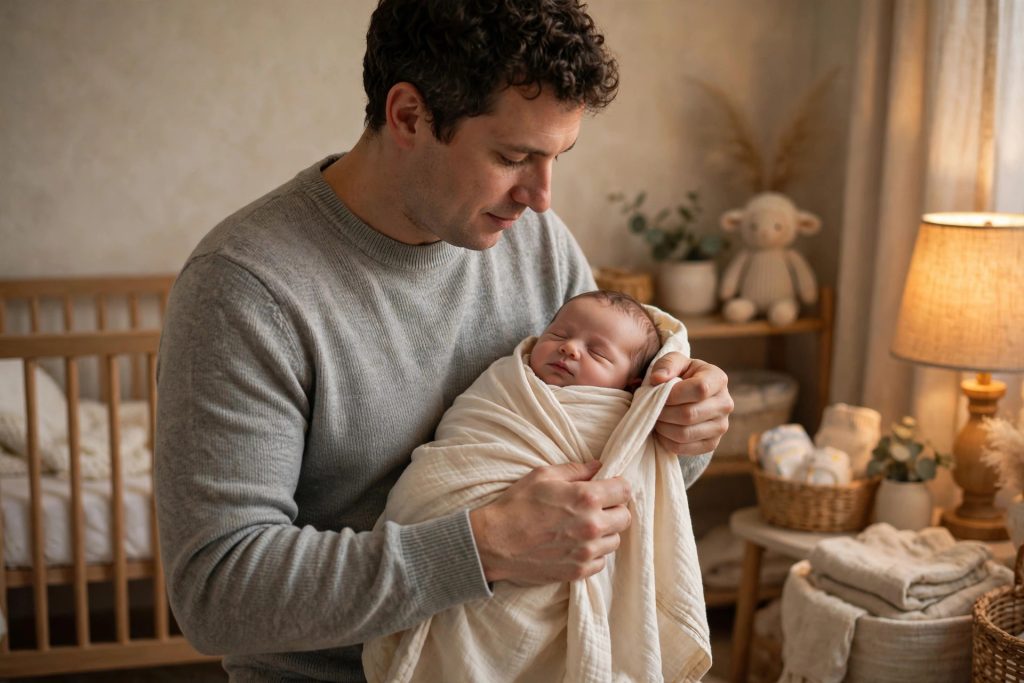
There is a particular kind of magic in watching a fussy newborn melt into calm the moment they’re wrapped snugly in a blanket. Their flailing arms settle, their breathing slows, and for a blissful few minutes, the whole house exhales. That magic has a name: swaddling. Parents have been wrapping their babies this way for thousands of years, and modern pediatric guidance still considers it a safe, effective soothing tool — as long as it’s done correctly.
But “correctly” matters more than most new parents realize. A swaddle that’s too tight around the hips, too warm, or used past its expiration date can create real risks. This guide walks you through exactly how to swaddle your baby safely: the step-by-step technique, the safety rules that matter most, the mistakes to avoid, and how to know when it’s time to stop.
Why Swaddling Works So Well
Newborns spend their first weeks adjusting to a world that is enormously different from the womb. Inside, your baby was held snug on all sides, warm, and constantly rocked by your movement. Outside, their arms jerk with the Moro (startle) reflex at the slightest noise or shift in position — and each startle can wake them just as they’re drifting off.
A good swaddle recreates some of that contained, cozy feeling. Gentle, even pressure around the torso calms the startle reflex, which is one of the main reasons swaddled babies often sleep in longer stretches. It also keeps little hands from scratching delicate newborn skin and helps babies feel secure during those disorienting first weeks. Many parents find that combining a swaddle with other calming techniques, like the gentle strokes described in our guide to baby massage benefits and techniques, creates a reliable wind-down routine before sleep.
Step-by-Step: How to Swaddle Your Baby

You’ll get faster with practice — most parents can do this one-handed, half-asleep, within a week. Here’s the classic diamond-fold method:
What you’ll need
- A large, thin blanket — roughly 40 by 40 inches (100 × 100 cm) works best. Muslin or light cotton is ideal because it breathes.
- A flat, safe surface like a crib mattress or changing table.
- Your baby, dressed appropriately for the room temperature (not overdressed — more on overheating below).
The seven steps
- Lay the blanket in a diamond shape and fold the top corner down about six inches, forming a straight edge across the top.
- Place your baby face-up on the blanket with their neck resting along that folded edge. Their head should stay completely above the blanket — never cover a baby’s head or face with swaddle fabric.
- Bring the left side across. Take the left corner, pull it snugly across your baby’s chest, and tuck it under their right side. The arm on that side should be straight at their side, comfortably contained — not pinned.
- Fold the bottom up. Bring the bottom corner up over your baby’s feet and tuck it behind the shoulder. Leave room at the bottom so the legs can bend up and out — the hips must stay loose and flexible.
- Bring the right side across. Pull the right corner snugly across the chest and tuck it under the left side, securing the wrap.
- Check the fit. You should be able to slip two to three fingers between the blanket and your baby’s chest. Breathing should look easy and unlabored.
- Check the hips. This is the step people skip. Make sure the legs can bend at the hips and the knees can fall outward into a natural frog-leg position. The swaddle should be snug at the arms and loose at the hips — always.
If the blanket keeps coming undone, the fabric may be too slippery or too small. Purpose-made swaddle wraps with Velcro or zippers are a perfectly good alternative — the same safety rules apply to them.
Swaddling Safety Rules That Matter Most
Swaddling is safe when you follow a few non-negotiable rules. These come from pediatric safe-sleep guidance and are worth memorizing:
- Always place your swaddled baby on their back to sleep. This is the single most important rule. A swaddled baby must never sleep on their side or stomach.
- Keep hips loose. Wrapping the legs straight and tight can contribute to hip dysplasia, a condition where the hip joint doesn’t develop properly. Snug arms, loose hips — every time.
- Watch for overheating. Swaddling adds a layer of warmth. Dress your baby lightly underneath, keep the room at a comfortable temperature, and check for signs of overheating: sweating, damp hair, flushed cheeks, or rapid breathing. If you notice these, remove a layer.
- Keep the face and head uncovered. Nothing should cover your baby’s face, and the blanket should sit well below the chin.
- Stop at the first sign of rolling. The moment your baby shows any sign of rolling over — even an accidental half-roll — swaddling must stop immediately. A swaddled baby who rolls face-down cannot push themselves back up.
These rules pair naturally with the broader safe-sleep habits covered in our newborn sleep basics guide — the swaddle is one piece of a safe sleep environment, not a substitute for the rest.
Common Swaddling Mistakes New Parents Make
Even careful parents get tripped up by a few of these:
- Wrapping too tightly overall. Snug is good; sausage-casing is not. The two-to-three-finger test at the chest is your best friend.
- Using a blanket that’s too thick. Heavy fleece or quilted blankets trap heat. Stick to thin, breathable fabrics, especially in warm weather.
- Swaddling a baby who’s already overheated or overdressed. Count the swaddle as a layer. In a warm room, a simple onesie underneath is usually plenty.
- Continuing to swaddle after rolling begins. Many parents miss the early signs — a baby who can roll from tummy to back during playtime is showing you they’re ready to transition.
- Swaddling for every sleep indefinitely. Some babies genuinely dislike being swaddled and sleep better with arms free. That’s fine. Follow your baby’s lead; fussing and fighting the wrap every time is a message.
When to Stop Swaddling
Most babies are ready to transition out of the swaddle somewhere between two and four months, but the real trigger isn’t age — it’s rolling. Stop swaddling as soon as your baby:
- Shows any attempt at rolling over, in either direction
- Consistently breaks free and seems happier with arms out
- Starts fighting the swaddle every single time
The gentlest way to transition is gradual: leave one arm out for a few nights, then both arms, then move to a sleep sack — a wearable blanket that keeps your baby warm without restricting movement. Some babies transition in days; others take a couple of weeks of slightly choppier sleep. Both are normal. If sleep falls apart during the transition, our guide on feeding your newborn can help you rule out hunger as the culprit behind new night wakings.
Swaddle vs. Sleep Sack: Which Is Right for Your Baby?
Parents often wonder whether to bother with swaddling at all when sleep sacks exist. Honestly, they serve different stages. A swaddle’s arm containment is uniquely calming for very young newborns with an active startle reflex — usually the first eight to twelve weeks. A sleep sack takes over beautifully once rolling begins, offering warmth and coziness with full freedom of movement.
Many families use both in sequence: swaddle for the newborn weeks, sleep sack from the first roll onward. There’s no prize for picking one over the other — there’s only what helps your particular baby sleep safely and soundly.
The golden rule of swaddling: snug around the arms, loose around the hips, always on the back — and the whole thing ends the day your baby starts rolling.
Frequently Asked Questions
Is swaddling safe for newborns?
Yes, when done correctly. Pediatric guidance supports swaddling as a safe soothing and sleep aid provided your baby is always placed on their back, the hips are left loose, the baby doesn’t overheat, and swaddling stops at the first sign of rolling.
How tight should a swaddle be?
Snug around the torso and arms, loose around the hips and legs. Use the two-to-three-finger test: you should be able to slip two to three fingers between the blanket and your baby’s chest. Your baby’s legs should be able to bend up and outward freely.
When should I stop swaddling my baby?
Stop immediately at the first sign of rolling over — even a single accidental roll. For most babies this happens between two and four months. Continuing to swaddle a baby who can roll is dangerous, because a swaddled baby can’t push themselves back over if they roll face-down.
Can I swaddle my baby with their arms out?
Yes. Arms-out swaddling (or using a swaddle with armholes) is a great transitional step when your baby is starting to roll or simply prefers their hands free. It still provides cozy containment around the torso while leaving the arms available for self-soothing and pushing up.
Should I swaddle my baby for naps too, or just at night?
You can swaddle for both naps and nighttime sleep, as long as all the safety rules are followed each time. Consistency actually helps — the swaddle becomes a sleep cue that tells your baby rest is coming. Just be sure someone is always watching for the rolling milestone, day or night.
Learning to recognize your newborn’s hunger cues pairs well with swaddling know-how: a well-fed baby settles into a swaddle far more easily than a hungry one, so try feeding first when your wrapped baby keeps fussing.